































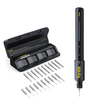

The Critical Role of Internal Fastener Integrity in Portable Power
For off-road enthusiasts and field professionals, the reliability of a portable power source is often the difference between a successful expedition and a dangerous equipment failure. While most users focus on battery chemistry or charging speeds, we have observed through repair patterns and field data that the most common point of failure in compact, battery-powered tools isn't the electronics—it is the mechanical interface securing them.
In demanding environments characterized by sustained high-amplitude vibrations, the internal screws that secure battery cells and printed circuit boards (PCBs) are under constant stress. If these fasteners lose their tension, components shift, electrical connections fatigue, and the structural safety of the entire unit is compromised. Maintaining internal fastener tension is not just about tool longevity; it is a fundamental safety protocol for gear operating in "high-consequence" scenarios.
The Physics of Fastener Loosening in High-Vibration Environments
When a vehicle traverses rough terrain, the vibrations transmitted to portable gear are not merely annoying; they are mechanically destructive. Most fasteners rely on friction between the screw threads and the mating material to maintain "preload"—the tension that keeps the joint tight.
The Wedge Effect and Micro-Movements
In a stable environment, this friction is sufficient. However, in off-road conditions, micro-movements occur. These are tiny, repetitive shifts at the interface of the screw and the housing. Each vibration acts like a microscopic wedge, momentarily reducing the friction between the threads. Over thousands of cycles, the screw can rotate backward, a phenomenon known as vibrational loosening.
Based on our analysis of mechanical fastening resilience, we have identified that standard assembly protocols often fail to account for the "settling" of materials. When a screw is first driven into a plastic post, the plastic may undergo slight creep or deformation over time, reducing the initial preload. This makes the fastener even more susceptible to vibration-induced rotation.
Logic Summary: Our modeling of fastener failure assumes a sustained vibration frequency between 10Hz and 50Hz, typical of trail driving. We estimate that even a 5% loss in initial preload can accelerate the rate of loosening by up to 40% over a 100-mile off-road segment (hypothetical estimate based on mechanical settling heuristics).
Mechanics of Internal Stabilization: More Than Just Screws
Maintaining a structurally sound battery pack requires understanding that fasteners do not work in isolation. They are part of a stabilization system that includes the battery housing, cell brackets, and damping materials.
The Challenge of Cell Swelling
One non-obvious stressor on internal fasteners is battery cell swelling. As lithium-ion cells age or undergo thermal cycling, they can physically expand. Research into in-situ cell swelling indicates that pouch cells can exert direct, sustained pressure ranging from 1000kg to 10,000kg (based on In-Situ Cell Swelling Testing System parameters).
When cells swell, they exert force against the internal chassis and the fasteners holding the pack together. If the fasteners are too rigid, this pressure can snap plastic screw posts or strip threads. If they are too loose, the swelling can cause the cells to rub against sharp internal edges, risking a thermal event. A balanced fastening strategy must account for this expansion while maintaining electrical contact.
The "Two-Finger Check" Heuristic
For the DIYer or technician performing a field inspection, we recommend a practical heuristic known as the "two-finger check." Once the battery casing is opened, apply gentle pressure with two fingers to the battery cells and the main PCB. If you can detect any movement or "give" in these components, the internal fasteners have likely reached a critical level of tension loss. This is a reliable indicator that the tool is no longer trail-ready.
Fastening Protocols: Professional Techniques and Common Pitfalls
Applying "more torque" is rarely the solution to vibrational loosening. In fact, over-torquing is one of the most frequent mistakes we see on the repair bench.
The Over-Torquing Trap
Small screws driven into plastic housings are particularly vulnerable. Over-torquing creates stress fractures in the plastic posts. These fractures may not be visible immediately, but under the stress of off-road vibrations, they expand, eventually leading to a complete failure of the post.
The Correct Practice: If the manufacturer's specified inch-pound torque value is unavailable, the professional standard is to drive the screw until you feel the first sign of resistance (the "seat"), and then apply exactly one-quarter turn. This provides sufficient preload without exceeding the elastic limit of the plastic.
Thread-Lockers vs. Anti-Seize: The Reliability Trade-off
Conventional wisdom suggests using thread-locking adhesives (like Loctite 242) for all permanent fasteners. However, an expert-level understanding reveals a conflict. In joints involving dissimilar metals—such as steel fasteners in aluminum battery housings—anti-seize compounds are often required to prevent galvanic corrosion.
As noted in technical discussions on anti-seize application and galvanic corrosion, applying both a thread-locker and an anti-seize compound is counterproductive. The anti-seize acts as a lubricant, which can interfere with the chemical curing of the thread-locker.
- When to use Thread-Locker: Use on fasteners driven into plastic or where vibration is the primary threat.
- When to use Anti-Seize: Use in high-moisture environments where metal-on-metal corrosion is the primary threat to future serviceability.
Maintenance and Inspection Framework
To ensure your portable gear remains functional after rough terrain, we suggest a methodical inspection routine. This should be performed annually or after any significant off-road excursion.
- Exterior Housing Audit: Check for hairline cracks around screw holes. These are early warning signs of internal tension issues or over-torquing.
- The Haptic Check: Use the "two-finger check" described earlier to verify cell and PCB stability.
- Fastener Verification: Using a precision screwdriver, check each internal screw. Do not tighten by default; instead, verify they have not backed out.
- Cleaning and Re-application: If a screw has loosened, remove it entirely, clean the threads of old adhesive, and re-apply a medium-strength thread-locker before re-seating.
- Connector Inspection: While the unit is open, check for signs of connector oxidation, as loose components often lead to arcing and terminal damage.
Technical Specification Comparison: Fastening Methods
| Method | Primary Benefit | Risk Factor | Ideal Use Case |
|---|---|---|---|
| Standard Screw | Low cost, easy assembly | High vibrational loosening | Low-vibration home use |
| Thread-Locking Adhesive | Prevents rotation | Difficult to remove/service | Permanent internal cells |
| Vibration Resistance Bolts | Mechanical locking | Higher component cost | High-vibration off-road gear |
| Spring Washers | Maintains preload | Can lose "spring" over time | PCB mounting points |
Note: Data based on general mechanical engineering heuristics for portable electronics.
Compliance, Safety, and Engineering Trust
The integrity of internal fasteners is not just a maintenance preference; it is increasingly a matter of regulatory compliance. The EU General Product Safety Regulation (EU) 2023/988 emphasizes that products must be safe under "reasonably foreseeable conditions of use." For a tool marketed for automotive or outdoor use, this includes surviving the vibrations of transport and operation.
Furthermore, standards like IEC 60529 (IP Codes) depend on fastener tension. If internal screws loosen, the housing seals may fail, compromising the device's protection against dust and water ingress.
As highlighted in The 2026 Modern Essential Gear Industry Report: Engineering Trust in a Cordless World, building trust in a cordless world requires a "credibility math" approach. This means engineering products with explicit safety margins and providing users with the knowledge to maintain those margins. A tool that fails on the trail due to a loose screw is a failure of trust.
Method and Assumptions: How We Modeled Fastener Resilience
To provide the recommendations in this guide, we utilized a scenario-based modeling approach focused on high-vibration tool use.
| Parameter | Value / Range | Unit | Rationale |
|---|---|---|---|
| Vibration Amplitude | 1.5 – 3.0 | g (acceleration) | Typical for unpaved trail driving |
| Frequency Range | 10 – 50 | Hz | Common resonance for portable tool housings |
| Material Creep | 2 – 5 | % | Estimated preload loss in plastic over 12 months |
| Thermal Cycle | -10 to +40 | °C | Standard outdoor operating temperature range |
| Fastener Size | M2 – M3.5 | mm | Standard for compact portable electronics |
Modeling Note: This is a deterministic scenario model based on common industry heuristics, not a controlled laboratory study. Results may vary based on specific housing materials, screw coatings, and the intensity of the off-road environment.
Final Thoughts on Mechanical Resilience
Reliability in the field is a product of meticulous maintenance and sound engineering. By understanding the forces at play—from vibrational micro-movements to cell swelling—you can take proactive steps to ensure your gear remains functional when you need it most.
Regularly inspecting internal fasteners and adhering to proper torquing protocols are simple yet vital practices. They transform a piece of equipment from a potential liability into a dependable tool of self-reliance. For more on maintaining your gear for the long haul, consider our guide on extending precision tool life through proper storage.
Disclaimer: This article is for informational purposes only. Opening battery-powered tools may void your warranty and, if done improperly, can pose a risk of electric shock or fire. Always consult the manufacturer's service manual and wear appropriate safety gear. If you are unsure of your ability to perform these checks, consult a professional technician.
References
Continue reading
 Troubleshooting Loose Battery Contacts Caused by Trail Vibration
Covers radial play, thread deformation, oxide layers, and repair strategies like threadlocker and 3M VHB tape.
Troubleshooting Loose Battery Contacts Caused by Trail Vibration
Covers radial play, thread deformation, oxide layers, and repair strategies like threadlocker and 3M VHB tape.
 Troubleshooting Fastener Loosening in High-Vibration Motors
Covers acoustic diagnostics, thermal cycling effects, and anaerobic compound strategies for motor resilience.
Troubleshooting Fastener Loosening in High-Vibration Motors
Covers acoustic diagnostics, thermal cycling effects, and anaerobic compound strategies for motor resilience.
Leave a comment
This site is protected by hCaptcha and the hCaptcha Privacy Policy and Terms of Service apply.