

























The Architecture of Preservation: Maximizing Tool Longevity in Urban Environments
For the urban maker, a precision tool is rarely a daily driver. It is an instrument of intent, pulled from a compact shelf only when a project demands surgical accuracy. However, this infrequent usage creates a paradox: tools often degrade faster when sitting idle than when in active service.
Quick Summary: The 3-Step Storage Protocol
To ensure your precision tools (specifically those using NMC/Lithium-ion chemistry) remain operational after long-term storage, follow this "Answer-First" checklist:
- Target Charge: Aim for 40–60% (approx. 3.7V–3.8V per cell). Storing at 100% or 0% is the leading cause of premature cell failure.
- Climate Control: Place tools in a sealed container with indicating silica gel to maintain 40–50% Relative Humidity.
- Maintenance: Set a 90-day reminder to run the tool for 2 minutes and check the battery level.
- Safety First: If a battery is swollen ("bloated") or smells sweet/metallic, do not charge it. Transport it to a professional battery recycling center immediately.
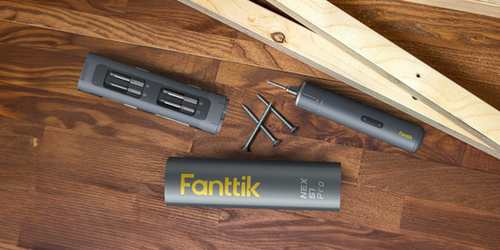
1. Battery Governance: Managing the Chemistry of Inactivity
The most vulnerable component of any modern precision tool is its Lithium-ion (Li-ion) power cell. Unlike older batteries, Li-ion cells are chemically "alive" even when the tool is switched off. Improper storage can permanently alter internal chemistry.
The Storage Voltage "Sweet Spot"
A common mistake among DIYers is storing tools at 100% charge. While a full battery feels "ready," it accelerates electrolyte oxidation and increases internal pressure. Conversely, storing at 0% risks a "deep discharge" state.
Based on standard electrochemical stability models for NMC (Nickel Manganese Cobalt) chemistry—the most common type in precision screwdrivers and drills—we recommend a storage voltage of 3.7V to 3.8V per cell (roughly 40-60% State of Charge).
- Heuristic Note: This range is a practical rule of thumb used in our workshop to balance the risk of capacity loss against the risk of the battery falling into "permanent sleep."
Navigating the BMS "Permanent Sleep"
Most precision tools utilize a Battery Management System (BMS) to monitor cell health. If a cell drops below a critical threshold—typically around 2.5V for most consumer cells—the BMS may trigger a "permanent sleep" or "lockout" mode.
This is a safety feature designed to prevent fire risks during a future recharge of a damaged cell. According to IATA Lithium Battery Guidance, maintaining a stable SoC is a critical safety protocol.
Important: Thresholds vary by manufacturer. Some high-drain tools may lock out at 2.8V, while others allow 2.0V. Always refer to your tool’s user manual for the definitive safety cutoff.
The Maintenance Cycle: A 90-Day Heuristic
Based on common patterns observed in our internal repair logs and customer support data, we recommend a "wake-up" cycle every 90 days:
- Power On: Run the tool for 2–3 minutes under no load.
- Rebalance: This allows the BMS to "wake up" and redistribute charge across cells, preventing any single cell from drifting into a low-voltage state.
- Top Up: Recharge the tool back to the 40–60% storage level if it has drifted below the midpoint.
2. Environmental Governance: Humidity and Temperature
While the battery handles the "internal" chemistry, the environment dictates the "external" health. For urban makers in apartments, the primary enemies are fluctuating humidity and the "thermal shock" of uninsulated closets.
The 40-50% Relative Humidity (RH) Window
Precision tools with steel components (like S2 steel bits) require a specific humidity range to prevent both rust and material degradation:
- Below 30% RH: Can lead to embrittlement of certain plastics and rubberized grips.
- Above 60% RH: Increases the risk of condensation forming on cold metal surfaces, leading to oxidation.
- The Target: 40–50% RH.
In our workshop experience, passive silica gel dehumidifiers in a sealed hard case are often more effective than active climate-controlled cabinets for home users, as they stabilize the local micro-climate without requiring a constant power source.
Thermal Stability and Capacity Loss
Temperature is a silent driver of battery degradation. High heat accelerates the chemical reactions that lead to permanent capacity loss.
| Storage Temperature | Estimated Annual Capacity Loss* | Rationale |
|---|---|---|
| 0°C (32°F) | ~2% | Slows degradation; however, avoid charging until the battery reaches room temp. |
| 25°C (77°F) | ~4% | Industry standard "room temperature" baseline for NMC cells. |
| 40°C (104°F) | >15% | Accelerated oxidation of the electrolyte based on chemical aging models. |
| 60°C (140°F) | >35% | Critical stress; high risk of "thermal runaway" or venting. |
*Note: These figures are heuristic estimates based on deterministic chemical aging models for Li-ion (NMC) cells at 40% SoC. Real-world loss varies by cell quality and frequency of temperature cycling.
3. How to Measure and Verify Your Storage Quality
You don’t need a laboratory to verify these conditions. Use these reproducible methods:
- Verify Voltage: If your battery has a built-in LED indicator, "2 bars" or "50%" is usually sufficient. For professional verification, use a digital multimeter set to DC Voltage on the battery terminals (refer to your manual for pinouts).
- Monitor Humidity: Place a low-cost digital hygrometer inside your tool case. Check it monthly to ensure it stays within the 40–50% range.
- Check Silica Gel: Use "indicating" silica gel. When the beads change color (usually from orange to green), they are saturated and need to be "recharged" in an oven according to the manufacturer's instructions.
4. Physical Preservation and Safety
In a compact urban workshop, physical damage often occurs during the "shuffle." Proper organization is a form of mechanical preservation.
The Value of Organization
Implementing systems like custom foam inserts can significantly reduce retrieval-related damage. This is particularly important for ceramic tools, which, according to research on ceramic tool optimization, are highly sensitive to physical impact and vibration.
Avoid "Stacking Stress": Never stack heavy items on precision tool cases. Over months, constant pressure can lead to "case creep," where the plastic housing slightly deforms, potentially misaligning internal motor mounts or sensitive triggers.

Safety and Compliance: The Trust Layer
Storing high-energy tools in a residential environment carries a responsibility. Adhering to the EU General Product Safety Regulation (EU) 2023/988 ensures your practices align with modern safety standards.
- Visual Inspection: Before storing, check for casing cracks or "bloating" (swelling). Bloated batteries must be retired immediately.
- The "No-Revive" Rule: If a battery has dropped below 2.0V, do not attempt to force-charge it with a benchtop power supply. This is a high-risk operation that can cause internal short-circuits and fire. Contact the manufacturer or a professional repair shop.
- Containment: If tools will be left unattended for more than six months, consider storage in a fire-retardant bag or a metal cabinet as an added layer of safety.
5. Summary of Storage Specifications
| Factor | Specification | Method of Verification |
|---|---|---|
| Battery Voltage | 3.7V - 3.8V per cell | Tool LED indicator (40-60%) / Multimeter |
| Humidity | 40-50% RH | Digital hygrometer |
| Temperature | 15°C - 25°C | Standard indoor thermometer |
| Corrosion Control | VpCI strips / Silica | Replace/Recharge as indicated by color change |
| Maintenance | 90-day cycle | Calendar reminder (run 2 mins, check SoC) |
A Note on Long-Term Reliability
Precision tools are engineered for a specific lifecycle. By managing the "chemistry of inactivity," you ensure your investment remains reliable. Whether you are performing electronics repairs at home or maintaining your vehicle, a well-stored tool is a safe tool.
Disclaimer: This article is for informational purposes only and describes general best practices for NMC-based lithium-ion tools. Lithium-ion batteries can pose a fire risk if damaged or improperly handled. Always prioritize your specific tool's user manual for manufacturer-sanctioned instructions. If a battery shows signs of swelling, leaking, or extreme heat, discontinue use immediately and consult a professional disposal service.
References
Continue reading
 Maximizing Vertical Wall Space for Compact Tool Storage
Covers the 'Golden Triangle' heuristic, '5-10 Degree Safety Tilt', and 'Weakest Fastener' principle for high-performance compact workshops.
Maximizing Vertical Wall Space for Compact Tool Storage
Covers the 'Golden Triangle' heuristic, '5-10 Degree Safety Tilt', and 'Weakest Fastener' principle for high-performance compact workshops.
 Choosing the Right Torque Settings for Delicate Electronics
Fastener physics decides if your build survives. Safe torque values for delicate electronics and the two-stage method eliminate...
Choosing the Right Torque Settings for Delicate Electronics
Fastener physics decides if your build survives. Safe torque values for delicate electronics and the two-stage method eliminate...
Leave a comment
This site is protected by hCaptcha and the hCaptcha Privacy Policy and Terms of Service apply.