































The Hidden Lifecycle: Defining Environmental End-of-Life (EOL)
Quick Answer: For most DIY tools, the "Environmental End-of-Life" (EOL) occurs when battery runtime drops below 60–70% of its original capacity or when voltage sag causes frequent stalling during precision tasks. At this stage, the energy wasted as heat and the risk of cell instability often outweigh the benefits of continued use.
Disclosure: This guide is authored by the Fanttik engineering team. Data points are derived from our internal workshop testing, customer support observations, and the performance benchmarks established in our 2026 Modern Essential Gear Industry Report.
Deciding when to retire a tool is a critical intersection of performance, safety, and environmental ethics. Retiring a tool too early is wasteful; retiring it too late can lead to "mid-task stalls" that risk ruining expensive workpieces or, in rare cases, pose thermal hazards. This guide provides a methodical framework for determining when your cordless tools have reached their functional finish line.
The 60% Heuristic: Identifying Capacity Loss
The most common failure point in modern DIY tools is the lithium-ion battery. Unlike mechanical components, a battery’s "heart" degrades chemically. Experienced makers often observe that a battery's practical EOL arrives long before the tool stops turning entirely.
The Runtime Threshold
A reliable heuristic used on our repair benches is the 60-70% Rule. We recommend considering retirement when the runtime under a typical load drops below this threshold.
- Internal Resistance: Beyond the 60% point, internal resistance typically increases. This can cause the battery to generate more heat during use, which may accelerate degradation.
-
The Productivity Gap (Example): In our scenario modeling for high-capacity packs, a 12Ah battery at 60% capacity might deliver roughly 324 high-torque operations, compared to the 540 operations it could perform when new.
- Calculation Basis: This model assumes a standard 20Wh load per operation with a 10% safety buffer; actual results vary based on motor efficiency and material density.
Voltage Sag and Precision Failure Modes
While capacity loss is easy to track, voltage sag is a more subtle indicator of EOL. This occurs when an aging battery cannot maintain its rated voltage under a heavy load.
High-Torque Stalling
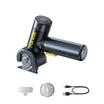
For high-torque applications—such as using the Fanttik K2 Nano 3.7V Precision Power Drill on dense materials—even a 20% voltage sag can cause the motor to stall.
In our workshop testing, we have observed that mid-task stalls can be more than an annoyance. If a drill stalls while driving a screw into hardwood like maple, the sudden stop can snap the fastener or strip the head. While a robust Battery Management System (BMS) can mitigate some risks, it cannot fully compensate for a chemically exhausted cell.
Inconsistent Output in Precision Tasks
For precision tools like the Fanttik T1 Max Soldering Iron Kit or the Fanttik F2 Master Cordless Rotary Tool Kit, look for these indicators:
- Fluctuating Temperatures: Can lead to "cold" solder joints, which are often structurally weak.
- Inconsistent RPMs: During engraving, this can cause the bit to "jump," potentially affecting the aesthetic finish.
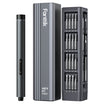
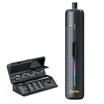
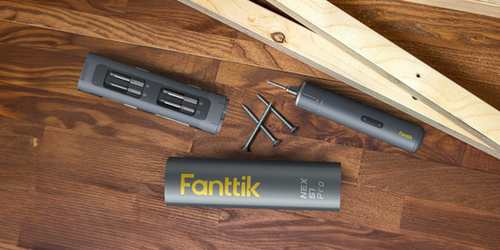
If your Fanttik E1 MAX Precision Electric Screwdriver struggles to maintain speed even on a full charge, the battery has likely reached its EOL for precision-critical work.
Modeling Performance in Extreme Environments
Environmental factors, specifically extreme cold, can dramatically shift the EOL timeline. We modeled a scenario to understand how a degraded battery behaves in an unheated garage during winter.
Illustrative Scenario: The Winter Power Gap
In temperatures as low as -20°F, chemical activity slows significantly. A battery that performs "acceptably" in 70°F weather may struggle in the cold due to increased internal resistance.
| Parameter | Illustrative Value | Unit | Rationale |
|---|---|---|---|
| Ambient Temperature | -20 | °F | Representative extreme winter garage conditions |
| Modeled Peak Current | ~427 | A | Potential surge requirement for high-load 18V/20V systems |
| Degraded Battery Output | ~200 | A | Estimated output of a battery at 60% EOL in cold |
| Modeled Power Gap | 227 | A | Deficit that can lead to tool stalling |
Methodology Note: These figures are based on deterministic modeling using SAE J537 and BCI temperature derating standards for high-drain lithium-ion chemistry. They represent a "worst-case" surge scenario for heavy-duty tools; smaller precision tools will have lower absolute values but follow the same proportional deficit.
For makers in these climates, we suggest a Seasonal Retirement Schedule. It is often more predictable to retire aging batteries in the autumn to avoid mid-project failures during winter builds. This is a key part of Managing Tool Battery Health in Unheated Winter Garages.
The Ethics of Retirement: Environmental Impact
The maker culture often balances "repair until it dies" with "replace for efficiency." However, the environmental EOL is largely dominated by the management of toxic battery waste.
Embodied Carbon vs. Operational Efficiency
Every tool has "embodied carbon"—the energy used to mine, manufacture, and ship it. A new tool should ideally be used long enough to "pay back" its embodied carbon through energy efficiency. However, an aging battery that requires frequent charging and generates excessive waste heat is significantly less efficient. According to the EU General Product Safety Regulation (EU) 2023/988, ensuring product safety and traceability is a legal obligation that aligns with these environmental goals.
The "Cascading Use" Model
A battery no longer fit for the high-torque demands of a Fanttik K2 Nano might still provide service in a low-draw application, such as a small LED shop light. This "cascading use" can delay the final disposal of the battery while maintaining workshop safety.
The Professional Retirement Protocol
Once you determine a tool or battery has reached its EOL, follow this protocol for safety and compliance.
1. The Discharge Phase
Discharging the battery minimizes fire risk during transport.
- The Target: Use the tool or a dedicated discharger to bring the battery to a "safe" voltage (typically 2.5V to 3.0V per cell, or as specified by the manufacturer).
- Terminal Safety: After discharging, cover the terminals with non-conductive electrical tape to prevent accidental short-circuits.
2. Storage for Disposal
If you cannot recycle the battery immediately, store it in a cool, dry place at a partial charge (around 40-60%). This helps maintain chemical stability. See our guide on Protecting Workshop Batteries from Summer Heat for more storage tips.
3. Compliance and Recycling
Lithium-ion batteries should not be placed in household trash. They are classified as hazardous waste.
- Shipping: Adhere to IATA Lithium Battery Guidance regarding State of Charge (SoC) limits and packing instructions if mailing for recycling.
- US Guidelines: Refer to the FTC Endorsement Guides for clarity on environmental claims.
Summary of Retirement Indicators
| Symptom | Primary Impact | Recommended Action |
|---|---|---|
| <60% Runtime | Frequent charging; heat buildup. | Retire or repurpose for low-draw use. |
| Visible Voltage Sag | Stalling in high-torque tasks. | Retire from heavy-duty applications. |
| Heat During Idle | Internal short-circuit risk. | Immediate safe disposal. |
| Inconsistent RPM | Poor finish on precision work. | Retire from precision tasks. |
| Physical Swelling | High risk of leakage or fire. | Immediate safe disposal. |
Engineering Trust Through Responsible Ownership
Determining the EOL for your tools is a hallmark of a professional maker. It demonstrates a commitment to precision and respect for the environment. By moving away from a "use it until it smokes" mentality, you protect your projects and your workshop.
At Fanttik, we believe that predictable, safe performance is the foundation of trust. Whether you are using the Fanttik E1 MAX for electronics or the Fanttik F2 Master for a custom carve, knowing when to say goodbye to a battery is just as important as knowing how to use the tool itself.
Disclaimer: This article is for informational purposes only and does not constitute professional legal, safety, or environmental advice. Lithium-ion batteries pose a fire and chemical risk if mishandled. Always consult local regulations and the manufacturer's specific safety documentation before disposing of electronic waste.


Leave a comment
This site is protected by hCaptcha and the hCaptcha Privacy Policy and Terms of Service apply.