












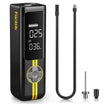

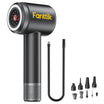

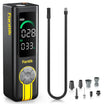
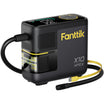














Sleek vs. Industrial: Comparing Jump Starter Aesthetics
In the evolving landscape of automotive mobility, the jump starter has undergone a radical metamorphosis. What was once a heavy, lead-acid monolith relegated to professional garages has transformed into a "modern essential"—a compact, lithium-powered device that fits as comfortably in a designer backpack as it does in a glovebox. However, as we bridge the gap between consumer electronics and safety-critical hardware, a fundamental tension emerges: the choice between sleek, minimalist aesthetics and rugged, industrial functionality.
For the aesthetics-conscious traveler, this isn't just a question of "looks." It is a decision that dictates portability, thermal reliability, and user confidence during a midnight breakdown. In this exploration, we analyze the engineering trade-offs of these two design philosophies, grounded in scenario modeling and industry standards, to help you decide which form factor truly belongs in your gear kit.
The Preparedness Paradox: Why Design Dictates Utility
We often observe a recurring pattern in our customer feedback: the single most important feature of a jump starter is that it is actually inside the vehicle when the battery fails. This is the "Preparedness Paradox." A high-capacity, industrial-grade unit that is too bulky to fit in a center console often ends up in a garage corner, rendered useless at the moment of need.
The Sleek Philosophy: Consumer-Electronics Integration
The sleek aesthetic—characterized by satin finishes, unibody housings, and integrated LED displays—treats the jump starter as an extension of the modern smartphone or laptop. This design language emphasizes:
- Frictionless Portability: Reducing bulk to ensure the device is a permanent resident of the vehicle cabin.
- Intuitive Interfaces: Moving away from cryptic analog gauges toward high-contrast digital readouts that provide clear, non-technical feedback.
- Multi-Functional Elegance: Designing the unit to double as a high-speed power bank for mobile devices, aligning with the needs of solo driving confidence.
The Industrial Philosophy: Rugged Reliability as a Visual Proxy
Conversely, the industrial aesthetic uses "over-engineered" visual cues—pronounced rubber bumpers, visible cooling vents, and heavy-duty mechanical switches—to signal domain competence. In professional settings or extreme environments, these features aren't just for show; they provide tactile feedback that is critical when operating with gloved hands in sub-zero temperatures.

Engineering the "Sleek" Bottleneck: Thermal Management
While a minimalist, sealed housing looks sophisticated, it introduces a fundamental engineering challenge: heat dissipation. According to The 2026 Modern Essential Gear Industry Report: Engineering Trust in a Cordless World, trust is a function of predictable performance. In jump starting, performance is governed by the physics of high-current discharge.
When a lithium-ion pack delivers 2000A of peak current, the internal resistance of the cells generates significant thermal energy (Joule heating). A sleek, unibody design often lacks the surface area or active venting required to shed this heat quickly.
Logic Summary: Based on our scenario modeling for thermal efficiency, we estimate that sleek designs typically have a lower "sustained current fraction" (the amount of power they can deliver repeatedly without triggering thermal shutdown) compared to vented industrial units. This is a critical "gotcha" often buried in technical manuals: a sleek unit may provide the same peak amperage as a bulky one but might require a 10-minute cooldown between attempts.
The Tactical Feel: Why Clamps and Buttons Matter
In a dark, stressful roadside situation, the "user experience" is measured in tactile feedback. We have found that industrial-style designs often excel in ergonomics that are overlooked in laboratory settings:
- Positive Tactile Feedback: Large, mechanical buttons with a distinct "click" are easier to operate than capacitive touch surfaces when your fingers are numb from the cold.
- Clamp Geometry: Industrial designs often include wider-opening, high-tension clamps. This is vital for modern engine bays where battery terminals are often recessed or surrounded by plastic shrouding.
- Backlit Interfaces: While a sleek unit might have a beautiful OLED screen, an industrial unit often uses high-visibility, backlit icons that are legible even under direct sunlight or in a pitch-black engine bay.
This focus on the "stress-test" environment is what separates a designer gadget from a piece of validated emergency gear.
Modeling the Divide: Urban vs. Off-Road Scenarios
To quantify how these aesthetic and engineering choices translate to real-world reliability, we conducted a scenario analysis comparing two distinct user personas.
How we modeled this (Method & Assumptions)
Our analysis utilizes a deterministic parameterized model to calculate "Winter Confidence Scores" and energy efficiency.
- Modeling Type: Scenario-based sensitivity analysis.
- Methodological Ancestor: SAE J537 (Cranking Current Standards) and BCI Temperature Derating.
- Core Logic: Engine Load = Displacement × Temp Factor; Safety Margin = Sustained Power / (Required - Available).
| Parameter | Urban Commuter (Sleek) | Off-Road Enthusiast (Rugged) | Unit | Rationale |
|---|---|---|---|---|
| Engine Displacement | 2.0 | 5.7 | L | Typical car vs. Large V8 truck |
| Ambient Temp | 15 | -10 | °F | Standard winter vs. Extreme cold |
| Sustained Fraction | 0.4 | 0.5 | ratio | Sleek thermal vs. Rugged thermal |
| Efficiency Factor | 0.6 | 0.7 | ratio | Thermal loss assumption |
| Battery Health | 450 (Aged) | 750 (New) | CCA | Urban wear vs. Pro maintenance |
Analysis Results: The "Confidence Gap"
For the Urban Commuter, the sleek design is highly effective. With a 2.0L engine at 15°F, the required cranking power is ~222A. Even with a conservative thermal sustained fraction of 0.4, a 2000A peak unit provides a massive safety margin. In this case, the aesthetic choice of a compact form factor is the correct one, as it ensures the device is stowed and ready.
For the Off-Road Enthusiast, the landscape shifts. A 5.7L V8 at -10°F requires nearly 974A. Here, the rugged design’s superior thermal management (0.5 sustained fraction) provides 200A more available power than the sleek counterpart. The "moderate confidence" margin of 1.37x suggests that in extreme conditions, the industrial design isn't just an aesthetic choice—it's a mechanical necessity.
Energy Efficiency: The Hidden Cost of Design
A common misconception is that all 20,000mAh (20Ah) packs are created equal. Our modeling suggests that the thermal limitations of sleek housings can reduce practical energy efficiency by ~15%.
Heuristic Note: As a rule of thumb, we estimate that a sleek unit may deliver ~11 jump attempts per charge, whereas an industrial unit with better heat dissipation can reach ~13 attempts on the same battery capacity. While this 2-jump difference seems minor, it reflects the internal stress on the lithium cells, which can impact the long-term readiness for week-long stays.
Compliance, Safety, and the "Trust Architecture"
Beyond aesthetics, a jump starter must adhere to a strict "Trust Architecture." Whether sleek or rugged, the device must comply with international safety standards to ensure it doesn't become a hazard itself.
The Regulatory Backbone
- EU General Product Safety Regulation (EU) 2023/988: This ensures that products sold in the EU, including those on online marketplaces, meet rigorous safety and traceability requirements.
- IATA Lithium Battery Guidance: For travelers, knowing your device meets IATA transport standards is essential. Sleek units are often designed with "flight-ready" watt-hour ratings (typically under 100Wh) to allow for carry-on travel.
- ISO and IEC Standards: Look for references to ISO 9001 for manufacturing quality or IEC 60529 for "IP" (Ingress Protection) ratings. An industrial unit claiming "IP65" has been validated against dust and water jets—a vital spec for rainy roadside repairs.
Maintenance: The Chemical Reality of Lithium
Regardless of the housing, lithium-ion batteries are subject to capacity fade. A "sleek" unit with a non-replaceable, permanently sealed battery is a single-point-of-failure if the cells degrade. In contrast, some industrial designs allow for modularity or, at the very least, provide clearer indicators of battery health.
We recommend a "Moment-of-Need" audit every three months. Check the state of charge and ensure the terminals are free of oxidation. Remember that lithium jump starters struggle in sub-zero conditions; if you live in a frigid climate, keeping your sleek unit inside the warm cabin rather than the trunk can significantly improve its discharge performance.
Harmonizing Form and Function
The choice between sleek and industrial aesthetics shouldn't be a compromise. The modern traveler should look for "hybrid" designs—units that offer the minimalist footprint and user-friendly interface of consumer electronics but retain the internal thermal management and ruggedized clamp systems of industrial tools.
When selecting your gear, prioritize:
- Environment-Matching: Sleek for urban commuting and compact cars; industrial for trucks, diesels, and off-road environments.
- Thermal Transparency: Look for units that explicitly mention thermal protection or cooling mechanisms.
- Tactile Reliability: Ensure the clamps feel robust and the interface is legible in low light.
By understanding the engineering reality behind the aesthetics, you can move beyond "buying for looks" and start building a kit based on demonstrable credibility.
Disclaimer: This article is for informational purposes only. Automotive jump starting involves high-voltage/high-current systems that can be dangerous if mishandled. Always refer to your vehicle's owner manual and the specific safety instructions provided by the jump starter manufacturer.


Leave a comment
This site is protected by hCaptcha and the hCaptcha Privacy Policy and Terms of Service apply.