




























The Hidden Friction of Emergency Preparedness
We’ve all been there: the trunk is packed to the brim for a long-weekend getaway, the cooler is wedged in tight, and the kids' gear is layered like a game of Tetris. Then, the unthinkable happens. You left the dome light on, or the cold snap overnight drained your aging battery. You reach for your portable jump starter, only to realize it’s buried under four layers of luggage and a heavy tent.
In our experience assisting drivers through these exact scenarios, the frustration isn't just the dead battery—it’s the "friction" of the recovery process. A tool you can't reach is a tool you don't have. Beyond simple convenience, how you stow your gear is a critical safety decision. A loose 3-pound jump starter isn't just an organizer's nightmare; in a sudden stop, it's a high-velocity projectile.
This guide moves beyond basic "keep it in the trunk" advice. We are going to explore the engineering of accessibility, the physics of vehicle safety, and the chemistry of battery longevity. Our goal is to help you build a "Two-Second" readiness system that maximizes your cargo room without compromising your safety or your gear's lifespan.
The Safety Stakes: Why "Loose" is Dangerous
One of the most common mistakes we see in customer feedback and roadside reports is storing a jump starter loose in the main cargo area or on a rear parcel shelf. While these units are compact, they possess significant mass.
The Projectile Hazard
Based on basic kinetic energy modeling, a typical high-capacity jump starter weighing approximately 1.5 kg (3.3 lbs) can exert over 100 kg of force in a 30 mph collision. If that unit is sitting unsecured on your backseat or at the top of a luggage pile, it becomes a lethal hazard to passengers.
According to the EU General Product Safety Regulation (EU) 2023/988, manufacturers and users alike must prioritize the safe integration of products into their intended environments. In a vehicle, "safe integration" means securement.
The Pedal Jam Risk
For those who prefer keeping gear under the driver or passenger seat, there is a hidden failure mode. During heavy braking, an unsecured container can slide forward. If it wedges under the brake pedal, the result is catastrophic. We always recommend that any gear stored in the cabin must be physically tethered or placed in a dedicated, enclosed compartment.
Modeling Note: Projectile Force Estimates This table illustrates the estimated impact force of a standard portable jump starter in various collision scenarios. This is a deterministic model based on standard deceleration rates (not a controlled crash test).
Parameter Value Unit Rationale Device Mass 1.5 kg Average weight of a 2000A+ jump starter Collision Speed 48 (30) km/h (mph) Standard urban collision benchmark Deceleration Distance 0.1 m Estimated vehicle crumple zone/stop distance Peak Impact Force ~1,350 Newtons Calculated via F = ma Equivalent Weight ~137 kg The "perceived" weight on impact Boundary Conditions: This model assumes a rigid impact and does not account for the energy absorption of seat foam or soft luggage.
The Two-Second Rule: Tiered Accessibility
In the world of professional roadside assistance, there is a heuristic we call the Two-Second Rule. Your primary emergency gear—specifically your jump starter and tire inflator—should be reachable and deployable within two seconds of opening your designated storage spot. You should not have to move a single bag of groceries or a suitcase to reach it.
To achieve this in a crowded vehicle, we suggest a tiered storage hierarchy:
Tier 1: Immediate Reach (Daily Driving)
For your daily commute, the jump starter should live in a side cubby, a seat-back pocket (if weight-rated), or a dedicated under-floor compartment that isn't covered by a heavy rubber mat. If your vehicle has a "frunk" (front trunk), this is often the gold standard for accessibility.
Tier 2: The "Planned Trip" Pivot
When the trunk is full of vacation gear, Tier 1 often becomes inaccessible. This is where most drivers fail. Before you load the first suitcase, move your jump starter to a Multi-Point Attachment System.
Experienced overlanders often use a Velcro strap looped around a seat rail or a dedicated Molle panel mounted to the side of the cargo area. This keeps the unit high and visible, even when the floor is covered.
Tier 3: Long-Term/Seasonal Storage
If you are carrying a backup unit or storing gear for the off-season, Tier 3 storage (like the spare tire well) is acceptable. However, accessibility is traded for protection.

Thermal Management and Battery Longevity
A portable jump starter is a chemical engine. Specifically, it’s usually a Lithium-ion or LiFePO4 (Lithium Iron Phosphate) battery. How you stow it directly impacts how many years of service it will give you.
The 50-80% Rule
A critical, often overlooked insight from our technical bench is the "Storage State of Charge." Most people charge their units to 100% and leave them in a hot car for six months. This is a recipe for battery degradation.
High cabin temperatures (which can exceed 140°F in summer) accelerate the chemical breakdown of lithium cells. Storing a battery at 100% charge in these conditions increases internal stress. We recommend keeping the unit between 50% and 80% charge for long-term vehicle storage. This provides enough "juice" for multiple jumps while preserving the health of the cells.
Ventilation vs. Waterproofing
While it’s tempting to seal your jump starter in a waterproof plastic bin, lithium batteries require thermal management. Sealing a unit in a non-breathable container in a hot car can lead to heat buildup.
According to IATA Lithium Battery Guidance, temperature control is the most significant factor in preventing thermal runaway. We suggest a semi-rigid, padded case with mesh ventilation or simply securing the unit in a spot with natural air circulation, like under a seat (provided it is anchored).
Seasonal Maintenance: The Winter Prep
Cold weather doesn't just drain your car battery; it can also lead to corrosion on your jump starter's alligator clips. Road salt and moisture can create a high-resistance layer on the copper teeth.
Expert Tip: Apply a light coating of dielectric grease to the metal contact points of your clamps and store them in a separate, sealed bag within your main kit. This prevents the "crunchy" corrosion that causes jump-starting failure in mid-winter.
Engineering the Stowage Space: Practical Solutions
Maximizing cargo room isn't just about finding a hole; it's about creating a system. Here are three methods we've tested that balance space and safety.
1. The Under-Floor "Sub-Trunk"
Many modern vehicles feature hidden compartments under the trunk floor. While excellent for space-saving, ensure your jump starter is secured within this space. A loose unit rattling against the jack or spare tire tools can damage the casing or accidentally depress the "on" button. Use foam inserts or adhesive-backed Velcro to "lock" the unit in place.
2. Side-Wall Molle Panels
For SUVs and hatchbacks, the side walls are often underutilized. Installing a small Molle (Modular Lightweight Load-carrying Equipment) panel allows you to strap the jump starter vertically. This keeps the floor 100% clear for luggage while keeping the gear at eye level.
3. The "Jump Pouch" Method
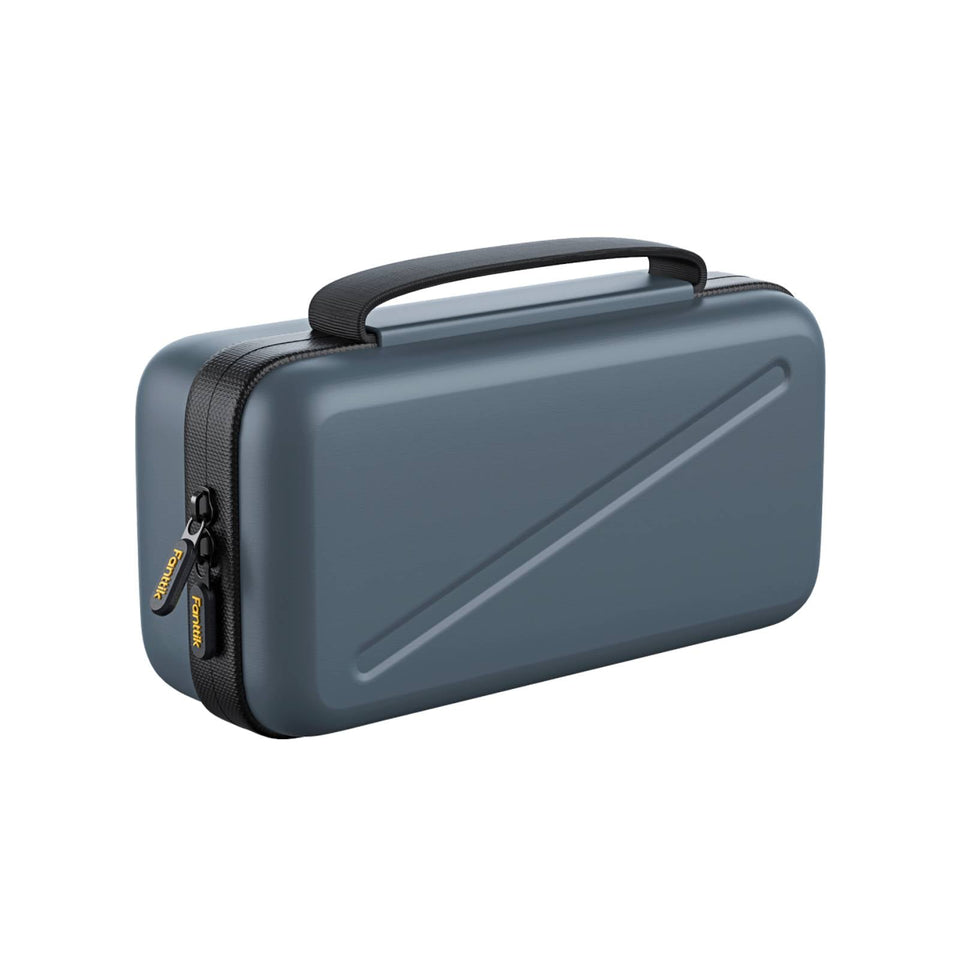
Instead of the bulky plastic briefcase many units come in, switch to a labeled, high-visibility soft pouch. This reduces the "footprint" of the gear by up to 30%, making it easier to tuck into side cubbies. Ensure the pouch has a heavy-duty carabiner or strap to secure it to the vehicle's factory tie-down points.
Logic Summary: Our recommendation for vertical mounting (Molle/Side-wall) is based on the principle of "Zero-Floor-Impact" organization, which we've observed reduces the likelihood of users leaving gear at home to save space.
Scenario Modeling: Compact Sedan vs. Full-Size SUV
The "best" stowage spot changes based on your vehicle's geometry. We modeled two common scenarios to show how the "Two-Second Rule" applies.
Scenario A: The Compact Commuter (Limited Space)
- The Challenge: No side cubbies, small trunk, often carries groceries.
- The Solution: The "Front-of-Seat" anchor. Use a small, padded bag secured to the front base of the passenger seat. It’s out of the way of the passenger's feet but reachable by the driver in seconds.
- Risk Mitigation: Ensure the bag is tethered to the seat frame to prevent it from sliding under the pedals during hard braking.
Scenario B: The Family SUV (High Volume)
- The Challenge: Deep trunk, gear gets buried under strollers or sports equipment.
- The Solution: The "D-Pillar" mount. Most SUVs have tie-down D-rings near the tailgate. Use a heavy-duty cinch strap to fix the jump starter to the D-ring on the driver's side.
- Benefit: Even with a full load of camping gear, you can reach in and unclip the unit without moving a single item.
Building Trust Through Preparedness
At the end of the day, your vehicle's emergency kit is a reflection of your self-reliance. As highlighted in The 2026 Modern Essential Gear Industry Report, the transition to a cordless world requires us to be more diligent about how we maintain and store our tech. Trust isn't just built by the manufacturer; it’s maintained by the user through proper care and strategic organization.
By moving away from "buried and forgotten" storage and toward a "Two-Second" secured system, you aren't just saving space—you're ensuring that when the moment of need arrives, you are ready to act without hesitation.
Quick Checklist for Your Next Trip:
- Securement: Is the unit tethered to a fixed point in the vehicle?
- Accessibility: Can I reach it without moving other bags?
- Charge Level: Is it between 50% and 80% (or at least above 50%)?
- Maintenance: Are the cables free of corrosion and stored in a bag?
- Thermal: Is the unit away from direct sunlight or unventilated "hot zones"?
References & Authority
- EU General Product Safety Regulation (EU) 2023/988
- IATA Lithium Battery Shipping & Handling Guidance
- The 2026 Modern Essential Gear Industry Report
- SAE International Standards for Automotive Electronics
Disclaimer: This article is for informational purposes only and does not constitute professional mechanical, legal, or safety advice. Always refer to your vehicle’s owner manual and the specific safety instructions provided by your gear manufacturer. Lithium batteries carry inherent risks of fire or explosion if damaged or improperly stored. If you notice swelling, leaking, or extreme heat from your device, discontinue use immediately and consult a professional.
Related Reading
Continue reading
 Evaluating Material Durability in Design-Forward DIY Tools
A technical guide for evaluating material durability in modern DIY tools, covering material science and engineering for long-term...
Evaluating Material Durability in Design-Forward DIY Tools
A technical guide for evaluating material durability in modern DIY tools, covering material science and engineering for long-term...
 Diagnosing Motor Lag After Peak Summer Heat Exposure
A guide to diagnosing and fixing motor lag in DIY tools caused by summer heat. Covers lubricant thinning,...
Diagnosing Motor Lag After Peak Summer Heat Exposure
A guide to diagnosing and fixing motor lag in DIY tools caused by summer heat. Covers lubricant thinning,...
Leave a comment
This site is protected by hCaptcha and the hCaptcha Privacy Policy and Terms of Service apply.