




























The Winter Reliability Crisis: Why Your Gear Fails When You Need It Most
We have all been there. It is a biting Tuesday morning, the kind where the air feels like needles against your skin and the frost has turned your windshield into a sheet of opaque lace. You realize your tire looks a bit low—a common side effect of plunging temperatures—and you reach for your portable inflator. You press the power button, expecting the reassuring hum of readiness, but instead, you get a flickering screen or, worse, nothing at all.
In our years of analyzing field data and handling customer support inquiries, we have observed a recurring pattern: winter is not just hard on your car’s engine; it is an invisible thief that siphons the life out of your portable technology. Whether it is a tire inflator, a handheld vacuum, or a precision screwdriver kept in the glovebox for quick repairs, extreme cold acts as a catalyst for chemical and mechanical degradation.
This guide is designed to move you beyond "hoping for the best." We are going to dive into the "credibility math" of winter storage—explaining why batteries fail, where the true "danger zones" are in your vehicle, and how you can engineer a storage strategy that ensures your tools are as resilient as you are.
The Science of the Shiver: Operating vs. Storage Temperatures
One of the most common misconceptions we encounter is the belief that if a tool is rated to operate down to -10°C (14°F), it is perfectly safe to store it at that temperature indefinitely. This is a dangerous oversimplification.
Based on our analysis of lithium-ion battery behavior and typical automotive storage scenarios, there is a significant distinction between an active state and a dormant state. When a tool is running, internal resistance generates a small amount of heat, which can slightly buffer the cells against the ambient cold. However, when that tool sits idle in a frozen trunk for three weeks, it is subject to a phenomenon known as "capacity fade."
Logic Summary: Our storage risk model assumes a standard 18650 or 21700 lithium-ion cell configuration. We define "capacity fade" as the permanent loss of energy density caused by electrolyte thickening and increased internal resistance during prolonged sub-freezing exposure.
The 15-20% Performance Gap
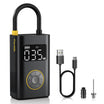
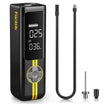
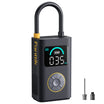
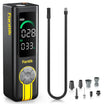
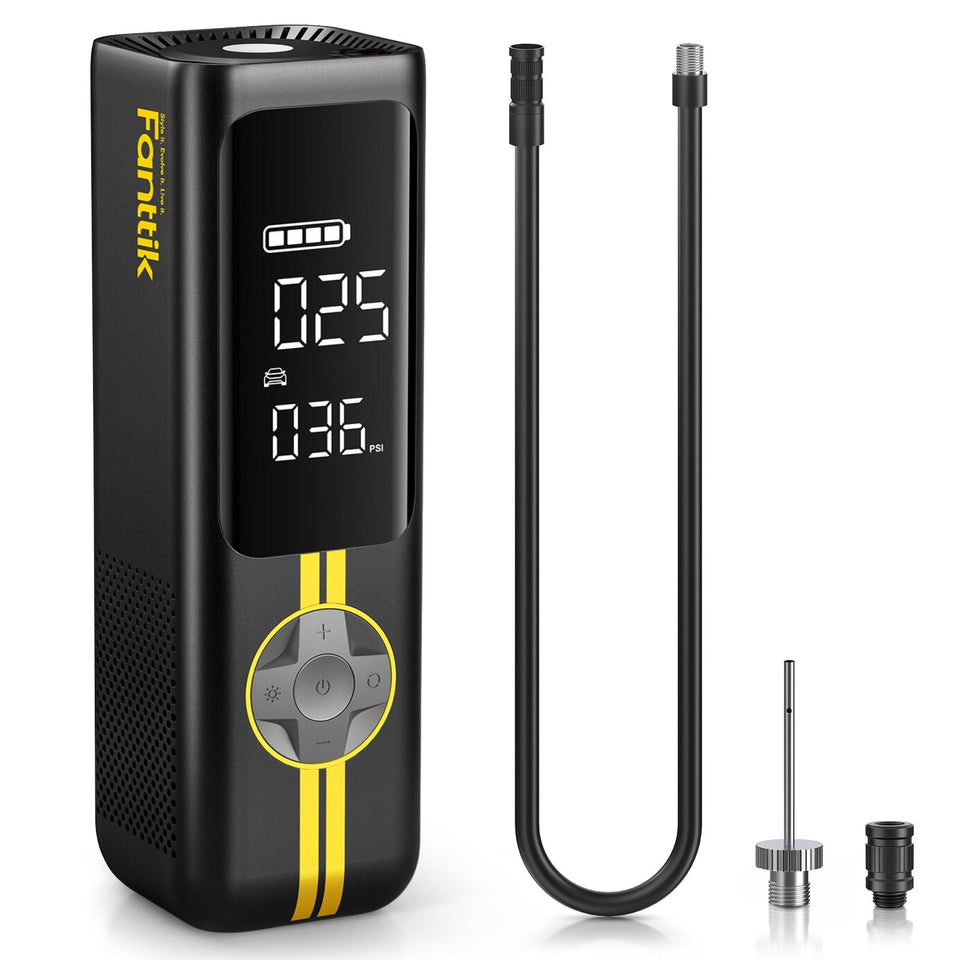
Practitioners in the field note that a battery stored at -10°C for a month can lose 15-20% more capacity than one stored at a stable 10°C (50°F). This isn't just a temporary dip in power; it can lead to accelerated chemical aging of the battery. If you are relying on a tool like the Fanttik X9 Pro Portable Tire Inflator to get you out of a roadside jam, that 20% margin could be the difference between reaching full pressure and being left stranded.
| Parameter | Operating Range | Safe Storage Range | Long-Term Risk (at -10°C) |
|---|---|---|---|
| Temperature | -10°C to 45°C | 10°C to 25°C | High Capacity Fade |
| Humidity | 20% - 85% | < 50% (Dry) | Internal Corrosion |
| Charge Level | 20% - 100% | 40% - 60% | Deep Discharge |
| Cell Stress | High (during use) | Low (if climate-controlled) | Electrolyte Sluggishness |
| Recovery Time | Immediate | 2-4 Hours (Thaw) | Potential Lithium Plating |
Mapping the Car’s Interior: Microclimates and Danger Zones
A cold car interior is not a uniform environment. Strategic placement of your gadgets can create microclimates that significantly impact the rate of battery drain. According to research on Cold Temperature Effects on Batteries, the rate of chemical reactions inside a battery slows down as temperatures drop, but the physical location of the tool determines how fast it reaches that critical low point.
The Radiant Cooling Trap
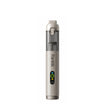
The real danger zone inside a car is near metal surfaces or glass. Radiant cooling can create localized spots that are 5-10 degrees colder than the cabin air temperature. If you leave your Fanttik Slim V8 Apex Car Vacuum in the side door pocket, it is essentially sitting against a thin sheet of metal exposed to the elements.
Where to Store (Best to Worst):
- Under the Seat (Center): This area has the most thermal mass surrounding it. It is shielded from direct wind chill and takes the longest to lose heat after the car is turned off.
- Center Console: Usually insulated by plastic and foam, providing a decent buffer against rapid temperature swings.
- Glove Box: Better than the trunk, but still prone to cooling if it sits against the firewall.
- The Trunk Floor: While it seems protected, the metal floor pan acts as a heat sink, drawing energy away from your tools.
- Door Pockets / Near Windows: The "Red Zone." Maximum exposure to radiant cooling.
The "Glove Rule" Heuristic
We recommend a simple shop baseline for self-reliant owners: if you need to wear gloves to handle a metal part of your car's interior (like the seat belt buckle or door handle), any battery-powered device stored in contact with those surfaces is at risk. This is a practical way to gauge thermal conductivity without needing a thermometer.

The Condensation Trap: Why the "Thaw" is Dangerous
One of the most counter-intuitive lessons we have learned from analyzing warranty claims is that the damage often happens after the tool is brought back into the warmth.
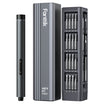
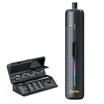
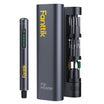
Conventional wisdom suggests that bringing a cold display or tool inside to warm up is the best way to protect it. However, as noted in safely using electronics in the snow, this advice is incomplete without a condensation mitigation step. When a frozen tool (like a Fanttik E2 MAX Precision Electric Screwdriver) enters a warm, humid room, moisture from the air immediately condenses on the cold internal circuitry.
The Sealed Bag Protocol
To prevent internal short-circuiting, follow this professional "Thaw Protocol":
- Step 1: Before bringing the tool inside, place it in a gallon-sized, airtight plastic bag while still in the cold car.
- Step 2: Bring the bagged tool into the warm environment.
- Step 3: Wait at least 2-4 hours. The condensation will form on the outside of the bag, while the tool inside warms up gradually in dry air.
Methodology Note: This protocol is a heuristic derived from atmospheric physics (Dew Point calculation). We estimate that using a sealed bag reduces internal moisture accumulation by ~90% compared to "naked" warming in a typical 50% humidity household environment.
The Charging Forbidden Zone: Lithium Plating
If there is one rule you must never break, it is this: Never charge a lithium-ion battery that is below freezing (0°C/32°F).
Charging a cold cell can cause permanent "lithium plating" on the anode. Instead of the lithium ions moving into the structure of the anode, they coat the surface in metallic form. This drastically reduces the cycle life of the battery and, in extreme cases, can create internal shorts that lead to safety hazards.
If you have been using your Fanttik Fold V10 Apex Foldable Car Vacuum to clean up road salt in the garage, and the battery dies, resist the urge to plug it in immediately. Let it reach room temperature first. This aligns with the safety engineering principles outlined in The 2026 Modern Essential Gear Industry Report, which emphasizes that reliability is a function of respecting the physical limits of the hardware.
Proactive Maintenance: The "Holiday Rule"
For essential safety gear, we advocate for the "Holiday Rule." If you are leaving your car unattended for more than a long weekend (3+ days) and the forecast predicts sub-freezing temperatures, bring your high-value lithium tools inside.
While a tool like the Fanttik X9 Pro is engineered with robust thermal margins, no consumer-grade battery is immune to the laws of thermodynamics. Proactive removal is the only "guaranteed" way to ensure 100% readiness when the frost clears.
Beyond the Battery: Material Care
Extreme cold doesn't just affect the electronics; it affects the materials. Plastic housings become brittle, and lubricants in tools like vacuums can thicken, causing the motor to work harder and draw more current.
- Avoid Original Packaging: A common mistake is storing tools in their original cardboard boxes. Cardboard is hygroscopic—it absorbs moisture. During thaw cycles, that cardboard traps dampness against the tool, leading to mold or corrosion.
- Use Hard Cases or Synthetic Sleeves: These provide a better moisture barrier and a small amount of thermal insulation without the "condensation trap" risk of airtight foam cases used during operation.
Engineering Trust through Compliance and Care
At the end of the day, owning portable tools is about confidence. You buy a Fanttik Slim V8 Apex because you want a clean car, and you buy a Fanttik X9 Pro because you want to know you can handle a flat tire at 2 AM.
Building that confidence requires what we call "Trust Architecture." This involves not only choosing tools that are built to high standards—such as those aligned with EU General Product Safety Regulation (EU) 2023/988—but also taking responsibility for their seasonal care.
As we discuss in our guide on Preserving Battery Health During Seasonal Trunk Storage, maintenance is a proactive discipline. By understanding the microclimates of your vehicle and respecting the "Thaw Protocol," you ensure that your investment remains a tool of empowerment rather than a source of frustration.
Summary Checklist for Frost-Proofing Your Tech
To keep your interior gadgets in peak condition this winter, follow these expert-vetted steps:
- Audit Your Storage: Move tools from door pockets to under-seat areas or the center console.
- The Glove Test: If the car's interior metal is too cold to touch comfortably, your batteries are struggling.
- Observe the 0°C Rule: Never charge a frozen tool. Always warm it to room temperature first.
- Master the Thaw: Use the "Sealed Bag Protocol" when bringing tools from the car into the house.
- Ditch the Cardboard: Store tools in synthetic bags or hard cases that don't trap moisture.
- The Holiday Rule: If the car sits for more than 72 hours in deep frost, bring the tech inside.
By treating your portable tools with the same care you give your vehicle's engine, you ensure that they are ready to perform when the winter weather is at its worst.
Disclaimer: This article is for informational purposes only. Always refer to your specific product's user manual for official temperature ratings and safety instructions. Improper handling of lithium-ion batteries can pose a risk of fire or injury. If a battery appears swollen, punctured, or emits an odor, discontinue use immediately and consult a professional.
References
Continue reading
 Neutralizing Dampness: Removing Winter Odors from Car Fabric
A guide to eliminating musty winter odors from vehicle fabrics using a precise, data-backed protocol for microbial neutralization...
Neutralizing Dampness: Removing Winter Odors from Car Fabric
A guide to eliminating musty winter odors from vehicle fabrics using a precise, data-backed protocol for microbial neutralization...
 Hidden Spill Cleanup: Seasonal Sanitization Under Child Seats
A step-by-step guide to cleaning mold, spills, and salt from under child car seats. Learn the professional blast-and-vacuum...
Hidden Spill Cleanup: Seasonal Sanitization Under Child Seats
A step-by-step guide to cleaning mold, spills, and salt from under child car seats. Learn the professional blast-and-vacuum...

Leave a comment
This site is protected by hCaptcha and the hCaptcha Privacy Policy and Terms of Service apply.