




























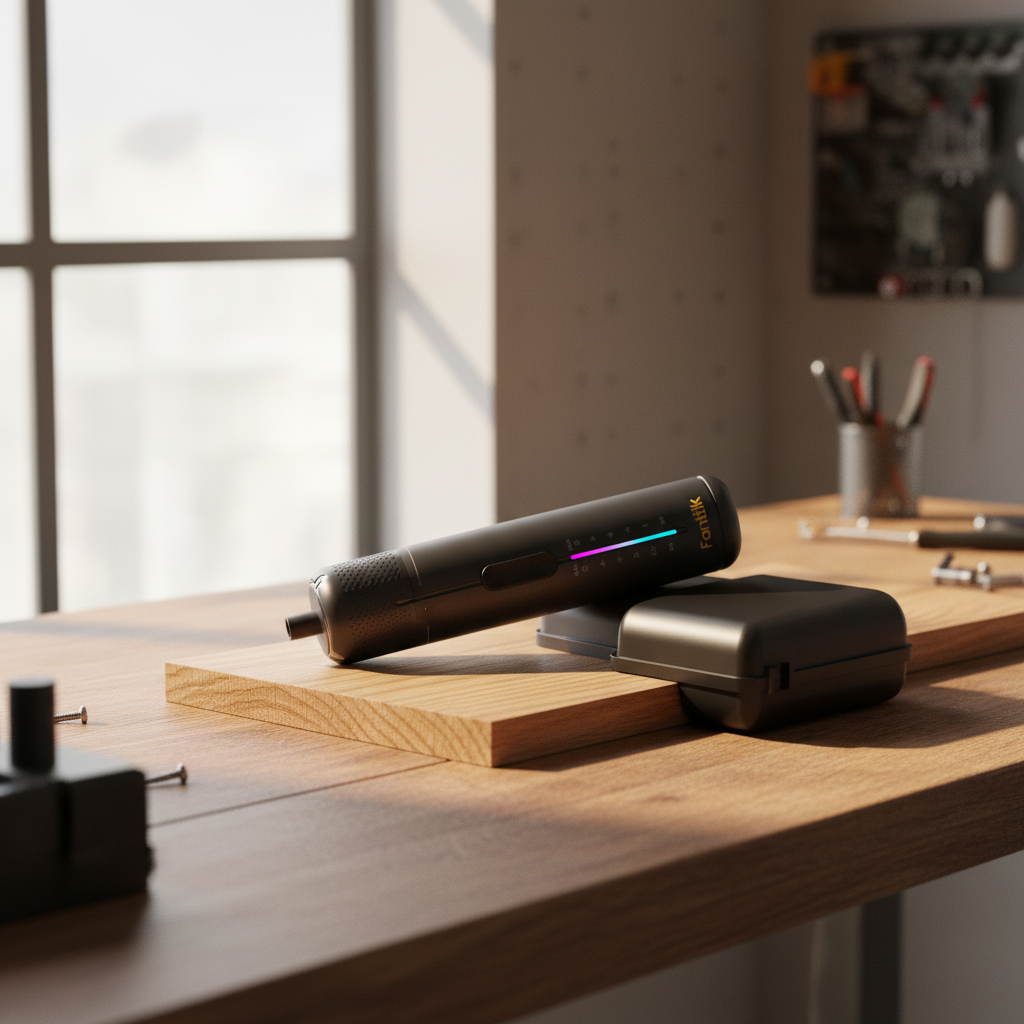
Substrate Strategy: Tuning Your Driver for Wood and Plastic
In our repair workshop, we frequently see the aftermath of "over-torquing." A DIYer spends hours crafting a mixed-media project—perhaps a custom smart-home hub or a piece of furniture with integrated electronics—only to have the final screw crack the plastic housing or split the hardwood frame. It is a frustrating, costly mistake that usually stems from a misunderstanding of how different substrates react to mechanical stress and thermal energy.
Mastering the art of fastening is not about having the most powerful tool; it is about "tuning" your driver to the specific material under the bit. Whether you are working with the fibrous, unpredictable nature of oak or the rigid yet brittle properties of polycarbonate, your approach must change. This guide provides a methodical framework for calibrating your power drivers to ensure every fastener sits flush and secure without compromising the integrity of your materials.
The Physics of Fastening: Wood vs. Plastic
To tune a tool effectively, we must first understand the mechanical differences between the two most common DIY substrates.
Wood: The Fibrous Composite
Wood is an anisotropic material, meaning its properties change depending on the direction of the grain. When you drive a screw into wood, the threads act like wedges, pushing the fibers apart. In softwoods like pine, the fibers compress relatively easily. However, in hardwoods like maple or oak, the density of the fibers creates immense resistance. If that resistance exceeds the lateral strength of the grain, the wood splits.
Plastic: The Homogeneous Polymer
Unlike wood, most plastics used in DIY projects (like ABS, PLA, or Acrylic) are homogeneous. They do not have a grain, but they are highly sensitive to heat and localized stress. When a screw enters plastic, it doesn't just push fibers aside; it displaces the polymer. If you drive a screw too fast, the friction generates heat. According to research on orthodontic miniscrews, high rotational speeds can cause thermal deformation, softening the plastic and reducing thread engagement strength by up to 40%.
Logic Summary: Our substrate strategy assumes that wood failure is primarily mechanical (splitting), while plastic failure is a combination of mechanical (cracking) and thermal (melting/stripping) factors.
The Torque Calibration Framework: The 70-80% Rule
One of the most effective heuristics we use in our shop is derived from the "medical bone screw" principle. In surgical applications, where material failure is not an option, practitioners aim for a "stripping torque" threshold.
According to studies on human bone characteristics, the optimal tightness is achieved at approximately 70-80% of the torque required to cause material failure. We have adapted this for DIY projects to create a repeatable calibration method.
The "Test Piece" Method
Never calibrate your driver on your final workpiece. We always maintain a "scrap library" of the materials we are using.
- Set to Minimum: Start your driver (such as the Fanttik S2 Pro Cordless Electric Screwdriver) at its lowest torque setting.
- Drive a Sample: Run a screw into a scrap piece of the same material.
- Incrementally Increase: Increase the torque setting one notch at a time until the screw head sits flush with the surface without the motor stalling or the material showing signs of distress.
- Find the Failure Point: On a separate scrap area, continue increasing torque until the material actually fails (strips or cracks).
- Calculate the Target: Set your final working torque to roughly 75% of that failure value.
Substrate Tuning Parameters (Estimated)
| Substrate | Typical Failure Mode | Torque Logic | Speed Target | Recommended Driver |
|---|---|---|---|---|
| Softwood (Pine/Cedar) | Grain Splitting | Low-Medium (Progressive) | High | Fanttik L2 Pro Cordless Electric Screwdriver |
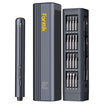
| Hardwood (Oak/Walnut) | Head Snapping / Splitting | High (Consistent) | Medium | Fanttik S1 Pro Power Screwdriver and E1 Max Electric Screwdriver |
| Thin Plastics (ABS/PLA) | Thread Stripping | Low (Precise) | Very Low | Fanttik E1 Max Electric Screwdriver |
| Dense Plastics (Delrin) | Stress Cracking | Medium (Controlled) | Low | Fanttik S2 Pro Cordless Electric Screwdriver |
Modeling Note (Scenario Analysis): This table represents a deterministic model based on common shop heuristics for fasteners between #4 and #8 in size. | Parameter | Value/Range | Unit | Rationale | | :--- | :--- | :--- | :--- | | Screw Size | #4 - #8 | Gauge | Common DIY range | | Torque Range | 0.5 - 6.0 | N.m | Typical cordless driver capability | | Material Thickness | 10 - 20 | mm | Standard project thickness | | Ambient Temp | 20 - 25 | °C | Standard workshop conditions | | Driver Type | Cordless DC | N/A | Focus of this guide |

Speed vs. Torque: The Plastic Problem
In many DIY circles, there is a misconception that speed and torque are the same thing. They are not. Speed (RPM) is how fast the bit spins; torque is the rotational force it applies.
When working with plastics, speed is often more dangerous than torque. As noted in the Kingroon guide to 3D printed parts, high-speed friction can melt the internal threads as they are being formed. This creates a "lubrication effect" that makes it easy to over-tighten and strip the hole.
The 3 RPM Standard
While most power tools run at 500-1500 RPM, precision work in medical and aerospace fields often utilizes much slower speeds—down to 3 RPM—to allow for heat dissipation. For the average DIYer, we recommend using a tool with a variable speed trigger or a dedicated "low-speed" mode. If your tool feels like it’s "pulsing" or "kicking" too hard, it’s a sign that the motor is delivering power in bursts that the plastic cannot absorb.
Motor Technology: Brushed vs. Brushless for Substrates
There is a common industry consensus that brushless motors are always superior. While brushless motors offer better efficiency and longevity, we have observed an interesting "gotcha" on our repair bench.
Brushless motors are designed for high-efficiency power delivery. However, for extremely delicate plastics, a high-quality brushed motor can sometimes offer a more "gradual" ramp-up of torque. High-torque brushless systems can be too aggressive, reaching peak force before a beginner DIYer has time to react to the material's resistance.
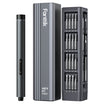
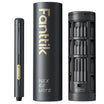
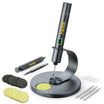
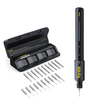
If you are a beginner working primarily on electronics or 3D-printed assemblies, a precision tool like the Fanttik K2 Nano 3.7V Precision Power Drill provides the fine-tuned control necessary to prevent the "snap" associated with overpowered drivers.
Pilot Holes: Engineering Stress Relief
Skipping a pilot hole is the leading cause of material damage in mixed-media projects. However, the "size" of the hole depends entirely on the substrate.
The Wood Rule: 70% Core Diameter
In wood, the goal of a pilot hole is to remove just enough material so the screw doesn't split the grain, while leaving enough for the threads to bite. A reliable rule of thumb is to use a drill bit that is 70% of the diameter of the screw's core (the solid shaft, not the threads).
The Plastic Rule: 85-90% Stress Relief
In plastic, the pilot hole serves as a stress relief channel. Because plastic doesn't compress like wood fibers, it needs more room to move. We recommend a larger pilot hole—85% to 90% of the thread diameter. This allows the threads to "cut" or "form" into the plastic without creating the internal pressure that leads to crack propagation.
Logic Summary: Based on our observations of material failure patterns (not a lab study), wood requires more "bite" (smaller hole) because it is resilient, while plastic requires more "room" (larger hole) because it is brittle.
Building Confidence Through Tool Selection
Transitioning from basic assembly to precision mixed-media work requires a shift in how you view your tools. You aren't just looking for "power"; you are looking for "fidelity."
For those moving into more complex projects, we recommend a tiered approach to driver selection:
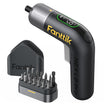
- For Furniture & Heavy Wood: Use a driver with a mechanical clutch, like the Fanttik L2 Pro Cordless Electric Screwdriver, which allows for high-torque delivery with a hard stop.
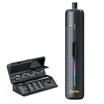
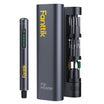
- For Mixed Media & Household Repairs: The Fanttik S2 Pro Cordless Electric Screwdriver offers 7 torque settings, making it the "Goldilocks" tool for switching between wood and plastic.
- For Precision Electronics: Stick to the Fanttik K2 Nano 3.7V Precision Power Drill to ensure you never exceed the delicate thresholds of small polymer enclosures.
Engineering Trust in Your Craft
At the core of every successful project is a commitment to reliability. Just as we advocate for "credibility math" in the industry, you should apply "precision math" to your workbench. By understanding the thermal limits of your plastics and the mechanical limits of your wood, you move from "guessing" to "knowing."
For a deeper look into how professional-grade tools are engineered to meet these standards, we recommend reviewing The 2026 Modern Essential Gear Industry Report: Engineering Trust in a Cordless World. This whitepaper outlines the importance of visible compliance and truthful claims in the tools we rely on for our most important work.
Summary Checklist for Substrate Strategy
- Identify the material: Is it fibrous (wood) or homogeneous (plastic)?
- Select the speed: Slower is almost always better for plastic to avoid heat.
- Calibrate torque: Use the 75% rule on a scrap piece before touching the workpiece.
- Size the pilot hole: 70% core for wood; 85-90% thread for plastic.
- Monitor feedback: Listen for the "creak" of wood or the "click" of plastic stress.
By following this methodical approach, you protect your materials, extend the life of your tools, and—most importantly—build the confidence to tackle increasingly complex DIY challenges.
This article is for informational purposes only. Always wear appropriate personal protective equipment (PPE) and follow the safety instructions provided by your tool manufacturer. For high-consequence structural fastening, consult a professional engineer.

Leave a comment
This site is protected by hCaptcha and the hCaptcha Privacy Policy and Terms of Service apply.