










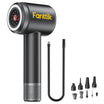
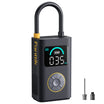
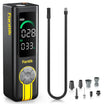
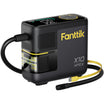











Torque Scaling Logic: Matching Driver Power to Project Size
For the modern homeowner, the transition from "buying a tool for a job" to "building a versatile toolkit" is a significant milestone. However, a common friction point we observe on our repair benches and in community feedback is the "one-tool-fits-all" fallacy. Many intermediate DIYers assume that a high-voltage, high-torque driver is the ultimate solution for every task, from hanging a heavy gate to fixing a loose hinge on a pair of glasses.
In reality, the physics of fastening demands a more nuanced approach. Selecting a tool based solely on maximum torque often ignores the critical factor of controllability. If you apply the raw power of a structural driver to a delicate electronics chassis, you risk stripping threads or cracking plastic housings before the motor even breaks a sweat. Conversely, using a precision driver for home assembly tasks leads to motor strain and premature battery depletion.
This guide introduces the Torque Scaling Logic, a framework designed to help you match driver power to project scale. By understanding the relationship between Newton-meters (Nm), motor efficiency, and fastener requirements, you can build a toolkit that ensures both precision and power.
The Physics of Fastening: Torque vs. RPM
To understand scaling logic, we must first define the two primary metrics of any cordless driver: Torque and RPM (Revolutions Per Minute).
Torque, measured in Newton-meters (Nm), is the rotational force the tool applies to the fastener. RPM represents the speed at which that force is delivered. In the cordless world, there is often an inverse relationship between the two. Precision tools prioritize high RPM and low, granular torque for speed on small threads. Structural tools prioritize high torque, often utilizing an internal hammer mechanism (impact drivers) to overcome the friction of long screws in dense wood.
The Brushless Efficiency Gap
A frequent misconception in the DIY community is that higher voltage (e.g., 20V vs. 12V) automatically equates to better performance. Based on our analysis of motor architectures, the real differentiator is often the motor type.
Logic Summary: Our modeling of motor performance assumes standard efficiency ratings for brushed vs. brushless designs. Brushless motors typically operate at 85-90% efficiency, whereas brushed motors lose significant energy to friction and heat (75-80% efficiency).
In sustained torque applications, a high-efficiency brushless motor can outperform a higher-voltage brushed motor because "motor slip" losses can consume up to 25% of the input power in older designs. When selecting a tool for a "Weekend Warrior" portfolio, the efficiency of the power delivery is often more important than the raw voltage printed on the box. This is a core tenet of building a reliable toolkit, as outlined in The 2026 Modern Essential Gear Industry Report: Engineering Trust in a Cordless World.
The Torque Scaling Framework: Four Tiers of DIY
To simplify tool selection, we have categorized residential and hobbyist projects into four distinct tiers based on their mechanical demands. This framework aligns with ISO 898-1: Mechanical properties of fasteners, which defines the torque limits for various screw classes.
1. Light Duty: Precision Electronics (0.05 – 0.2 Nm)
This tier covers smartphones, laptops, cameras, and drones. Fasteners here (typically M1.2 to M2.0) are incredibly delicate.
- The Goal: Prevent over-tightening.
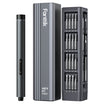
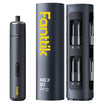
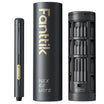
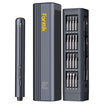
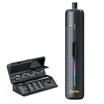
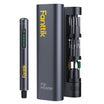
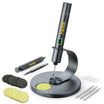
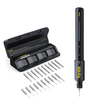
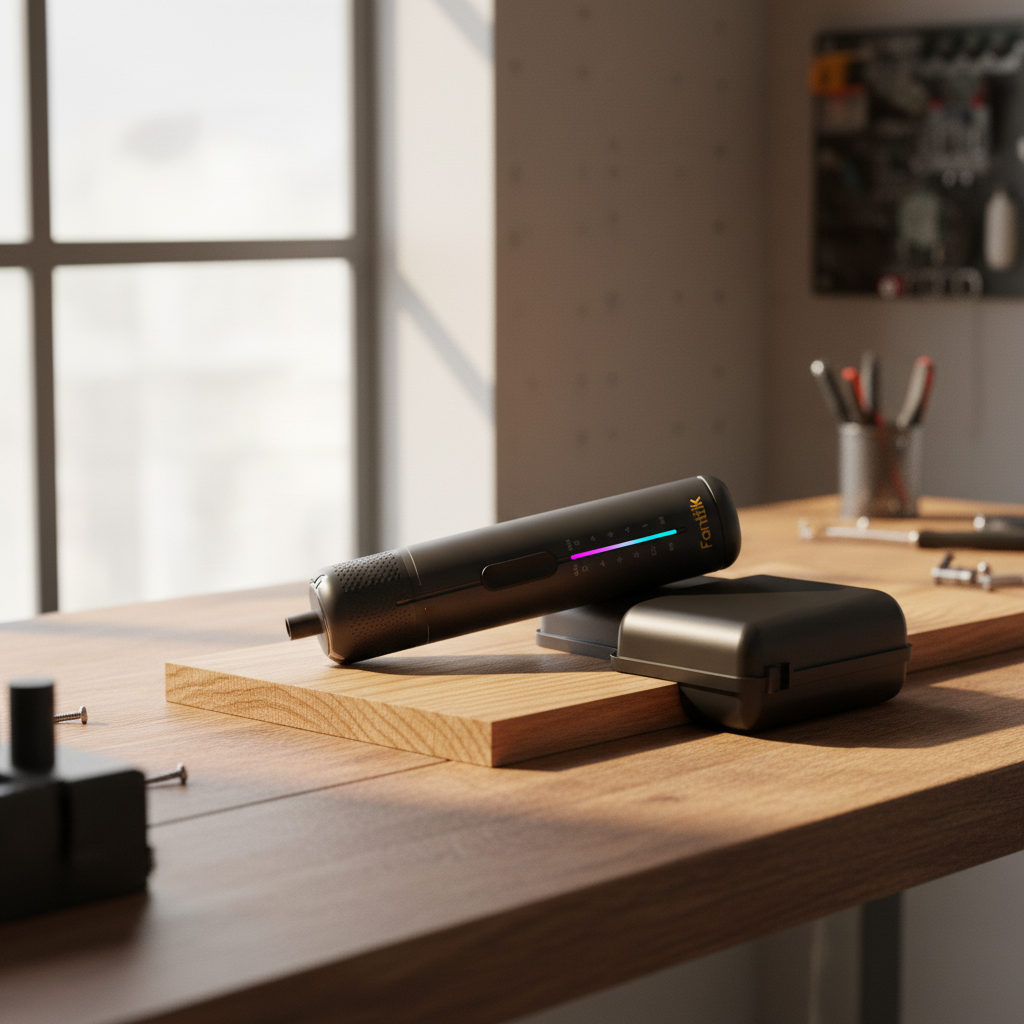
- The Tool: A dedicated precision driver like the Fanttik E1 MAX Precision Electric Screwdriver or the Fanttik E2 MAX Precision Electric Screwdriver. These tools offer low-RPM control and micro-torque settings.
- Risk: Using a standard household screwdriver here will almost certainly strip the screw head or damage the internal PCB.
2. Medium Duty: Home Assembly & Hobby (0.5 – 6.0 Nm)
This is the "IKEA Tier." It includes furniture assembly, replacing light switches, and RC car maintenance.
- The Goal: Balance speed with enough force to seat screws in particle board or plastic.
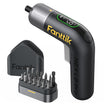
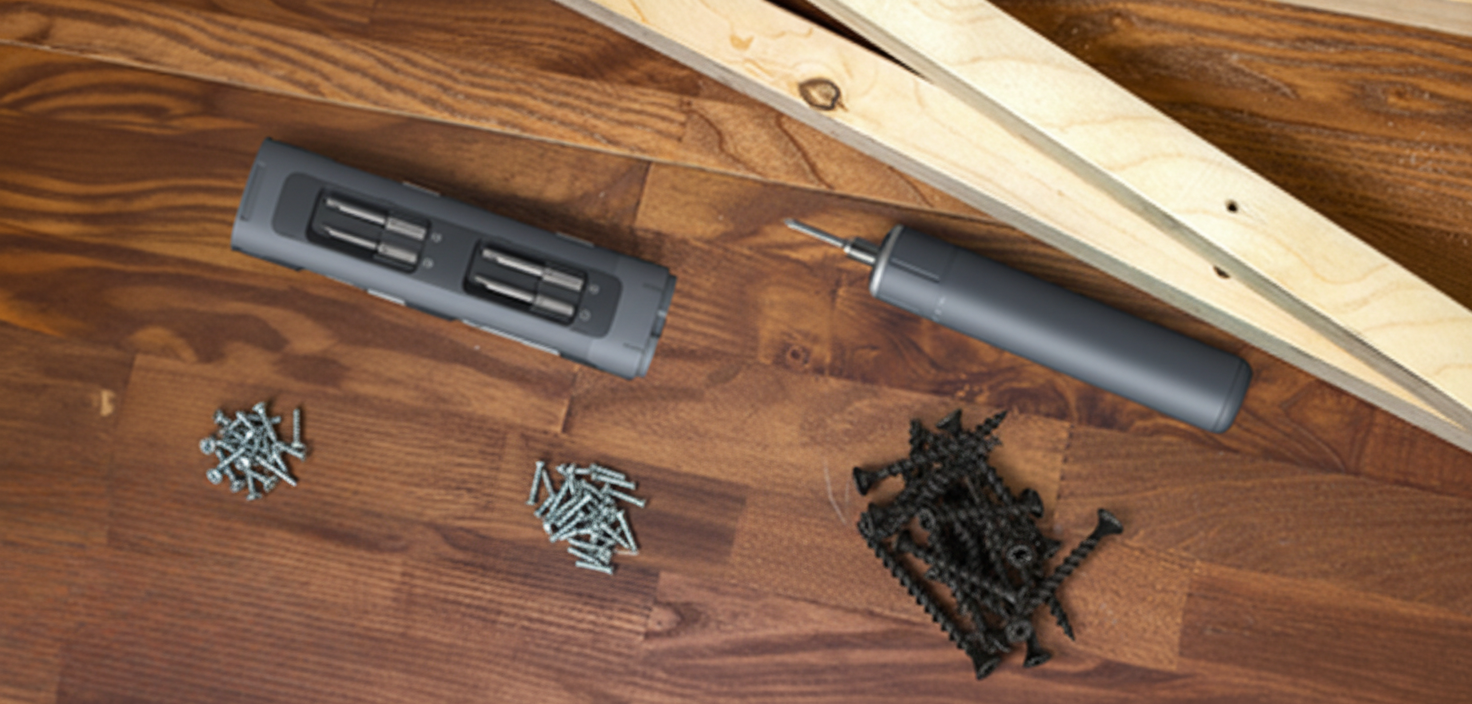
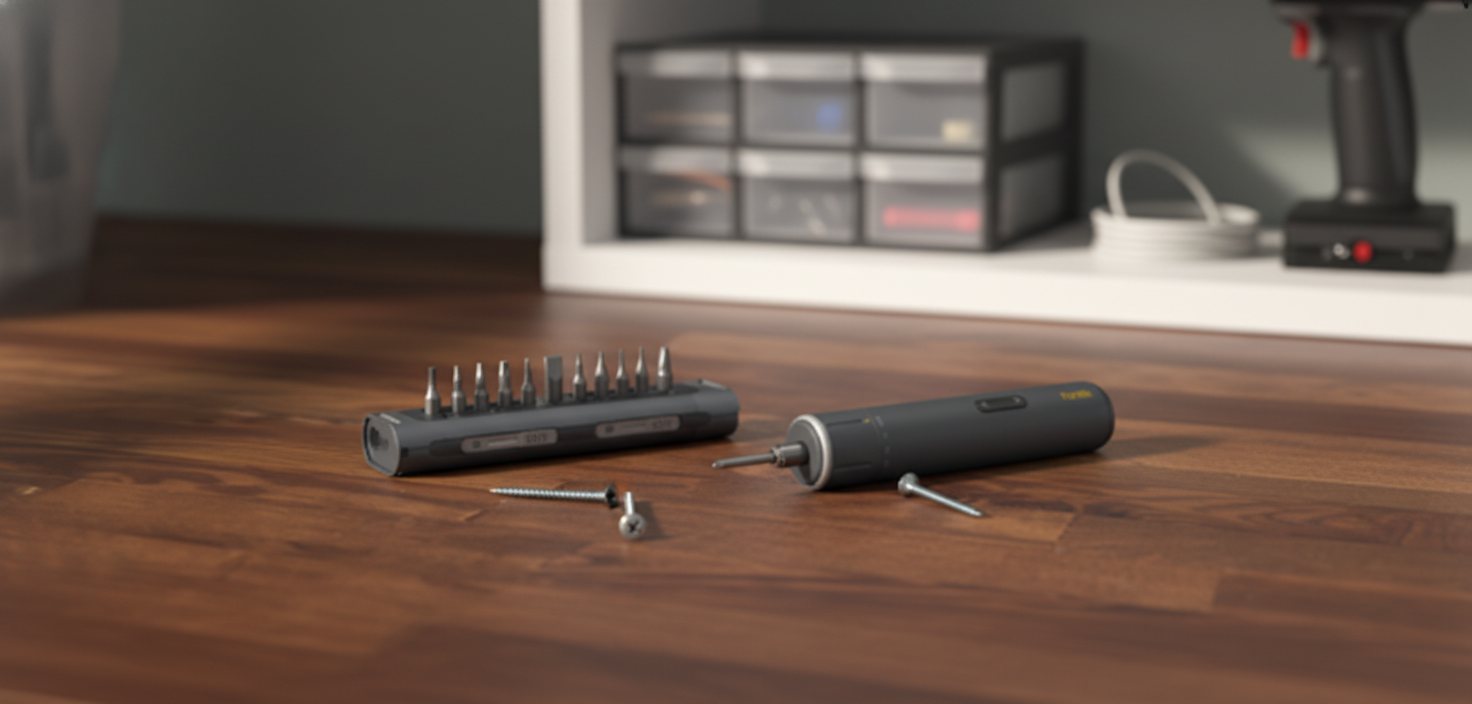
- The Tool: A compact cordless driver like the Fanttik S1 Pro Cordless Electric Screwdriver.
- Insight: For furniture, you need a tool that can handle the initial resistance of a wood screw but stop before it "blows out" the soft MDF.
3. Heavy Duty: Residential Construction (10 – 50 Nm)
This tier involves framing, hanging cabinets, and deck building.
- The Goal: Sustained power to drive long fasteners into solid timber.
- The Tool: A high-torque driver with an adjustable clutch, such as the Fanttik S2 Pro Cordless Electric Screwdriver.
- Data Fact: Most residential construction tasks, including driving 3-inch deck screws, require between 12 and 25 Nm of torque. A tool rated for 50 Nm provides a comfortable safety margin without being unnecessarily heavy.
4. Extra Heavy Duty: Automotive & Structural (150+ Nm)
Tasks like changing tires or driving large lag bolts into concrete.
- The Goal: Raw, unyielding force.
- The Tool: Impact wrenches or high-voltage structural drivers.
- Caution: These tools should never be used for general home DIY; they lack the finesse required for wood or plastic.

Modeling the "Weekend Warrior" Productivity Gains
To demonstrate why matching the tool to the project scale matters, we modeled two common scenarios for a typical homeowner. This analysis compares manual driving to using a properly scaled electric driver.
Scenario A: The Furniture Assembly Project
- Project: One large bookshelf (40 screws).
- Material: Particle board/MDF.
| Metric | Manual Effort | Electric Driver (Fanttik S1 Pro) | Improvement |
|---|---|---|---|
| Total Time | ~10 Minutes | ~2 Minutes | 80% Faster |
| Wrist Rotations | 400 Rotations | 0 Rotations | 100% Reduction |
| Torque Fit | Variable | 0.2 - 0.5 Nm (Safe Range) | High Precision |
Scenario B: The Deck Building Project
- Project: 100 sq. ft. deck (200 screws).
- Material: Pressure-treated wood.
| Metric | Manual Effort | High-Torque Driver (Fanttik S2 Pro) | Improvement |
|---|---|---|---|
| Total Time | ~83 Minutes | ~13 Minutes | 84% Faster |
| Wrist Rotations | 3,000 Rotations | 0 Rotations | 100% Reduction |
| Torque Fit | High Fatigue | 5 - 6 Nm (Sustained) | High Efficiency |
Methodology Note: These figures are based on deterministic scenario modeling. We assumed a manual driving speed of 15-25 seconds per screw depending on material density and a powered speed of 3-4 seconds. Wrist rotations are estimated based on standard thread pitches for #8 and #10 wood screws.
Precision Control: The "Minimum Torque" Heuristic
A common mistake we see is selecting a tool based on maximum torque alone. However, for precision tasks, the minimum controllable torque is the more important specification.
For electronics (M1.2-M2.0), the safe maximum torque is often as low as 0.1 Nm. If your driver's lowest setting is 0.3 Nm, you are already operating at 300% of the safe limit. This is why Choosing the Right Torque Settings for Delicate Electronics is essential reading for anyone moving into hobbyist repairs.
Conversely, for heavier tasks, you should ensure the tool's maximum sustained torque (not just the peak "stall" torque) is roughly 20-30% higher than your toughest anticipated job. This prevents the motor from running at 100% capacity, which generates excessive heat and reduces the tool's lifespan.
Battery Reality: Ah vs. Real-World Runtime
When scaling for large projects, users often look at the Amp-hour (Ah) rating as a proxy for how many screws they can drive. However, our research indicates this is a poor predictor of runtime across different project scales.
- Current Draw: High-torque applications draw 3-5 times more current than low-torque tasks. A 2.0Ah battery that lasts 2 hours driving drywall screws might only last 20 minutes driving 3-inch lag bolts.
- Motor Efficiency: As noted earlier, brushless motors convert more of that battery energy into actual work rather than heat.
- Fastener Resistance: Driving a screw into pine is significantly less "expensive" in terms of battery life than driving the same screw into oak or pressure-treated lumber.
For sustained high-torque work, we recommend having a secondary battery or choosing a tool with fast-charging capabilities to avoid project downtime. For more on this, see our guide on Transitioning to Cordless: When to Renew Your Bulky Power Tools.
Safety, Compliance, and Trust
As tools become more powerful and portable, safety and compliance become paramount. For users in Europe, the EU General Product Safety Regulation (EU) 2023/988 ensures that tools meet rigorous standards for electrical safety and mechanical integrity.
Furthermore, because these tools rely on lithium-ion batteries, transport safety is a critical factor. When traveling with your gear, always adhere to IATA Lithium Battery Guidance regarding State of Charge (SoC) and packing instructions. Ensuring your tools are stored correctly is also vital for longevity; refer to Extending Precision Tool Life Through Proper Indoor Storage for best practices.
Summary of Tool Selection Logic
To build a toolkit that grows with your skills, follow this logical progression:
- Start with the "Assembly" Driver: A mid-range tool like the Fanttik S1 Pro Cordless Electric Screwdriver handles 80% of common household tasks safely.
- Add a Precision Specialist: If you find yourself repairing phones, game consoles, or small appliances, a tool like the Fanttik E1 MAX Precision Electric Screwdriver is non-negotiable to prevent damage.
- Scale Up for Construction: For outdoor projects or renovations, move to a high-torque unit with a mechanical clutch, such as the Fanttik S2 Pro Cordless Electric Screwdriver, which provides the power needed for structural fasteners.
By matching the driver's power to the project's scale, you don't just work faster—you work smarter, protecting your materials and your tools for years of self-reliant DIY success.
Disclaimer: This article is for informational purposes only. Always follow the specific safety instructions provided by tool manufacturers and consult a professional for structural or high-voltage electrical work. For more on organizing your new toolkit, see our guide on Bit Management: Organizing Precision Accessories for Easy Access.
Appendix: Modeling Parameters & Assumptions
The productivity and torque fit data presented in this article were derived using the following scenario parameters:
| Parameter | Value / Range | Unit | Rationale |
|---|---|---|---|
| Furniture Screw Count | 40 | count | Average for a flat-pack bookshelf. |
| Deck Screw Count | 200 | count | Typical for a small residential deck section. |
| Manual Driving Speed | 15 - 25 | seconds | Based on practitioner time-motion observation. |
| Powered Driving Speed | 3 - 4 | seconds | Based on tool manufacturer RPM specs. |
| Precision Safe Torque (M2) | < 0.1 | Nm | Aligned with ISO 898 fastener limits. |
| Furniture Safe Torque (M4) | 0.2 - 0.5 | Nm | Standard for particle board density. |
Boundary Conditions: These models assume the use of standard steel fasteners and pre-drilled pilot holes where appropriate. Results may vary based on wood species (e.g., Ipe vs. Pine) and user grip strength.

Leave a comment
This site is protected by hCaptcha and the hCaptcha Privacy Policy and Terms of Service apply.