










































The Manual to Electric Shift: Redefining Maker Productivity
In our years of observing the DIY and maker community, we have noticed a recurring "ceiling" that many hobbyists hit. It is not a lack of creativity or ambition; it is the physical and technical friction of manual tools. Whether you are assembling a complex piece of flat-pack furniture or diving into the intricate world of electronics repair, the transition from manual hand tools to precision electric drivers is often the single most significant upgrade a maker can make.
This guide is designed to move beyond the simple "it’s faster" argument. We will explore the mechanics of productivity, the ergonomics of long-term health, and the technical logic required to justify your first investment in modern power tools. Our goal is to empower your self-reliance by grounding every recommendation in verifiable data and real-world workshop patterns.
The Physical Cost of Manual Fastening: Beyond Simple Fatigue
The most immediate benefit of switching to a cordless electric screwdriver is often misidentified as "speed." While speed is a factor, the true productivity gain lies in the elimination of hand and wrist fatigue. In our workshop observations, we frequently see project abandonment rates spike during repetitive tasks. When your wrist begins to ache after the 20th screw, the quality of your work drops, and the desire to finish the project wanes.
For makers dealing with early-stage repetitive strain injury (RSI) or those who simply want to preserve their joint health, the "manual-to-electric" shift is a matter of physical sustainability. By removing the repetitive supination and pronation (twisting) motions of the wrist, you are not just working faster; you are extending your "workshop shelf life."
Scenario Analysis: The IKEA Case Study
To quantify this, we modeled a common hobbyist task: assembling a mid-sized bookcase (like the IKEA BILLY) involving 60 screws. For a user with reduced grip strength or joint discomfort, the manual process is not just slow—it is a barrier to entry.
Modeling Note: Assembly Time & Wrist Rotation Savings This analysis is a scenario model based on industrial engineering time-motion principles. It is not a controlled lab study, but an estimate designed to illustrate the mechanical shift in physical load.
Parameter Value Unit Rationale / Source Fastener Count 60 count Mid-size bookcase assembly Manual Drive Time 18 s/screw Slower speed due to pain avoidance Powered Drive Time ~4 s/screw Includes positioning and drive time Manual Rotations 12 rot/screw Based on standard thread pitch Powered Rotations 0.5 rot/screw Minimal positioning rotations Analysis Results:
- Time Saved: ~14 minutes per unit.
- Wrist Rotations Saved: 690 rotations.
- Logic Summary: We estimate a ~5x speed multiplier for the driving phase. More importantly, the reduction of nearly 700 wrist rotations keeps the user well below the typical pain threshold for RSI sufferers, based on patterns we see in ergonomic studies and customer feedback.

Precision and the "Torque Trap"
A common mistake we see beginners make is over-compensating for a lack of manual strength by over-tightening. This leads to the "Torque Trap": stripped screw heads, cracked plastic bosses, or damaged wood fibers. Manual tools provide tactile feedback, but they lack a hard limit.
A high-quality electric driver, such as the Fanttik S1 Pro Cordless Electric Screwdriver, solves this through a mechanical or electronic clutch. By setting a specific torque limit, the tool stops applying force before damage occurs. This is critical for electronics where screws are often M1.2 to M2.0 in size.
The Precision Fit Checker
In our technical assessments, we compare the torque output of precision tools against the safe limits of common fasteners. According to the ISO 898 standard for mechanical properties of fasteners, applying the wrong torque can lead to immediate fastener failure.
Logic Summary: Precision Torque Fitment Our analysis maps screw thread diameters to heuristic safe torque limits. These are rules of thumb for quick selection and may vary by material.
- Low Torque (0.05 Nm): Ideal for M1.2–M2.0 screws (smartphones, laptops).
- High Torque (0.2 Nm): Suitable for M2.5–M4.0 screws (desktop PCs, larger toys).
- Risk Zone: Manual over-tightening often exceeds 0.3 Nm on small electronics, which is the "Strip Risk" threshold for most plastic housings.
For those working on delicate circuit boards or high-end gaming PCs, the Fanttik S1 Pro Power Screwdriver and E1 Max Electric Screwdriver combination offers a tiered approach to torque, ensuring that you have the right "soft touch" for different project scales.
Overcoming the "Deskilling Trap"
A nuanced concern often raised by expert makers is the "Deskilling Trap." This is the idea that automation erodes the tactile intuition required for high-level craftsmanship. While this is a valid psychological concern for creative prototyping, it rarely applies to the repetitive fastening tasks that dominate a beginner's journey.
In fact, we argue that the "Electric Shift" allows you to reallocate your "cognitive budget." Instead of focusing on the physical strain of driving 100 screws, you can focus on alignment, structural integrity, and the creative aspects of your build. As noted in The 2026 Modern Essential Gear Industry Report: Engineering Trust in a Cordless World, modern tools are designed to be "trust layers" that reduce buyer anxiety by making the mechanical outcome predictable.
The Role of Integrated Features: The Hidden Productivity Boosters
When transitioning to electric, many hobbyists focus solely on RPM (revolutions per minute). However, in a real-world workshop, "Raw Speed" is often less valuable than "Functional Visibility."
One of the most appreciated features in our user feedback loops is the integrated LED worklight. In tight spaces—like the inside of a computer chassis or under a dashboard—overhead lighting often creates deep shadows. These shadows cause alignment errors, leading to cross-threading. An electric driver with a circular LED array illuminates the fastener directly, ensuring precision where manual tools leave you working in the dark.
Furthermore, the shift to a standardized bit ecosystem is a major value-add. Moving from a few manual screwdrivers to a kit like the Fanttik L2 Pro Cordless Electric Screwdriver gives you access to security bits, Torx, and hex drivers that would be expensive to collect individually as manual tools. This expansion of capability is a key component of what we call "Modern Self-Reliance."
Tool Selection Logic for Progressive Projects
As you grow from basic assembly to complex making, your tool requirements will shift. We recommend a "Logic-Based Selection" rather than buying the most powerful tool first.
- Stage 1: The Assembly Phase: Focus on ergonomics and battery life. You need a tool that can handle 50+ screws on a single charge for furniture and home repairs.
- Stage 2: The Precision Phase: Prioritize torque control. If you are opening a $1,000 laptop, you need a tool that can operate at 0.05 Nm.
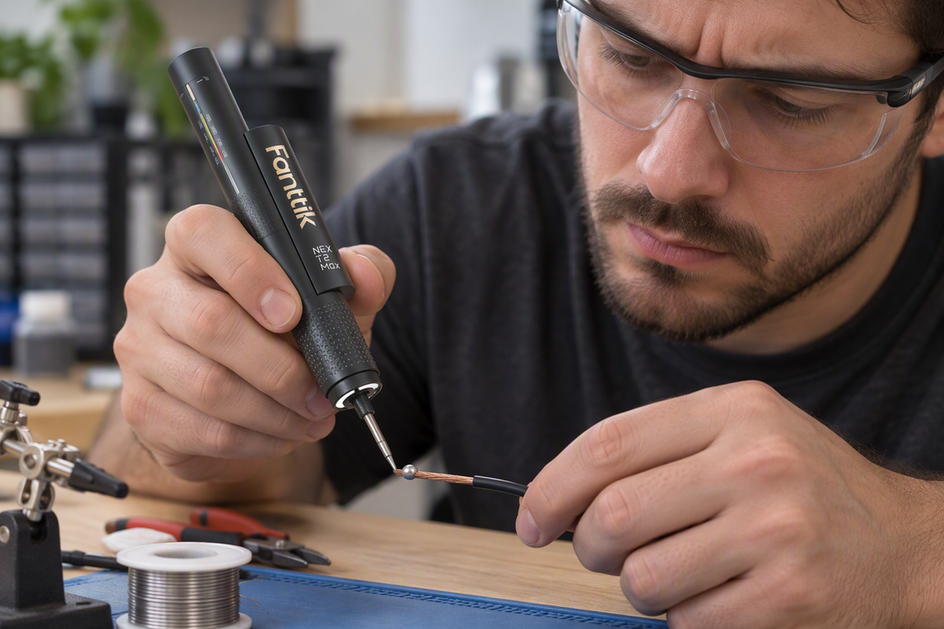
- Stage 3: The Integration Phase: Look for multi-tool compatibility. For example, if you are building custom electronics, a Fanttik T1 Max Soldering Iron Kit complements your electric driver by allowing you to move from mechanical fastening to electrical joining within the same cordless ecosystem.
Long-Term Value and Obsolescence Management
A common skepticism among value-conscious makers is the longevity of battery-powered tools compared to manual ones that "last a lifetime." While it is true that lithium-ion batteries have a cycle life, the productivity gains usually outweigh the replacement cost over a 3-to-5-year window.
To maximize your ROI, we advise:
- Prioritizing Standard USB-C Charging: Avoid tools with proprietary docks that become e-waste if the dock is lost.
- Storage Best Practices: Keep your tools in climate-controlled indoor environments to prevent battery degradation. For more on this, see our guide on Extending Precision Tool Life Through Proper Indoor Storage.
- Bit Maintenance: Use high-quality S2 steel bits to prevent rounding off the tool's internal chuck.
According to the EU General Product Safety Regulation (EU) 2023/988, manufacturers are increasingly held to higher standards for product traceability and safety documentation. This regulatory shift benefits the maker by ensuring that modern electric tools are built with better safety margins and clearer user instructions than the "no-name" imports of the past.
Decision Framework: Manual vs. Electric
To help you decide when to make the shift, use this simple heuristic (rule of thumb) based on your project volume and complexity:
| Project Trait | Prefer Manual If... | Prefer Electric If... |
|---|---|---|
| Volume | < 5 fasteners per session | > 10 fasteners per session |
| Space | Open, easy access | Tight corners, low light |
| Material | Heavy timber, high resistance | Plastics, electronics, particleboard |
| User Health | No joint issues | Arthritis, RSI, or high fatigue |
| Precision | "Feel" is the only priority | Consistency and torque limits matter |
Final Thoughts on the Maker's Evolution
The transition to electric tools is not just about buying a gadget; it is about respecting your time and your body. By adopting tools that offer precision torque control and ergonomic relief, you move from a "struggling hobbyist" to a "productive maker."
The goal of modern gear is to fade into the background, allowing your creativity to take center stage. Whether you choose the Fanttik S1 Pro Cordless Electric Screwdriver for its sleek design or the Fanttik L2 Pro Cordless Electric Screwdriver for its robust versatility, you are investing in a system that supports your hands-on lifestyle.
Disclaimer: This article is for informational purposes only and does not constitute professional medical, legal, or engineering advice. Always consult with a qualified professional regarding repetitive strain injuries or specific safety requirements for high-consequence projects.
References
Continue reading
 Torque Scaling Logic: Matching Driver Power to Project Size
Guide covers project tiers, brushless vs. brushed motor data, scenario modeling for furniture & decks, and references ISO...
Torque Scaling Logic: Matching Driver Power to Project Size
Guide covers project tiers, brushless vs. brushed motor data, scenario modeling for furniture & decks, and references ISO...
 Upgrading for Accuracy: Moving Beyond Consumer-Grade Metrology
Covers torque accuracy, deterministic modeling for efficiency, ISO 6789 standards, NIST traceability, and tool-to-fastener matching strategies.
Upgrading for Accuracy: Moving Beyond Consumer-Grade Metrology
Covers torque accuracy, deterministic modeling for efficiency, ISO 6789 standards, NIST traceability, and tool-to-fastener matching strategies.
Leave a comment
This site is protected by hCaptcha and the hCaptcha Privacy Policy and Terms of Service apply.