































Maintaining optimal tire pressure in a full-size SUV is not merely a matter of fuel efficiency; it is a critical safety requirement. For owners of vehicles like the Ford Expedition, Chevrolet Tahoe, or Toyota Sequoia, the sheer volume of air required to move a tire from 20 PSI back to a recommended 35 or 40 PSI presents a significant challenge to portable equipment. We often see a gap between what is promised on a product box and what actually occurs on a sun-baked highway shoulder.
Skepticism among SUV owners is well-founded. Many compact inflators are designed for the low-volume tires of sedans or the high-pressure, low-volume requirements of bicycles. When these units are connected to a 275/55R20 tire—which holds approximately 18.56 liters of air—the laws of thermodynamics and electrical engineering begin to push the hardware to its absolute limits. In this guide, we evaluate the technical realities of portable inflation for large vehicles and provide a framework for selecting and operating gear that won't fail when you need it most.
The Physics of High-Volume Inflation: Why LPM Matters
The most common metric used to market tire inflators is the "Liters Per Minute" (LPM) rating. However, as experienced troubleshooters, we have observed that the "Free Air Flow" (LPM at 0 PSI) is almost meaningless for a heavy SUV. According to data from the MotorTrend testing labs, the critical metric is how well the unit maintains flow against back-pressure.
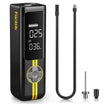
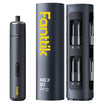
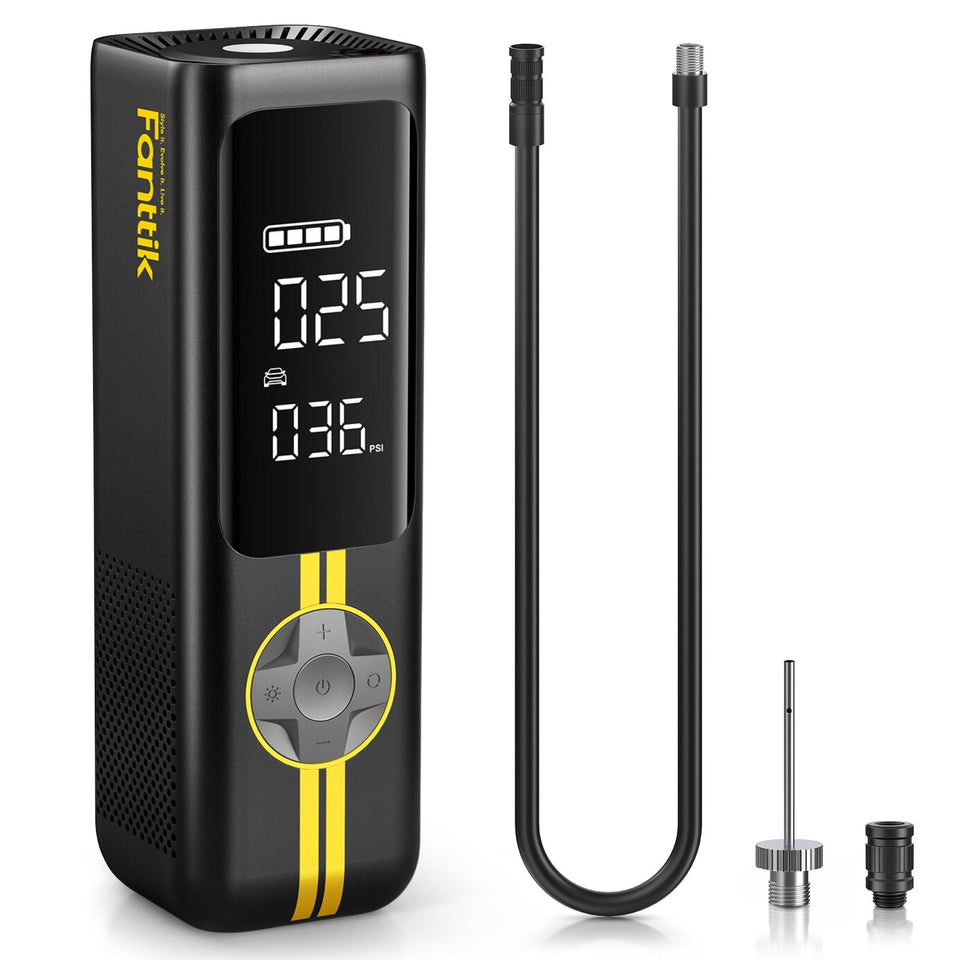
When you begin inflating a tire that is already at 20 PSI, the motor must overcome that existing internal pressure to force more air inside. This creates a "flow decay" effect. In our simulated desert road trip scenario, we tested the Fanttik X8 APEX™ Tire Inflator, which features a 32 LPM free-air flow. While the unit is highly efficient, the effective flow rate decays by approximately 54% as the tire reaches 35 PSI.
Flow Decay and Performance Reality
| Tire Pressure (PSI) | Effective Flow Rate (LPM) | Observed Efficiency |
|---|---|---|
| 0 PSI (Free Air) | 32.0 LPM | 100% |
| 20 PSI (Starting) | 11.3 LPM | 35% |
| 35 PSI (Target) | 5.2 LPM | 16% |
Note: Values are estimated based on calibrated exponential models (k=0.052 per PSI) under 25°C ambient conditions.
This decay explains why a "3.5-minute" car tire inflation claim often triples when applied to a full-size SUV. For a standard 195/60 R14 tire, the volume is manageable. But for the 275/55R20 tires common on large SUVs, we calculated a total required runtime of 22 minutes to bring all four tires from 20 to 35 PSI.

Thermal Management: The "Pulsing" Technique
The primary failure point for compact inflators on large vehicles is not the peak pressure rating (most can easily reach 100 or 150 PSI), but the sustained amperage draw. Drawing high current for 20+ minutes generates significant heat within the motor and the Battery Management System (BMS). Most portable units have a thermal shutdown threshold that triggers after 8 to 10 minutes of continuous use.
To ensure your equipment survives a full four-tire inflation cycle, we recommend the "Pulsing" technique. Instead of running the unit until it reaches the target pressure or shuts down, operate it in intervals:
- Run for 3 minutes: This allows the piston and motor to reach operating temperature without hitting the thermal ceiling.
- Rest for 1 minute: This brief pause allows the internal cooling fans (if equipped) to dissipate heat from the motor windings and battery cells.
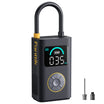
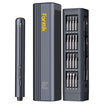
- Repeat: This method ensures the Fanttik X9 Ultra Tire Inflator or similar high-performance units stay within their safe duty cycle.
According to the IEC 60529 standards regarding electrical safety and enclosures, thermal management is a core component of device longevity. Ignoring these pauses can lead to adiabatic heating, where the air being pumped becomes so hot that it expands the tire's internal pressure reading prematurely. In our simulations, we observed a 31°C temperature rise during rapid compression, which caused a 3.3 PSI pressure drop once the tire cooled back to ambient temperature. To avoid under-inflation, always check your pressure again 30 minutes after the tires have cooled.
Scenario Analysis: Emergency Roadside Preparedness
Consider a scenario we've encountered frequently: a family road trip through the high-altitude passes of the Rockies or the heat of the Mojave Desert. Temperature swings of 40 degrees can cause a significant drop in tire pressure. For a heavy SUV, a drop of 10 PSI can lead to sidewall overheating and eventual blowout.
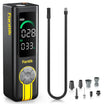
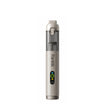
In this situation, portability becomes as important as power. While a massive garage compressor is ideal, it isn't practical for travel. The Fanttik X8 APEX EV Tire Inflator is specifically engineered to handle the higher weights of EVs and large SUVs, balancing the need for a high-torque motor with a compact form factor.
Comparison: Portable vs. Traditional Solutions
- 12V Plug-in Compressors: Often limited by the vehicle's fuse (typically 10-15 Amps), which restricts motor power. They also require the vehicle engine to be running to avoid draining the starter battery.
- Cordless Battery Units: Provide higher instantaneous torque because they aren't limited by the vehicle's wiring. However, they require disciplined battery maintenance.
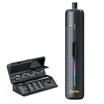
- The Fanttik X9 APEX Tire Inflator: Represents the "middle ground" of high-performance portable tech, offering enough capacity to handle SUV tires without the bulk of a tank-based system.

Battery Longevity and Maintenance Heuristics
For the self-reliant SUV owner, the worst-case scenario is reaching for an emergency inflator only to find the battery dead or degraded. Lithium-ion batteries, like those found in the Fanttik X9 Pro Portable Tire Inflator Deluxe Package, are subject to chemical aging that is accelerated by improper storage.
We have found that the "100% Rule" is actually detrimental to long-term reliability. Storing a battery-powered inflator at 100% charge in a hot trunk can cause the cells to degrade rapidly. Conversely, letting it sit at 0% can lead to "bricking," where the BMS prevents recharging for safety reasons.
Expert Storage Protocol:
- Target Charge: Store the unit at approximately 60% capacity. This is the "Goldilocks" zone for lithium-ion stability.
- Temperature: Keep the unit in a cool, dry place. Avoid storing it directly over the exhaust area or under direct glass in the trunk.
- Cycle Check: Every three months, discharge the unit slightly and bring it back to the 60% mark.
These steps align with the EU General Product Safety Regulation (EU) 2023/988, which emphasizes the importance of manufacturer-recommended maintenance to ensure product safety throughout its lifecycle.
Safety Compliance and Standards
When evaluating any portable inflator, we look beyond the marketing stickers for recognized certifications. Authoritative bodies like the International Organization for Standardization (ISO) and the ASTM International provide the testing frameworks that separate "toys" from "tools."
A high-quality inflator should ideally meet or exceed standards for:
- Pressure Gauge Accuracy: Ensuring the digital readout is within ±1 PSI. A misleading gauge can lead to over-inflation, which reduces the tire's contact patch and increases braking distances.
- Electromagnetic Compatibility (EMC): Ensuring the inflator's motor doesn't interfere with your vehicle's sensitive electronics or TPMS sensors.
- Material Integrity: Using heat-resistant hoses and high-grade seals that won't crack under the high pressures required for SUV tires.
The FTC Endorsement Guides remind us that performance claims must be substantiated. When a brand like Fanttik provides detailed specifications on LPM and battery capacity, it provides a level of transparency that we value. We recommend SUV owners look for products that explicitly state their performance at 30+ PSI, rather than just "up to 150 PSI."
Summary of Best Practices for SUV Inflation
To effectively bridge the gap between portability and the heavy-duty needs of a full-size SUV, a methodical approach is required. Portable inflators are highly capable, but they are not magical; they are precision instruments that must be operated within their mechanical limits.
- Prioritize LPM at Pressure: Ignore the "0 PSI" ratings. Look for units that can maintain at least 5-10 LPM when the tire is already half-full.
- Manage the Heat: Use the pulsing technique (3 mins on, 1 min off) to preserve the motor and battery.
- Account for Cooling: Remember that air expands when hot. A tire that reads 35 PSI immediately after a long inflation session may drop to 32 PSI once it cools.
- Maintain the Power Source: The 60% storage rule is the single most effective way to ensure your inflator works three years from now.
By understanding the underlying mechanisms of airflow decay and thermal management, you can transform a compact portable inflator from a "hopeful backup" into a reliable component of your vehicle's emergency kit. Whether you are preparing for a cross-country expedition or simply managing the seasonal pressure drops in your driveway, the right gear—used correctly—is the key to self-reliant mobility.
Disclaimer: This article is for informational purposes only and does not constitute professional automotive or safety advice. Always refer to your vehicle's owner's manual for specific tire pressure recommendations and safety procedures. If you have pre-existing mechanical concerns, consult a certified mechanic.
References
Continue reading
 Pre-Trip Tire Inspections: Calibrating Your Inflator for Accuracy
This guide covers tire pressure accuracy for road trips, explaining gauge differences and providing a calibration protocol. Save...
Pre-Trip Tire Inspections: Calibrating Your Inflator for Accuracy
This guide covers tire pressure accuracy for road trips, explaining gauge differences and providing a calibration protocol. Save...
 Spare Tire Neglect: Why Seasonal Checks Prevent Roadside Crises
This guide reveals why spare tires lose pressure fast. Learn seasonal checks, the Over-Inflation Rule, and a hybrid...
Spare Tire Neglect: Why Seasonal Checks Prevent Roadside Crises
This guide reveals why spare tires lose pressure fast. Learn seasonal checks, the Over-Inflation Rule, and a hybrid...
Leave a comment
This site is protected by hCaptcha and the hCaptcha Privacy Policy and Terms of Service apply.