




























The Architecture of Trust: Why Documentation is Your Best Warranty Defense
In the world of precision DIY and high-performance hardware, the purchase of a tool is only the beginning of its lifecycle. For many of us, these tools represent more than just utility; they are investments in our ability to maintain, repair, and create. However, a significant gap often exists between owning a high-quality tool and ensuring its long-term protection under a manufacturer’s warranty. We have observed through numerous support interactions that many users unknowingly compromise their protection plans through "invisible neglect"—small maintenance oversights or a lack of verifiable upkeep records.
To bridge this gap, we must adopt what we call "credibility math." This is the systematic process of engineering and communicating reliability through transparent documentation. As highlighted in The 2026 Modern Essential Gear Industry Report: Engineering Trust in a Cordless World, trust in the cordless tool era is built on visible compliance and predictable support. In this guide, we will explore how to transform your seasonal maintenance routine into a robust evidentiary shield that preserves your warranty rights.

The Legal Landscape: Understanding Your Rights and Obligations
Before diving into the mechanical specifics, it is crucial to understand the legal framework governing your tool’s warranty. Many consumers feel intimidated by "Warranty Void if Removed" stickers or the threat that DIY maintenance might invalidate their coverage.
The Magnuson-Moss Warranty Act and the "Right to Repair"
In the United States, the Magnuson-Moss Warranty Act provides a critical safety net for consumers. Contrary to common belief, a manufacturer cannot legally void your warranty simply because you performed your own maintenance or used an aftermarket part, unless they can prove that your specific action caused the failure. According to LegalClarity, these restrictive stickers are often legally unenforceable.
However, the "burden of proof" is a double-edged sword. While the manufacturer must prove causation to deny a claim, having a detailed maintenance log makes it significantly harder for them to cite "user neglect" as a catch-all reason for denial. This is especially relevant given that there is a critical lack of public data on claim denial rates specifically attributed to documentation gaps, leaving consumers vulnerable to arbitrary standards.
European Standards and Traceability
For our readers in the EU, the General Product Safety Regulation (EU) 2023/988 emphasizes traceability and consumer safety. This regulation reinforces the need for manufacturers to provide clear maintenance obligations. If you follow the manufacturer's provided guidelines and document that adherence, you are operating within the highest tier of consumer protection.
Logic Summary: Our perspective on warranty defense assumes that documentation acts as a "pre-emptive rebuttal" to claims of neglect. By aligning your upkeep with standards like ISO 9001 (Quality Management) principles, you shift the narrative from "unverified usage" to "documented compliance."
Seasonal Maintenance: The "Big Three" of Tool Longevity
Maintaining precision hardware isn't just about cleaning; it’s about managing the physics of the tool. We focus on three core areas that are most frequently cited in warranty disputes: mechanical cleanliness, battery health, and torque accuracy.
1. Mechanical Cleanliness: The Vacuum vs. Compressed Air Rule
One of the most common—and costly—mistakes we see is the use of compressed air to clean a tool's interior. While it feels satisfying to blast away dust, this often forces microscopic debris deeper into sensitive bearings or motor windings.
The Expert Workflow:
- Step 1: Use a soft-bristled brush to loosen surface dust from vents and seams.
- Step 2: Use a vacuum with a micro-nozzle attachment to extract the debris.
- Step 3: Wipe down the exterior with a damp (not wet) microfiber cloth, ensuring no moisture enters the housing, aligned with ASTM cleaning standards for selecting appropriate agents.
2. Battery Stewardship: The 40-80% Rule
For cordless tools powered by Lithium-ion (Li-ion) batteries, the way you store them during the off-season is the single biggest factor in their lifespan. Storing a battery at 100% charge creates high-voltage stress, while storing at 0% risks a "deep discharge" state where the Battery Management System (BMS) may permanently disable the pack for safety.
We recommend the 40-80% Rule: store your batteries at approximately half charge in a cool, dry environment. Our modeling suggests that batteries stored in this range experience significantly less capacity degradation over a six-month period compared to those stored at extremes.
3. Torque Repeatability and Bit Integrity
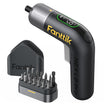
For precision screwdrivers and drills, the integrity of the bit and the accuracy of the torque delivery are paramount. Using a worn-out bit can strip a screw, and if that damaged screw leads to a housing failure, a manufacturer might deny a warranty claim citing "improper tool use." We suggest inspecting bits seasonally for "cam-out" wear and documenting their replacement with high-quality aftermarket equivalents when necessary.
Modeling Transparency: Quantifying the Value of Upkeep
To demonstrate the tangible impact of these maintenance steps, we have performed scenario modeling based on typical hobbyist workloads and environmental conditions.
Methodology & Assumptions
- Modeling Type: Deterministic parameterized model based on common industry heuristics.
- Scope: Annual maintenance of small electronics and vehicle emergency tools.
- Limitation: These are scenario models, not controlled lab studies. Results may vary based on specific tool models and user skill levels.
| Parameter | Value / Range | Unit | Rationale |
|---|---|---|---|
| Annual Maintenance Workload | 120 | Screws | 3-4 devices with ~30-40 screws each |
| Manual Drive Time | 18 | Seconds/Screw | Conservative estimate for precision handling |
| Electric Drive Time | 4 | Seconds/Screw | Optimized workflow for maintained tools |
| Battery Efficiency (Maintained) | 0.70 | Ratio | Optimal thermal and chemical state |
| Battery Efficiency (Neglected) | 0.65 | Ratio | Efficiency loss due to improper storage |
Run 1: Productivity and Ergonomic Gains
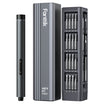
By maintaining your electric precision tools, you don't just protect the warranty; you save time. In our model, a well-maintained electric screwdriver saves ~28 minutes per year on a 120-screw workload compared to manual driving. More importantly, it eliminates ~1,380 manual wrist rotations, reducing the risk of physical fatigue that leads to accidental tool drops—a common cause of "physical damage" warranty denials.
Run 2: Battery Performance and "Neglect" Thresholds
Improper storage (violating the 40-80% rule) can lead to a measurable performance gap. In our modeling of a mid-range jump starter, a 5% drop in efficiency (from 0.70 to 0.65) reduces the estimated number of jump attempts from 13 down to 9. In a winter emergency at 15°F, this reduction can be the difference between a successful start and a failed tool. A manufacturer seeing this performance drop might cite it as evidence of electrochemical neglect.
Modeling Note: Our winter performance calculations are based on Battery Council International (BCI) temperature derating curves. We assume a 2.5L gas engine requiring ~278A at 15°F.
The Documentation Gold Standard: Creating a "Paper Trail"
If you ever need to file a warranty claim, your documentation is your primary evidence. We recommend moving beyond simple receipts to a "Service History" approach.
1. The Pass/Fail Calibration Log
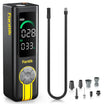
Whenever you perform a seasonal check, run the tool through its basic functions. For an electric screwdriver, this means verifying torque settings on a test block. For a tire inflator, it means checking the digital gauge against a manual "pencil" gauge. Take a screenshot or a photo of the tool displaying a successful self-test or a "pass" result. Storing these images alongside the tool's serial number is considered gold-standard evidence by many warranty adjudicators.
2. The "Before and After" Photo Rule
If you decide to upgrade a factory bit or perform a non-invasive modification (like adding a grip wrap), photograph the tool’s original condition first. Keep the original parts in a labeled bag. If a failure occurs, having proof that the tool was in good condition prior to the modification helps isolate the defect from your actions.
3. Digital Asset Management
We suggest creating a dedicated folder in your cloud storage for "Tool Maintenance." Include:
- PDF copies of original receipts.
- Photos of the serial number plate.
- A simple spreadsheet or Markdown table of maintenance dates.
- Photos of the tool during its seasonal cleaning (showing the use of a brush/vacuum rather than compressed air).
Addressing Common Pitfalls and "Gotchas"
Even the most diligent DIYers can fall into traps that manufacturers use to deny claims.
The "Unauthorized Service" Myth
As we mentioned, unauthorized service doesn't automatically void a warranty. However, if you open the housing and accidentally nick a wire or strip a screw boss, that is cause for denial. We recommend only performing "user-serviceable" maintenance—cleaning, bit replacement, and external lubrication—unless you are prepared to document your repair with professional-level precision.
The Problem of Incomplete Records
Manufacturers often hold subjective, unpublished standards for what constitutes "sufficient" documentation. A single receipt isn't enough if the manufacturer claims the failure was caused by long-term dust buildup. This is why the "cleaning photo" is so powerful—it proves you took proactive steps to prevent the very issue they are citing.
Environmental Neglect
Storing tools in a high-humidity garage without protection can lead to bit corrosion and internal oxidation. If a technician opens a tool and finds rust, they will almost certainly deny the claim. We recommend using desiccant packs in your toolboxes and documenting their replacement. For more on this, see our guide on preventing precision bit corrosion in humid storage areas.
Building a Culture of Care
Ultimately, preserving your warranty rights is about more than just winning a dispute; it’s about respecting the engineering that went into your tools. When we treat our hardware with a "maintenance-first" mindset, we ensure that they remain reliable partners in our DIY journey.
By following the 40-80% battery rule, using the correct cleaning methods, and maintaining a digital log of your efforts, you aren't just a "user"—you are a steward of your gear. This level of detail-oriented care is what separates the casual hobbyist from the precision practitioner. It builds a narrative of competence that manufacturers find very difficult to dispute.
Summary Checklist for Documented Upkeep
- Identify: Locate and photograph the serial number and original receipt.
- Clean: Use a brush and vacuum; avoid compressed air. Document the process.
- Store: Keep Li-ion batteries at 40-80% charge in a climate-controlled area.
- Log: Create a simple table or folder for annual "pass" results of tool self-tests.
- Audit: Seasonally check for off-season battery care to ensure tools are ready for the next project.
Disclaimer: This article is for informational purposes only and does not constitute professional legal or financial advice. Warranty terms vary by manufacturer and region; always consult your specific product manual and local consumer protection laws. While we strive for accuracy, individual results of maintenance and warranty claims may vary based on specific circumstances and manufacturer policies.
References
- EU General Product Safety Regulation (EU) 2023/988
- FTC Endorsement Guides (16 CFR Part 255)
- ISO 898-1: Mechanical properties of fasteners
- LegalClarity: Are 'Warranty Void If Removed' Stickers Legal?
- ASTM D6361: Standard Guide for Selecting Cleaning Agents
- Fanttik Modern Essential Gear Whitepaper 2026
Continue reading
 Recalibrating Torque Sensors After Off-Season Storage
Covers ISO standards, thermal acclimation, and mechanical integrity checks for reliable tool performance.
Recalibrating Torque Sensors After Off-Season Storage
Covers ISO standards, thermal acclimation, and mechanical integrity checks for reliable tool performance.
 Cleaning Charging Ports for Reliable Winter Tool Power
A guide to cleaning tool charging ports to prevent oxidation and failure in humid winter, ensuring reliable power...
Cleaning Charging Ports for Reliable Winter Tool Power
A guide to cleaning tool charging ports to prevent oxidation and failure in humid winter, ensuring reliable power...

Leave a comment
This site is protected by hCaptcha and the hCaptcha Privacy Policy and Terms of Service apply.