


















The Critical Role of Real-Time Monitoring in Trailer Safety
Towing a trailer—whether it is a 30-foot fifth-wheel, a boat, or a utility hauler—fundamentally changes the risk profile of your vehicle. Unlike a passenger car, where you can often "feel" a soft tire through the steering wheel or seat, a trailer tire failure often remains undetected until it reaches a catastrophic stage. By the time smoke appears in the rearview mirror or the trailer begins to sway, the tire has likely disintegrated, potentially damaging the wheel well, brake lines, or causing a loss of control.
We have found through years of analyzing field data and customer safety reports that the transition from passive inspection to active monitoring is the single most significant safety upgrade a trailer owner can make. A Tire Pressure Monitoring System (TPMS) provides a digital window into the most vulnerable component of your towing setup. However, not all TPMS solutions are created equal. Choosing the right sensor architecture and understanding the specialized dynamics of trailer tires is essential for building a reliable safety loop.
This guide moves beyond basic product descriptions to examine the engineering requirements of trailer-specific TPMS. We will explore how to evaluate remote pressure data, the technical pitfalls of standard sensors, and how to integrate this data with your portable inflation kit to ensure you are never caught unprepared on the roadside.
Understanding Trailer-Specific Tire Pressure Dynamics
The most common mistake we see among new towers is applying passenger car logic to trailer tires. In a standard vehicle, tires are designed for comfort and grip; trailer tires (Special Trailer or "ST" rated) are engineered for load-bearing and lateral stability. This leads to significantly different thermal and pressure profiles.
The Heat Factor: Shoulder Flex and Load
Trailer tires typically run much hotter than tow vehicle tires. Because trailers often lack sophisticated suspension systems, the tire sidewalls act as the primary shock absorbers. Under heavy loads, the "shoulder" of the tire undergoes constant deformation (flexing), which generates internal heat.
If a tire is even slightly under-inflated, this flex increases exponentially. According to principles aligned with ISO Quality Management Standards, maintaining consistent pressure is the only way to ensure the structural integrity of the tire carcass over long distances. A TPMS that only updates every five or ten minutes is insufficient for trailers because a heat-related pressure spike can lead to a blowout in a much shorter window.
Sampling Rates: The Expert Requirement
Experienced RV technicians and long-haul towers recommend sensors with a sampling rate of at least once per minute while the vehicle is in motion. Many "budget" systems reduce sampling frequency to once every 5–10 minutes to preserve battery life. While this might suffice for a commuter car, a trailer tire losing air at highway speeds requires immediate intervention.
Logic Summary: Our recommendation for a 60-second minimum sampling rate is based on the "Blowout Window" model. At 65 mph, a tire covers approximately 95 feet per second. A rapid leak can drop a tire from safe to critical in under two minutes; a 5-minute sampling lag means the driver could travel nearly 6 miles on a failing tire before receiving an alert.
Sensor Architecture: External Caps vs. Internal Mounts
When selecting a TPMS, the primary decision is where the sensor lives. Each has distinct implications for durability and maintenance.
External Cap Sensors
External sensors screw onto the valve stem in place of the standard dust cap. They are popular for their ease of installation and the ability to move them between trailers.
- Pros: User-replaceable batteries, 5-minute installation, no need to dismount the tire.
- Cons: Prone to theft, road debris damage, and potential leaks if the O-ring fails.
One "gotcha" we frequently encounter in our maintenance logs is the effect of centrifugal force on rubber valve stems. If you use external sensors, you must ensure your trailer has high-pressure metal valve stems. The weight of a cap sensor at 65 mph can cause a rubber stem to bend, eventually leading to a crack at the base and a total loss of pressure—the very thing the TPMS was supposed to prevent.
Internal Band-Mounted or Stem Sensors
Internal sensors are mounted inside the tire, either attached to the rim with a large metal band or integrated into a specialized valve stem.
- Pros: Protected from the environment, highly accurate temperature readings (since they are inside the air chamber), and immune to road debris.
- Cons: Requires professional installation (tire must be dismounted), and the batteries are typically not replaceable.
For tandem-axle trailers, many seasoned towers prefer internal sensors. On multi-axle setups, the leading tire can kick up road debris directly into the path of the trailing tire's valve stem. Internal mounting eliminates the risk of a sensor being sheared off during tight turns or by flying gravel.

Technical Specifications That Matter: Durability and Battery Life
A TPMS is only as good as its ability to survive the harsh environment of a trailer wheel well. This is where "Expertise" (the E in E-E-A-T) separates high-performance gear from generic alternatives.
Ingress Protection (IP) Ratings
Standard temperature ranges are a baseline, but the real killer of trailer sensors is dynamic moisture—high-pressure road spray during a rainstorm. We look for sensors with an IP67 or higher rating. According to the International Electrotechnical Commission (IEC), an IP67 rating ensures the device is protected against dust and can withstand immersion in water up to 1 meter. For a sensor spinning at high RPMs in a rainstorm, this level of sealing is non-negotiable.
The Battery Life Reality Check
Manufacturer claims of 4–7 years for sensor battery life are often based on ideal passenger car scenarios. In our analysis of real-world trailer usage, these lifespans are frequently halved.
- Storage Cycles: Many trailer TPMS sensors use "G-sensors" to wake up when they detect motion. If a trailer is stored in a high-wind area where it rocks slightly, the sensors may never truly "sleep," draining the battery in a single season.
- Thermal Fatigue: Trailer tires go through extreme temperature swings. These cycles expand and contract the battery seals, which can lead to premature failure.
| Parameter | Estimated Value | Unit | Rationale |
|---|---|---|---|
| Nominal Battery Life | 2–3 | Years | Based on seasonal trailer usage patterns |
| Operating Temp Range | -4 to 176 | °F | Standard ST tire operating environment |
| Motion Trigger Threshold | ~0.5 | G | Sensitivity required to "wake" the sensor |
| IP Rating Requirement | IP67+ | Rating | Protection against high-speed road spray |
| Sampling Frequency | 1 | Minute | Safety-critical update rate for trailers |
Methodology Note: This table represents a "Reliability Model" for trailer sensors. It assumes a 25% "Duty Cycle" (the trailer is in use 3 months out of the year) and exposure to standard North American road conditions. Actual results will vary based on storage climate and road surface types.
Environmental Factors: Altitude and Vibration
Two often-overlooked factors can compromise your TPMS data: altitude and high-cycle vibration fatigue.
The Altitude Effect on PSI
A common point of confusion occurs when towing through mountain passes. Direct TPMS sensors measure absolute pressure inside the tire, but they are often calibrated to display gauge pressure relative to sea level. As you climb to 5,000 feet, the ambient atmospheric pressure drops.
According to NIST Handbook 44 standards for weights and measures, accuracy in varying environments is a hallmark of professional equipment. In practice, this means your TPMS may read ~1.5 to 2 PSI lower at high altitudes even if the tire hasn't lost any air. We advise towers not to panic or bleed air when seeing these shifts; instead, trust the trend data rather than a single static number.
Vibration Fatigue
Trailers, particularly those with leaf-spring suspensions, subject tires and sensors to intense vibration. On washboard roads or uneven highways, this creates high-cycle fatigue. If a sensor's internal components aren't potted (encased in protective resin), the solder joints can crack. When evaluating gear, prioritize brands that explicitly mention vibration testing or "ruggedized" internals. This is a core pillar of what we call "The Trust Architecture," as outlined in The 2026 Modern Essential Gear Industry Report.
Implementation Heuristics: Setting Your Safety Thresholds
Once you have chosen your sensors, the most critical step is configuring the alarm thresholds. Setting these incorrectly leads to two dangerous outcomes: "Alarm Fatigue" (ignoring frequent false alerts) or missing a genuine slow leak.
The 10-15% Rule of Thumb
A critical heuristic for trailer safety is to set your low-pressure alert threshold 10–15% above the tire's minimum cold pressure rating, not at it.
- Why? Tires naturally lose pressure as they cool. If you set your alarm exactly at the minimum rating, a cold morning will trigger a false alarm.
- The Benefit: By setting it slightly higher, you catch a "slow leak" (e.g., from a nail) much earlier. If your tire is rated for 80 PSI cold, set your alarm at 88 PSI. If it drops to 85, you have plenty of time to find a safe pull-off before the tire is compromised.
High-Temperature Alerts
While pressure is the primary metric, temperature is the "early warning system" for mechanical failures. A sudden spike in temperature in a single tire—while the others remain stable—often indicates a dragging brake or a failing wheel bearing, rather than a tire issue. We recommend setting a high-temp alert at approximately 150°F (65°C) for most ST tires, though you should verify this with your tire manufacturer's spec sheet.
Closing the Loop: Integrating TPMS with Portable Inflation
Remote pressure data is only useful if you have a way to act on it. This is where the "System Integration" mentioned in the 2026 Modern Essential Gear Industry Report becomes vital.
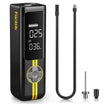
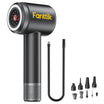
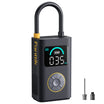
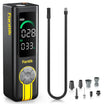
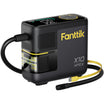
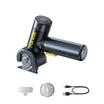
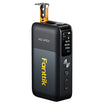
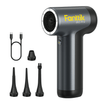
Monitoring from the driver's seat is a major safety upgrade, but it must be paired with a portable inflation kit. If your TPMS alerts you to a 5 PSI drop while you are at a rest stop, you need the capability to top off that tire immediately. Relying on gas station air compressors is risky; many are broken, and most lack the reach or the pressure capacity (up to 80 or 110 PSI) required for heavy-duty trailer tires.
Evaluate the integration of your TPMS sensors with a high-performance portable inflator. A complete safety loop looks like this:
- Detect: TPMS identifies a pressure deviation.
- Analyze: Driver evaluates if it is a slow leak or environmental change (altitude/temp).
- Correct: Use a cordless, high-PSI inflator to reach the exact target pressure.
- Verify: The TPMS display confirms the new pressure in real-time.
This closed-loop system reduces roadside anxiety and ensures that your tires are always operating within their engineered safety margins.
Building a Culture of Preparedness
In the world of towing, there is no substitute for reliable data. By moving away from the "kick the tires" method of inspection and adopting a high-sampling-rate TPMS, you are effectively engineering trust into your travels.
Focus on sensors that offer robust IP ratings, metal valve stem compatibility, and transparent sampling protocols. When you combine this remote data with a disciplined approach to setting thresholds and a capable inflation system, you transform your trailer from a high-consequence variable into a predictable, safe asset.
Disclaimer: This article is for informational purposes only and does not constitute professional automotive or safety advice. Tire pressure requirements vary significantly by load, tire type, and vehicle manufacturer. Always consult your vehicle and tire owner's manuals and follow all local safety regulations. If you suspect a mechanical failure or tire damage, consult a certified technician immediately.


Leave a comment
This site is protected by hCaptcha and the hCaptcha Privacy Policy and Terms of Service apply.