












































To pressure wash concrete steps with less risk of etching, check the surface first, test a hidden spot, and keep the spray moving at a distance. For older concrete, one practical guide suggests moderate pressure under 3,000 psi, a nozzle at least 12 inches away, and a steady sweeping motion.
No method guarantees a damage-free result on every step. If the test spot or any washed area looks rougher, stop the spray and switch to gentler hand cleaning.
How to Pressure Wash Concrete Steps Without Etching
The safest approach is a short sequence: assess, test, wash, then inspect. Each stage tells you whether to keep going or switch to something gentler.
Assess the Surface Before You Wash
Start by figuring out what you are cleaning and what you need to remove. For historic masonry, which can include concrete, the National Park Service advises identifying the material and the soiling, then choosing the least harmful effective cleaning method. That guidance is written for historic buildings, not pressure washers. Still, the same habit helps on home steps.
Before you turn on the machine, look for:
- Age of the concrete. The pressure guidance below comes from advice on older concrete. Newer steps are not covered by that advice.
- Finish. Decorative, stamped, painted, or sealed steps are outside that guidance. Clean those by hand unless the finish maker gives washing directions.
- Visible condition. Flaking, crumbling edges, loose patches, or deep cracks mean the surface is already weak. Treat those steps as hand-cleaning jobs.
- Type of dirt. Mud and loose grime differ from oil or rust stains, which may need a cleaner instead of more pressure.
Test and Wash With a Controlled Moving Spray
Concrete Network says pressure washing older concrete is generally safe with moderate pressure, typically under 3,000 psi. It also recommends keeping the nozzle at least 12 inches from the surface and using a steady, sweeping motion. Treat those numbers as a practical starting point for sound, older concrete, not a setting that works for every step.

- Pick a hidden test spot. The back corner of a lower tread or the side of a step works well.
- Start with the nozzle well back. Stay at least 12 inches away and keep the pressure moderate.
- Sweep, don't hold. Move the spray across the test spot in steady passes. Never park it on one spot.
- Rinse and let it dry. Check the dry spot in good light and compare it with the concrete around it.
- Expand only if the spot looks unchanged. Work from the top step down so dirty water runs over areas you haven't cleaned yet.
- Make another pass on stubborn dirt. Repeated sweeps are gentler than moving closer or holding the spray in place.

Our guide to pressure washer safety covers protecting yourself while you work.
Inspect for Surface Change and Decide Whether to Stop
Stop spraying as soon as the surface looks different from the concrete around it. Warning signs include a rougher texture, exposed sand or stones, lines that follow your spray path, or loose bits washing away. Continuing to spray can remove more material, so don't try to blend the mark by spraying more. Switch to a lower-force method instead: a garden hose, a mild cleaner, and a soft-bristle brush. If the steps were already flaking or crumbling, ask a concrete contractor about repair rather than cleaning them harder.
Why Concentrated Water Can Roughen Concrete
Water at high enough pressure can cut into concrete. That is why distance and movement matter so much. The American Concrete Institute describes hydrodemolition, a professional repair method in which high-pressure water jets remove concrete and leave the remaining surface roughened so that new repair material can bond to it.
Hydrodemolition uses specialized equipment and is meant to remove material. Your home pressure washer is meant for cleaning. ACI's description doesn't tell you what psi will etch your steps. What it does show is that concentrated water can strip and roughen concrete. A narrow, close, or stationary spray pushes your cleaning job toward that result. Keeping the nozzle back and the spray moving spreads the force out.
FAQs
Are steps harder to pressure wash than a flat slab?
They can be. Steps have edges, corners, and vertical risers, so it's easy to hold the spray on one spot longer than you mean to. Keep the sweeping motion going on each tread and riser, and be especially careful along the front edges.
What should I do if a stain won't come off at a safe distance?
Don't move the nozzle closer. Make another pass, or treat the stain by hand with a cleaner suited to that type of dirt. Oil, rust, and mildew each call for a different cleaner, and more pressure isn't the fix.
Can I pressure wash painted or sealed concrete steps?
The older-concrete guidance in this article doesn't cover coatings. For painted or sealed steps, start with a hose and a soft brush, and follow the coating maker's cleaning directions if it gives any.
Does a lower psi always prevent etching?
No. Distance, how long the spray stays on one spot, and the condition of the concrete all affect the result. A moderate setting held too close or too long can still mark a weak surface, so test first even at lower pressure.
Continue reading
 How to Choose Tire Pressure for a Cargo E-Bike
No single PSI fits every cargo bike. Read your tire and rim markings, account for rider and cargo...
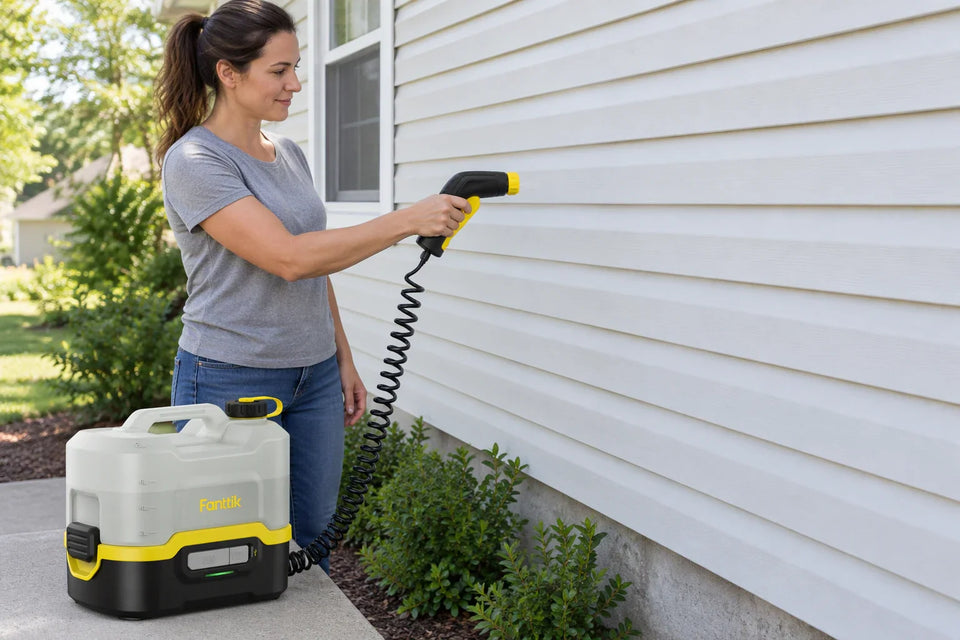 How to Pressure Wash Vinyl Siding Without Forcing Water Behind It
Check your siding and washer instructions first. Then use a level spray, keep water out of laps and...
Leave a comment
This site is protected by hCaptcha and the hCaptcha Privacy Policy and Terms of Service apply.