












































To reduce tent condensation overnight, open every inner window and vent your tent has before bed. Open opposing rainfly vents if your tent has them, and move damp clothes and gear out of the sleeping area.

These habits cut down the moisture that collects inside, but they can't guarantee a dry tent. Even a well-ventilated rainfly is often wet by morning. The goal is to keep more of that moisture on the outside, away from sleeping bags.
A Bedtime Routine to Reduce Tent Condensation
Run this quick routine once the kids settle in: adjust your airflow openings for the night's weather and clear wet items out of the sleeping quarters. Splitting the job into ventilation steps and moisture habits keeps the process simple before lights out.
Why Tent Condensation Forms on Cooler Surfaces
Condensation happens when moist air cools down against something colder than it is. The National Weather Service describes moist air cooling over a colder surface to below its dew point, which is how some fog forms. The dew point is the temperature at which air holds all the water vapor it can. Cool it further, and some of that vapor turns back into liquid water.
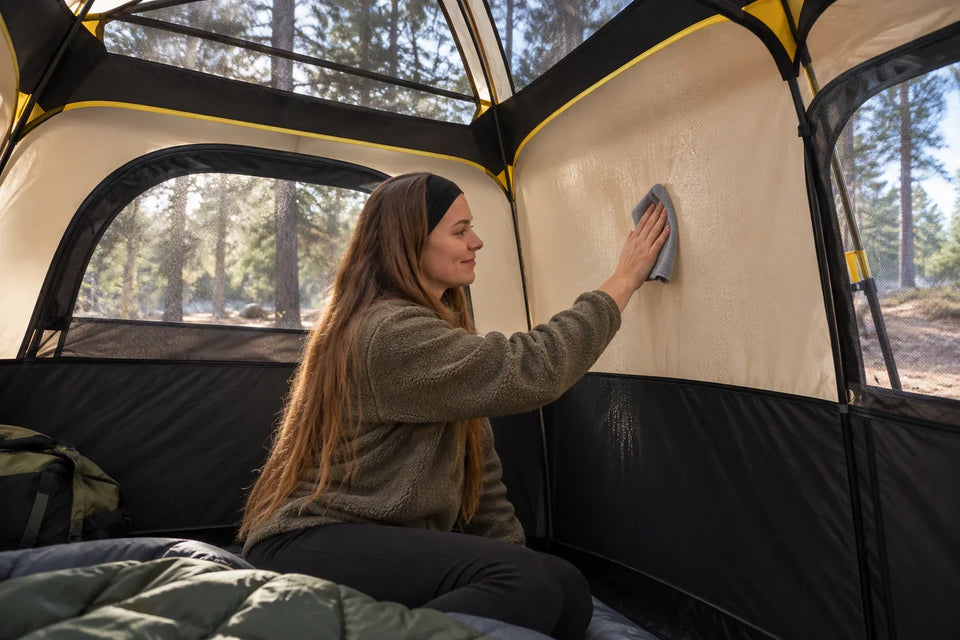
The same physics applies inside a tent. At night, the tent walls and rainfly cool off. The air inside is usually more humid than the air outside, since a family breathes out moisture all night and wet items add more. When that humid air touches the cool fabric, water can bead up.
That points to two levers you control. Airflow swaps humid inside air for drier outside air. Limiting added moisture means there is less water vapor to condense. Neither lever changes the outdoor humidity or how cold the night gets, so some dampness can still show up.

Adjust Tent Airflow Before Bed
Good airflow comes from using every opening the weather allows. Here is how to set each one:
- Inner windows: Open all of them. These are the windows on the inner tent body, separate from the rainfly.
- Rainfly vents: Open all of them. If your rainfly has vents on opposite sides, open both so air can cross the tent instead of stalling.
- Door orientation: If there is a gentle breeze when you pitch, set the tent so the door faces into it. Skip this if the air is still or the wind is strong.
- Rainfly doors and roll-up sections: Keep them open for airflow on a dry night. If rain starts, close them.
Not every tent has all of these openings. Use what yours has rather than forcing a setup it wasn't built for. If you're still choosing a shelter, our guide to family tent capacity ratings covers floor plans and gear storage, which affect where wet gear can go. You can also compare vent layouts on the Zeta C6 Pro 6-person tent or the Zeta C8 Pro 8-person tent before your trip.
Keep Damp Gear Out of the Sleeping Area
Wet items add moisture to the air inside your tent. You can't change the humidity at your campsite, and everyone keeps breathing all night. What you can control is whether soggy things sleep inside with you. Before lights out, run this check:
- Find the damp items: Rain jackets, wet socks and shoes, swimsuits, towels, and gear that got wet during the day.
- Move them out where practical: Keep them out of the sleeping area so they aren't adding moisture where your family sleeps.
- Dry them during the day: Hang or spread them out in the daytime so they come back into the tent dry.
Damp gear is only one moisture source, so clearing it out won't stop condensation by itself. It does take away a source you control, and it pairs well with the airflow steps above. A wet dog adds moisture too, so it helps to dry pets off before bedtime.
FAQs
Will my rainfly still be wet in the morning?
Probably. A rainfly is rarely dry by morning, even with good ventilation. The goal of these habits is to keep most of the moisture on the outside of the tent, not to get rid of it completely.
Is condensation the same as a leak?
No. Condensation forms when humid air inside the tent touches cooler fabric. A leak is outside water getting through. If water collects on the inside walls on a dry night, condensation is the likely cause.
Why does a full family tent seem to get damper?
Each person breathes out moisture all night, so more sleepers add more water vapor to the air inside. That makes airflow and keeping wet items out of the tent more useful when the whole family is sleeping inside.
Should I close everything up when it rains?
Close the rainfly doors and roll-up sections once rain starts. Leave the rainfly vents and inner windows open if they stay protected, so some air keeps moving.
Continue reading
 Tent Site in Shade or Sun? Balance Heat, Drainage, and Overhead Hazards
Choosing between a shaded and an open tent spot in summer? Screen the ground and overhead conditions first,...
 SUV Tent vs Cabin Tent: Which Fits Your Family's Car-Camping Setup?
How to decide between a tent that attaches to your vehicle and a standalone cabin tent, using exact...

Leave a comment
This site is protected by hCaptcha and the hCaptcha Privacy Policy and Terms of Service apply.