












































To choose a tent for limited mobility, judge the exact model against the camper's real routine, not its type or capacity label. Try getting in and out, pitch it with the help you'll actually have, and check its dimensions against the sleeping setup and campsite before you commit.
The result is one of three calls. The tent works for the routine you tested, it fails because an essential step didn't work, or it stays unverified because a measurement or hands-on trial is still missing.
How to Test a Tent for Entry, Setup, and Space
Start With the Camper's Real Routine
No two campers move the same way. REI's adaptive camping guide points out that even experienced wheelchair users don't speak for every wheelchair user, and it advises choosing gear around your own needs. Before you look at any tent, write down:
- How the camper approaches the door, gets in, repositions inside, and gets out. Include a mobility aid only if they use one.
- The planned sleeping setup, such as a pad on the floor, a cot, or a collapsible bed, plus any equipment that has to fit inside or near the door.
- Who is coming along and which tasks each person will handle, including setup.
- Where gear needs to be stored. For wheelchair users, REI suggests a dry spot for the chair near the door, like a vestibule or covered porch, and enough headroom in the tent and vestibule to move without bumping the ceiling.
This list is what you test against. A "family," "cabin," or "4-person" label tells you nothing about whether this routine will work.
Try Entry, Exit, and Setup
- Repeat the real entry and exit in the exact tent. Have the camper go through their usual approach, entry, repositioning, and exit. Use their regular aid, and include a transfer only if one is part of their routine. For wheelchair users, REI recommends a door with a shallow or absent door lip. It also notes that threshold height usually isn't listed, so roll through the actual doorway instead of guessing.
- Watch what happens. Pay attention to snags, like a zipper the camper can't reach, a lip that stops a wheel, or a turn that's too tight. Note any moment when someone has to step in and help unexpectedly. If the camper can't finish an essential step with the help planned for the trip, that tent isn't a fit.
- Pitch the exact model using its current instructions. Lay out the actual poles, fly, and stakes, then follow the manufacturer's steps with the same helpers who are coming on the trip. Write down which steps the camper does and which ones a helper does. Don't assume a tent is easy or hard to set up based on its category.
- Mark missing details as unknown. If the manufacturer doesn't publish a detail that affects fit, check it in person if you can. Don't fill the gap with a guess.

Compare Usable Space With the Site Plan
Listed floor dimensions help you spot conflicts, but they don't prove there's room to move. Run these checks separately:
- Get the exact model's numbers. Pull the current floor dimensions, layout, and footprint from the manufacturer. Measure the cot, aid, and other gear, then use the same units for everything (12 inches per foot).
- Draw the floor to scale. Place the sleeping setup and equipment on the drawing, then mark the space the camper needs to move and transfer, plus room for a helper. If you're thinking about a cot or collapsible bed, United Spinal shares a suggestion that it can make transfers easier, so include it at full size. If the layout only works on paper with the floor empty, treat it as unverified.
- Check the footprint against the site. When you arrive, walk the edges of the campsite to find possible spots for the tent, cooking area, and eating area, as National Park Service campsite guidance recommends. Then confirm the tent's outside footprint fits that spot. If you plan to put a ground cloth under the tent, our guide on sizing a tent footprint explains how to keep it from sticking out past the floor.
- Leave real gaps open. If a dimension or setup detail that affects fit isn't published and can't be checked in person, that part of the decision stays unresolved.
If the tent passes the entry, setup, and layout checks for this routine, it's workable for that plan. If it doesn't, compare a different setup too. Our breakdown of tent versus car camping covers that trade-off. For an SUV tent, use our steps to check SUV tent fit against your exact vehicle.

FAQs
Could a cot or collapsible bed make transfers easier?
It might. United Spinal passes along the suggestion to sleep on a cot or collapsible bed to make transfers easier. It also notes that some campgrounds offer raised tent beds. Treat these as options, not requirements. Practice the camper's actual transfer onto the specific bed inside the specific tent before you count on it.
What if the manufacturer does not list an entry measurement?
Don't guess the size of the opening or the height of the threshold. Try the exact tent with the camper's usual movement or aid, ideally in a store or at a demo. If you can't do that, consider entry fit unconfirmed. A hands-on check can answer the practical question, but it doesn't replace other missing specs.
What if I cannot pitch the tent before the trip?
Ask the seller for a demonstration of the exact model, or arrange a hands-on trial at home or in a store. Reading the current instructions ahead of time helps you plan who does each step, but reading isn't proof the setup will work for you. If setup is still untested when you leave, consider that part of the decision unverified and plan backup help.
Continue reading
 Using Electric Scissors for Sewing Fabric: Check Material and Layer Limits
Find out how to match your fabric, thickness, and layer count to your electric scissors' documented limits, and...
 Drilling Thin Sheet Metal With a Cordless Drill: Secure It Before You Start
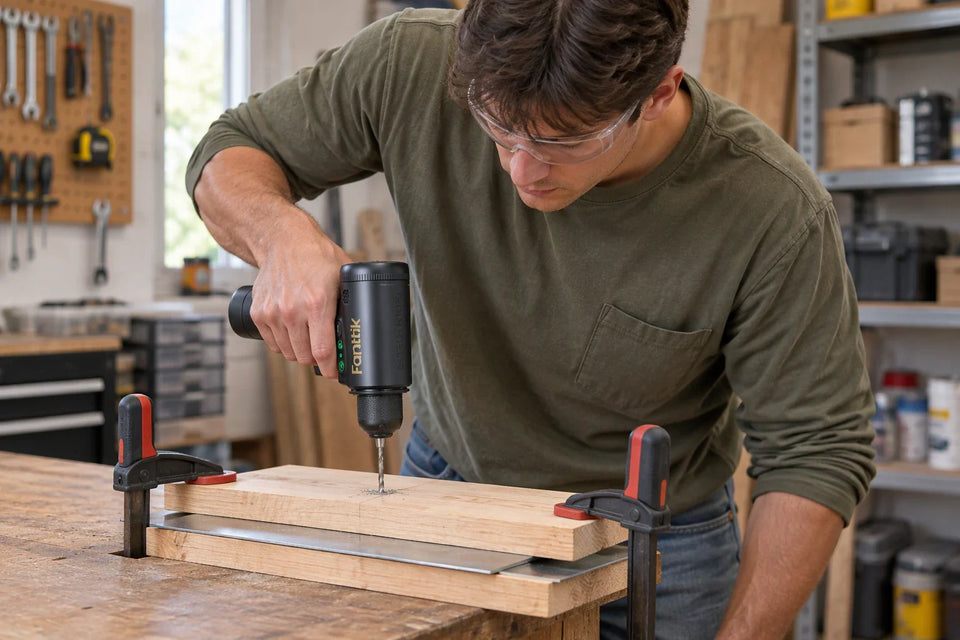
A step-by-step guide to clamping thin sheet in a wood sandwich, choosing HSS or cobalt bits, starting on...
Leave a comment
This site is protected by hCaptcha and the hCaptcha Privacy Policy and Terms of Service apply.