















After a soap job, turn the washer off and unplug it, rinse the detergent intake with clean water, drain the extra water, and store the unit somewhere sheltered and well ventilated. That is the general routine. Your washer's manual sets the exact order and any extra steps.
Detergent systems are not all built the same way. Some washers draw soap from an onboard tank, and others pull it through a siphon tube or a nozzle attachment. So good pressure washer care after soap means using the general routine below as your outline and filling in the details from the instructions for your exact model.
After Soap: Rinse the Detergent Intake and Prepare for Storage
Ferguson Home's maintenance guide gives a short after-use routine. It also tells owners to follow their manufacturer's instructions. Here is what it recommends:
- Power down first. Ferguson Home's guide says to switch off and unplug the washer before you do anything else. Treat this as your stop point. Don't touch the detergent intake or move water around while the unit can still run.
- Clean the soap path, not just the patio. The same guide says to find the chemical or detergent intake and rinse the detergent intake thoroughly with water.
- Get the water out. Ferguson Home says to drain excess water before you put the washer away.
- Pick a sheltered spot. The guide says to store away from the elements, meaning sun, rain, and snow, in a well-ventilated area.
That list is a solid outline, but it leaves out details only your manual can give you. It doesn't say how long to run clean water through the intake. It doesn't say which hoses, tanks, or fittings to drain, or whether you should release pressure or remove accessories before storage. Ferguson Home's own answer to those gaps is to follow the manufacturer's instructions, and that is the right move here.
To pull the right steps from your manual, look for three parts: the section on using detergent or soap, the after-use or shutdown section, and the storage section. Start with the detergent section. It should name the feed type your washer uses, such as a tank, a siphon tube, or a foam or soap attachment. Use the rinse steps written for that feed type. Don't borrow steps from a different washer, even one from the same brand. Models can differ in parts and maintenance needs.
Next, keep two jobs separate. Rinsing the surface you cleaned clears soap off your car, deck, or siding. Flushing the detergent system clears soap out of the washer's own intake. Finishing the first job doesn't mean the second is done. If your manual describes a specific flush, such as running clean water through the soap path, do that before you start draining.

Then check whether your manual separates routine storage from long-term or cold-weather storage. If it gives one storage routine, the four general steps plus the manual's details cover you. If it has a separate section for the off-season or freezing temperatures, follow that section when the washer will sit for months or stay in a space that gets below freezing. The general guidance above only covers keeping the unit out of sun, rain, and snow. It doesn't spell out winter prep.
Cordless washers add one more item: the battery. Power-down and storage directions for a battery pack come from the washer's manual. Our guide to battery maintenance for cordless washers explains how fixed and swappable batteries change cleanup and seasonal storage. If you own a Fanttik washer, start with our Fanttik user manual hub to get the instructions for your exact model.
Put together, a complete post-soap routine looks like this: power down, flush the detergent path the way your manual describes for your feed type, drain the water from the parts your manual names, then store the washer in a ventilated spot out of the weather. If your manual has a long-term or cold-weather section, add those steps. Follow that routine every time and pressure washer care becomes a quick habit instead of a guess.

FAQs
How do I know which detergent system my pressure washer has?
Check the detergent or soap section of the manual for your exact model. It should say whether soap comes from an onboard tank, a siphon tube, or an attachment, and it should give the rinse steps for that setup. Looking at the parts can give you a hint. The manual is still the reliable source for how that system should be flushed.
Can I leave soap in the washer until the next job?
The general guidance doesn't support that. Ferguson Home's after-use routine calls for rinsing the detergent intake with water every time you finish, not just at the end of the season. If your manual allows something different for your model, follow the manual. Otherwise, plan to flush after each soap session.
Do I need extra steps before winter storage?
Only your washer's documentation can answer that for your model. General storage guidance covers keeping the unit in a ventilated place out of sun, rain, and snow. Freeze protection or long-term prep, if your washer needs it, will be in the manual's storage or cold-weather section. Read that section before the first freezing night, not after.
What should I do if I can't find my washer's manual?
Contact the manufacturer and give them the model name so they can send the correct instructions. Don't fill the gap with another washer's steps, because detergent systems and drain points can differ between models. For Fanttik products, you can contact our support team to request the documentation for your model.
Is rinsing my car or deck the same as flushing the washer?
No. Rinsing the surface removes soap from what you cleaned. Flushing the detergent system clears soap from inside the washer's intake. These are separate jobs, so finish both before you put the washer away. That is the difference between cleaning with the washer and taking care of it.
Continue reading
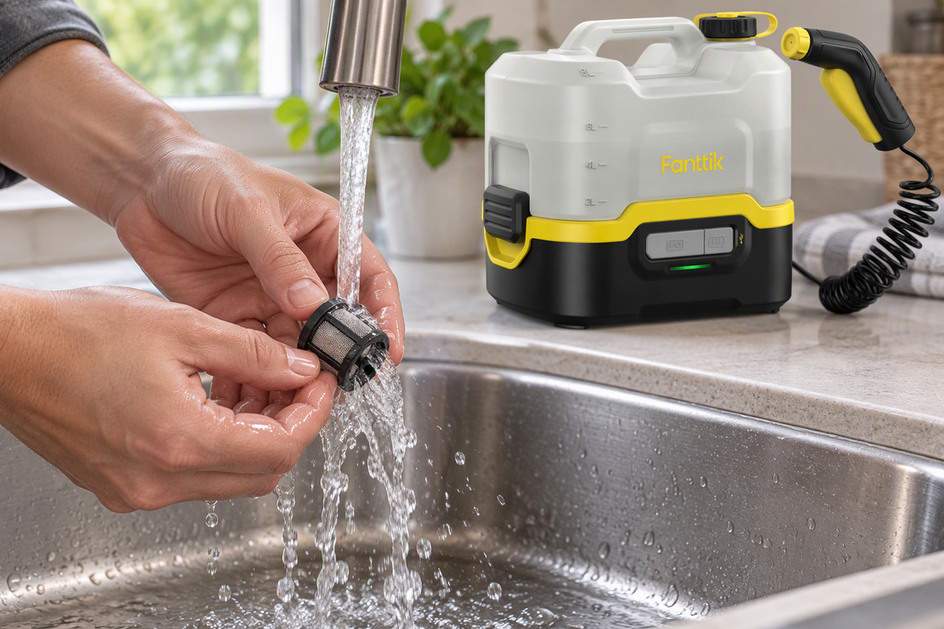 How to Clean a Pressure Washer Inlet Filter After Using a Tank
After tank use, debris may sit on the inlet screen. This guide covers the rinse-and-dry step, how to...
How to Clean a Pressure Washer Inlet Filter After Using a Tank
After tank use, debris may sit on the inlet screen. This guide covers the rinse-and-dry step, how to...
 Why a Drill Can Struggle Even When the Bit Is Sharp
Sharpness alone doesn't make a bit right for the job. Sort the symptom first, then check bit type,...
Why a Drill Can Struggle Even When the Bit Is Sharp
Sharpness alone doesn't make a bit right for the job. Sort the symptom first, then check bit type,...
Leave a comment
This site is protected by hCaptcha and the hCaptcha Privacy Policy and Terms of Service apply.