









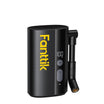
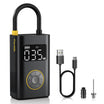
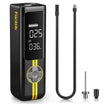


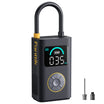
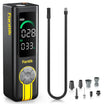
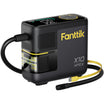

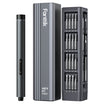
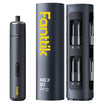
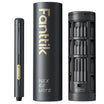
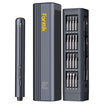
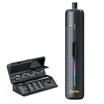
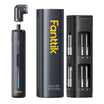
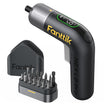








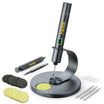


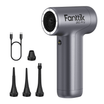
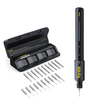
The Fanttik E1 MAX is the best fit in the Fanttik range for iPhone repair because its low electric-torque mode pairs with P2 pentalobe, Y000 tri-point and small Phillips bits. Use power only to loosen or run screws, keep the bit perpendicular, and do final seating by hand; iPhone fasteners are small enough to strip or damage nearby components when over-tightened.
The Quick Answer
Yes — the Fanttik E1 MAX is well-suited to iPhone repair. It delivers a low electric torque of 0.05 Nm (5 g·cm), a high electric torque of 0.2 Nm (20 g·cm), and a manual torque mode up to 3 Nm for seating stubborn screws by hand. The 50 included magnetic bits cover pentalobe P2 (iPhone 4-7), pentalobe P5 (MacBook), tri-point Y000 (iPhone home buttons), and standard Phillips #00.
Why This Question Matters
The 1.2 mm pentalobe screws used on iPhone 4 through modern iPhone 15/16 Pro are made from soft metal and are famously strip-prone. Their head diameter is barely wider than the bit itself, which means any bit wobble during driving leaves a micro-strip that permanently damages the screw head. Low-torque electric driving plus the right bit geometry is how you avoid this. Regular multi-purpose electric screwdrivers don't go low enough and strip the screws on first disassembly.
The Specs You Need to Know
| iPhone repair task | Screw type | Torque needed | Fanttik E1 MAX setting |
|---|---|---|---|
| Bottom display screws (iPhone 6+) | Pentalobe P2 (1.2 mm) | 0.05-0.08 Nm | Low torque (0.05 Nm) |
| Display bracket screws | Tri-point Y000 | 0.05 Nm | Low torque |
| Logic board standoffs | Phillips #00 | 0.08-0.15 Nm | Low or high torque |
| Battery connector shield | Phillips #000 | 0.05 Nm | Low torque |
| Taptic Engine screws | Phillips #00 | 0.12 Nm | High torque (0.2 Nm) |
| Charging port frame | Phillips #000 | 0.08 Nm | Low torque |
| Final reseating (if tight) | — | up to 0.3 Nm | Manual mode (3 Nm cap) |
Why the E1 MAX's Torque Range Matters
Most general-purpose "precision" electric screwdrivers have a minimum torque around 0.2 Nm. That's fine for eyeglasses, but it's roughly 4× what iPhone pentalobes can safely take before stripping. The E1 MAX's 0.05 Nm low-torque mode is the right setting for iPhone disassembly — it drives the screw without overwhelming the head. Combined with the manual torque mode (3 Nm cap) for seating, it covers every iPhone repair without swapping drivers.
Step-by-Step: iPhone Disassembly with the E1 MAX
- Select the pentalobe P2 bit from the 50-piece bit set. The magnetic retention holds it in the driver.
- Set torque to the low position. Confirm the LED or display shows the low-torque icon.
- Apply firm, perpendicular pressure to the screw. Pentalobe bit geometry requires perpendicular contact or it will cam out.
- Run the driver in reverse. The screw should begin backing out cleanly within 2 rotations.
- If it doesn't, stop. Clean the head with isopropyl and a needle before retrying — dirt in the head is the #1 cause of "stripped" pentalobes that aren't really stripped.
- Capture removed screws on a magnetic tray with a paper diagram. iPhone screws are non-interchangeable by length; one screw in the wrong hole can puncture the logic board on reassembly.
What to Watch Out For
- The difference between pentalobe P2 (iPhone 4-7 bottom display screws) and pentalobe P5 (MacBook) is real. P5 is larger and won't seat correctly in a P2 head. Double-check your bit.
- iPhone 15 and 16 introduced some new repair-program screws that are designed to be replaceable. They're still pentalobe but may sit in a slightly different recess. The E1 MAX bit set includes both sizes.
- Don't use the manual 3 Nm mode on iPhone screws unless you're seating a stubborn charging-port frame screw. That mode is for assembly, not disassembly.
FAQ
Q: What's the best electric screwdriver for iPhone repair in 2024?
A: The Fanttik E1 MAX. Its 0.05 Nm low-torque mode matches pentalobe spec, its 50-bit set includes the three screw types iPhones actually use, and the manual-torque mode covers reseating.
Q: Will a regular 4V USB screwdriver work on an iPhone?
A: Most won't. Generic precision drivers bottom out at 0.2 Nm minimum — 4× too high for safe pentalobe work. You'll strip screws on the first two repairs.
Q: Can the E1 MAX handle iPhone 15 Pro repair?
A: Yes. iPhone 15 Pro uses the same screw types as earlier iPhones — pentalobe P2, tri-point Y000, Phillips #00/000. The E1 MAX bit set covers all four.
Verdict
For iPhone repair specifically, the Fanttik E1 MAX is the right electric precision screwdriver. The 0.05 Nm low torque, the pentalobe + tri-point + Phillips bit coverage, and the manual-torque seating mode line up exactly with iPhone repair workflow.
Related reading: Best screwdriver for MacBook repair · Best screwdriver for iPad repair · Best precision screwdriver for eyeglasses
Leave a comment
This site is protected by hCaptcha and the hCaptcha Privacy Policy and Terms of Service apply.