












































To check a spare tire before a trip, start by finding the pressure your vehicle maker lists for that spare. Next, make sure your portable inflator can read pressure, reach that target, and connect to the spare's valve. Then measure the spare cold, add or let out air until you hit the target, and check it again.

Don't assume the spare uses the same PSI as your road tires. Never use the maximum printed on the sidewall as your target, either. If the spare is damaged or won't hold air, have it inspected before you leave.
How to Check the Spare With a Portable Inflator
Do the check in three stages: find the target, confirm the tool, then measure and adjust. Each stage depends on the one before it.

Find the Spare's Correct Pressure
Your vehicle maker sets the right number. NHTSA's vehicle pressure guidance says to look for it on the Tire and Loading Information label on the driver's door edge or post, or in the owner's manual. It also says the correct pressure is the one the vehicle manufacturer lists, not the number on the tire itself. The same guidance tells you to check all tires, including the spare.
Look on the label for a separate spare value. If you don't see one, check the owner's manual instead of copying the road-tire number. For example, the 2019 HR-V manual for U.S. models says to check each tire, including the spare if one is provided, when the tires are cold. That's one vehicle, so follow the instructions for your own.
Timing matters too. NHTSA's cold-check guidance defines a cold tire as one that hasn't been driven on for at least three hours. It also recommends using an accurate gauge. A spare stored in the trunk is usually cold already, but heat from the road can still warm the car. To see how heat changes readings, read our guide on how to check pressure when cold.
Verify the Inflator Before Connecting It
Check your inflator's manual for three things before you rely on it:
- Pressure readout: The manual should say the inflator shows tire pressure, not just a preset target. Also confirm the display unit matches the unit on your label. If it shows BAR and your label lists PSI, learn how to match PSI and BAR readings.
- Pressure capability: The rated range should cover your spare's target. A high maximum PSI tells you how hard the pump can push. It is not your tire's target, and it doesn't prove the gauge is accurate.
- Valve connection: The chuck or hose has to fit the spare's valve type. Car tires usually have Schrader valves, but make sure you're looking at the right fitting.
If the manual doesn't show a usable pressure reading, take your readings with an accurate tire gauge. If you can't confirm the fit or the pressure range, use a different inflator whose documentation does.
Read, Adjust, and Confirm the Pressure
- Inspect and read. Take the spare out or reach it where it's stored. Look it over, then take a first cold reading with your checked inflator or an accurate gauge.
- Add air if it's low. Work out how many PSI you're short of the target. Then inflate following the inflator's own instructions, setting the target to the spare's specified value if your tool lets you.
- Let air out if it's high. Release air a little at a time by pressing the valve core gently, then read again. Stop at the specified value.
- Recheck. Remove the tool, reconnect it or use your gauge, and take a final reading. The check is done only when that reading matches the vehicle's spec. If you don't trust the inflator's display, confirm the result with a gauge.
When Should You Stop and Get the Spare Inspected?
Don't count on a spare that shows physical damage or won't hold its specified pressure. NHTSA's tire damage and pressure guidance lists cuts, cracks, bulges, and other physical damage as reasons to stop using a tire, and advises consulting a tire service professional if pressure will not hold. Book that inspection before your trip, not after a flat.
A slow leak can sometimes come from the valve. Our guide to a leaking Schrader valve core shows how to diagnose one. If the tire itself is damaged, or you can't find the leak, take it to a shop.
A tool problem is a different case. If you couldn't confirm the inflator's readout, fit, or range, the check just didn't finish. It doesn't mean the spare is bad. Check it again with an accurate gauge and a suitable documented inflator before you decide.
FAQs
How often should I check the spare's pressure?
NHTSA recommends checking tires monthly with an accurate gauge. The 2019 HR-V manual also includes the spare in its monthly cold check. A pre-trip check is a good extra habit on top of that routine.
Will my TPMS warn me if the spare is low?
Don't rely on it for that. NHTSA says the tire pressure monitoring system doesn't replace regular tire maintenance, so check the spare with a gauge either way.
Can I use the spare to replace a worn tire?
No. NHTSA specifically advises against using your spare as a replacement for worn tires. Keep it for its intended job and replace worn road tires.
What if I check the spare right after driving?
Warm tires read higher than cold ones. NHTSA says to measure when tires are cold or allow for the extra pressure in warm tires. The simplest approach is to wait at least three hours and check again before you adjust.
Continue reading
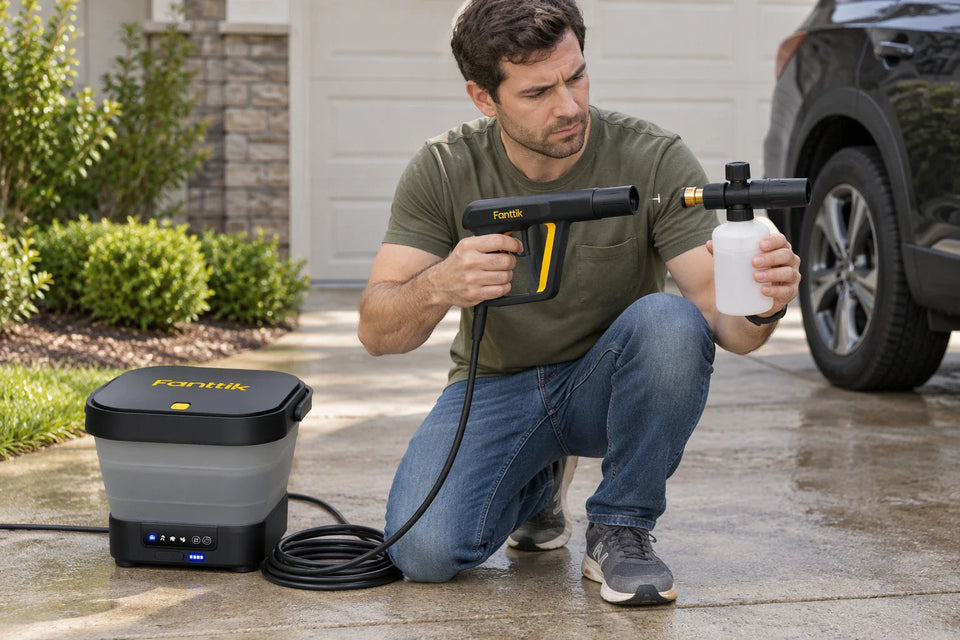 Can You Use a Foam Cannon With a Cordless Pressure Washer?
Here are the two checks that decide whether a cordless washer can run a specific foam cannon, plus...
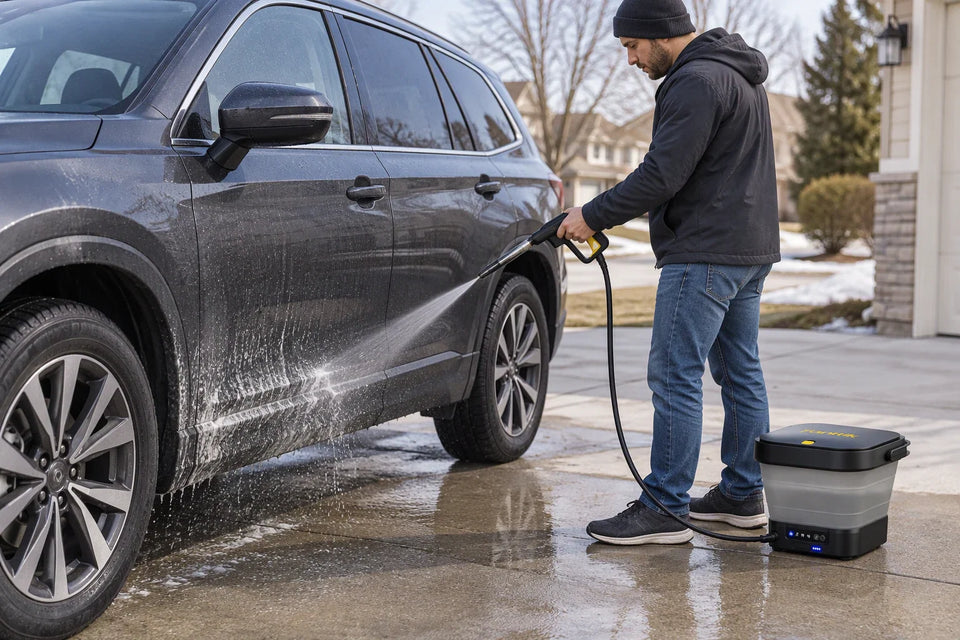 How to Rinse Road Salt Off a Car With a Portable Pressure Washer
A step-by-step method for clearing winter salt from your car's lower body, wheel wells, and tires, plus why...
Leave a comment
This site is protected by hCaptcha and the hCaptcha Privacy Policy and Terms of Service apply.