












































To rinse road salt off a car with a portable pressure washer, start by reading your vehicle owner's manual and your washer's instructions. Those two sources set the spray limits for your car and your washer. Then rinse the whole car before you touch the paint, and spend extra time on the lower panels, rocker panels, wheel wells, and tires.
A road salt rinse only cleans the surfaces your spray actually reaches. The underbody and hidden spaces need their own separate pass, so don't count them as clean after an exterior rinse.
How to Rinse Road Salt Off a Car With a Portable Pressure Washer
Work in this order: manuals first, then a full rinse, then the salt-prone areas. The full rinse comes before any wash mitt or brush touches the car.

- Read both sets of instructions before you spray. Your owner's manual covers your vehicle. Your washer's manual covers its nozzles, modes, and setup. Look for any limits on spraying near door and window seals, trim, badges, sensors, and the engine bay. Follow the stricter rule when the two overlap. No single pressure, nozzle, or spray distance is right for every car and every washer, so let these documents set your limits.
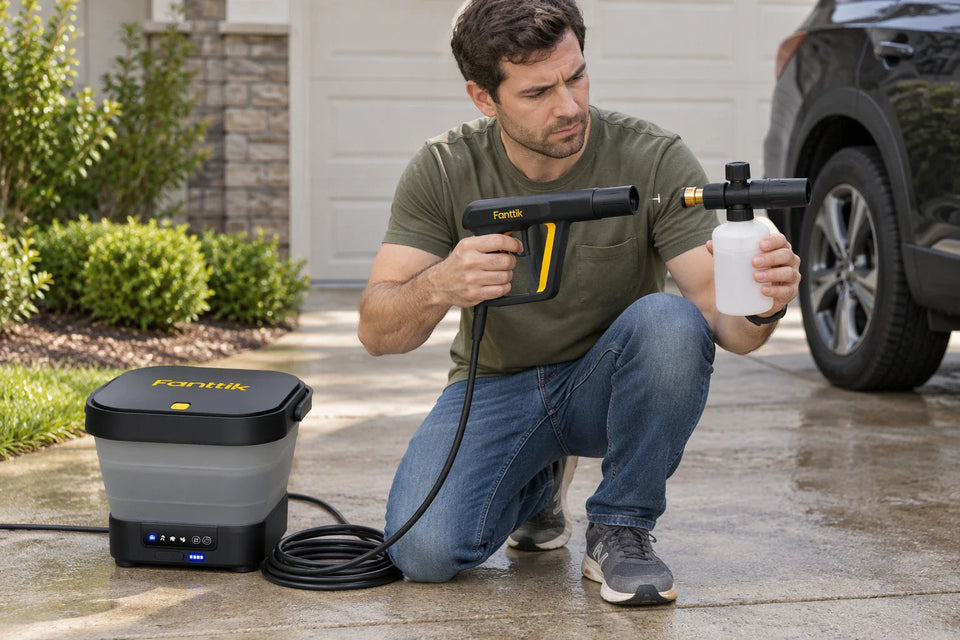
- Set up the washer as its manual describes. Charge it, connect the water source, and confirm you have a steady stream before you aim at the car. If your manual lists a gentler mode or wider spray pattern for vehicles, start there. For background on spray angles, our guide to pressure washer nozzle degrees explains how each pattern behaves.
- Give the whole car a full rinse first. AutoGeek's winter cleanup guide recommends a thorough rinse before any contact with a hose or pressure washer. It also names the areas where salt and grime build up most: lower panels and rocker panels, wheel wells and tires, and the undercarriage. The goal is to loosen grit so you don't drag it across the paint later.
- Go back over the lower body. Make slow, overlapping passes along the lower doors, rocker panels (the strip below the doors), and bumper bottoms. Watch the runoff. Keep rinsing a section until the water runs clear and you see no white film or gritty streaks.
- Rinse the wheel wells and tires. Aim into the arch from several angles to reach the surfaces you can see. Let the wheels cool first after a drive.
- Keep the spray away from areas your manuals restrict. Vehicle makers can set strict limits here. Ford's Bronco engine-cleaning warning says high pressure could get past sealed parts in the Bronco engine and cause damage. That warning covers the Bronco's engine. It shows why you should read your own car's guidance before you point a washer at an area you're unsure about.
- Move on to washing. Once the loose salt is gone, continue with soap and a mitt. Our home car wash workflow covers buckets, mitts, and wash order.
What an Exterior Rinse Does—and Doesn't—Confirm
An exterior rinse cleans only the surfaces your spray hits. Clear runoff from the rocker panels tells you those panels are rinsed. It does not tell you that frame rails, the inside of body cavities, or the hidden parts of the wheel arches are clean.

The AutoGeek guide lists the undercarriage as its own focus area, separate from the lower panels and wheel wells. Treat it as a separate job. Before you try it, check what your vehicle's guidance says about underbody cleaning and whether your washer can actually reach those surfaces safely. If you can't see a surface, you can't confirm it was rinsed.
FAQs
Should I wash the car with soap before rinsing off salt?
No. Rinse first. The full pre-rinse loosens salty grit so your mitt doesn't grind it into the paint. Add soap after the loose residue is gone.
Can I use the same nozzle on the wheels and the paint?
Not always. Many washers include several spray patterns, and your washer's manual may suggest different ones for painted panels and wheels. Use the patterns your manual lists for each surface instead of choosing one setting for the whole car.
Is it okay to rinse right after a long drive?
Let things cool first. Ford's Bronco guidance says not to clean hot wheels. Check your own owner's manual for the rules on your vehicle.
How do I know the lower panels are done?
Watch the runoff and look closely at the surface. When the water runs clear and you can't see a white film or gritty streaks, that panel is rinsed. Hidden areas still need their own check.
Continue reading
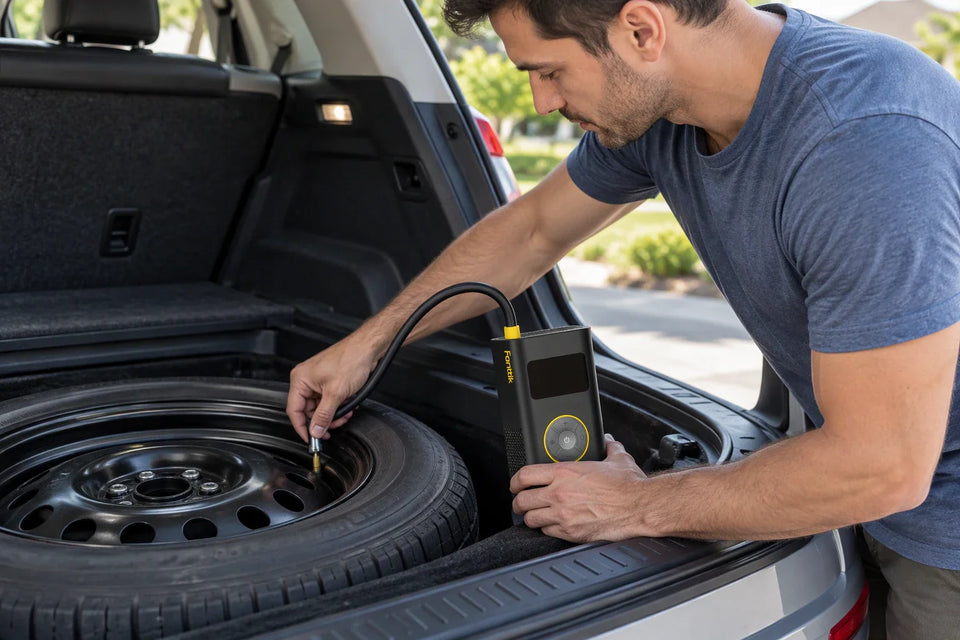 How to Check a Spare Tire With a Portable Inflator Before a Trip
A pre-trip routine for your spare: find its target on the label or in the manual, vet the...
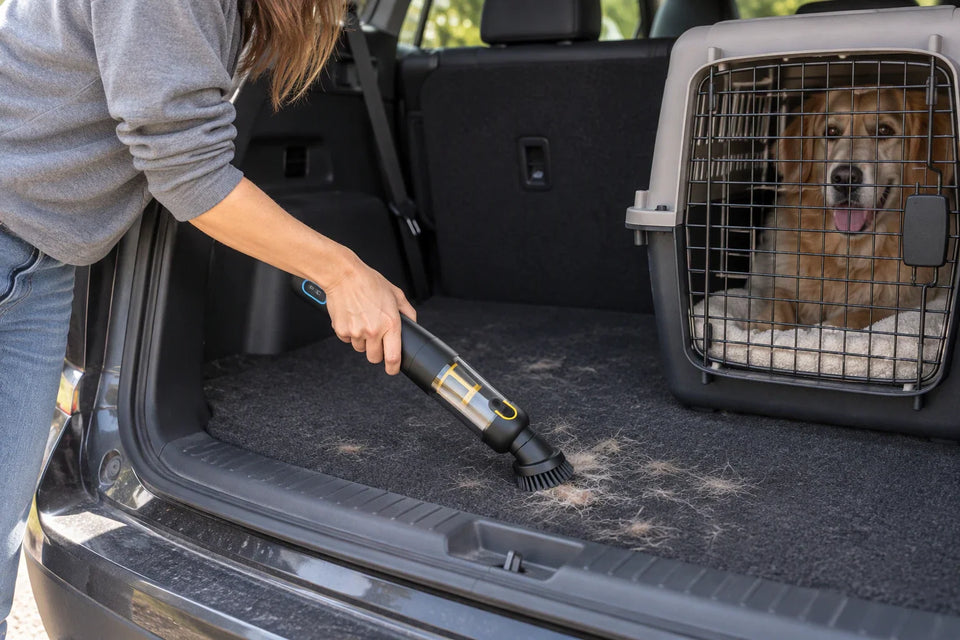 How to Vacuum Dog Hair From a Car’s Cargo Area
This step-by-step method covers prepping the cargo area, loosening embedded fur, cleaning edges and crate spots safely, and...
Leave a comment
This site is protected by hCaptcha and the hCaptcha Privacy Policy and Terms of Service apply.