










































Remote jump points vary by vehicle, so connect a jump starter only to the positive connection and ground point named in your vehicle's own owner's manual. Don't pick a spot based on where the battery sits or what looks like a terminal. Then check that your portable jump starter's manual covers those same points before you connect anything.
Key Takeaways
- Consult your vehicle manual first: Identify designated positive and ground remote jump points rather than guessing from appearance.
- Cross-check your jump starter instructions: Ensure your portable unit explicitly supports the vehicle's designated connection points and sequence.
- Stop when uncertain: If points cannot be confirmed, accessed, or documentation conflicts, stop and call professional roadside help.
Where Should the Jump Starter Connect?
Use only the specific points your vehicle's documentation designates for jump-starting: one designated positive connection and one designated ground point. When a battery sits under a seat, in the trunk, or behind other components, some vehicle models provide designated remote jump points instead.

These dedicated terminals provide a secure location away from the battery specifically intended for jump-starting.
No single location works for every vehicle. Here is one example. The 2019 Chevrolet Silverado 1500 owner's manual puts the discharged vehicle's positive jump-start post and negative grounding point on the passenger side. The positive connection sits under a cover that you slide aside to expose the terminal. That layout belongs to that truck and model year as shown in its manual. Another vehicle, another year, or another configuration can put its points somewhere else.
The Silverado example also has a second limit. It tells you where the truck's jump points are, but it doesn't tell you how a particular portable jump starter should connect to them. You need two documents for that: your vehicle's manual for the locations, and your jump starter's manual for the connection instructions.
How to Find the Jump-Start Points for Your Vehicle
Find the jump-start section of the U.S.-market owner's manual for your exact vehicle. Then use that section's labels or diagram to identify the designated positive and ground points before an emergency happens.
Checking these locations ahead of time makes troubleshooting far easier than trying to read a diagram in poor lighting or on the shoulder of a road.
- Match your exact vehicle. Write down the year, make, model, and configuration, such as trim or engine. Use the manual for that vehicle, not a similar model or a different year.
- Get the applicable owner's manual. Start with the printed copy in the glove box. If it's missing, go to the automaker's official U.S. owner resources. GM owners can use GM's official manuals page to open the owner's manual in the vehicle mobile app or search for a free downloadable PDF. Other brands have their own official channels.
- Find the jump-starting instructions. Use the manual's index or table of contents, and read the entire jump-start section along with any diagram.
- Identify only the labeled points. Note exactly where the manual places the positive connection and the ground point, plus any cover or cap you have to open to reach them. If the manual describes remote jump points, use those and not the battery itself.
- Find them on the vehicle. Open the hood or panel and match each point to the diagram while you have time and good light.
Vehicle layouts really do differ. Our guides for BMW B58-engine models and the Toyota Prius 12V auxiliary battery cover engine-bay jump terminal setups on those specific vehicles. Use them alongside your own manual. They don't replace it.
How to Cross-Check the Portable Jump Starter
Once you know your vehicle's points, compare them with your jump starter's manual. Go ahead only if the device instructions clearly apply to those points. Each document answers a different question, so keep them separate:

- Vehicle manual: where to connect. It names the designated positive and ground points and any covers or access steps. It won't cover your specific jump starter.
- Jump starter manual: how to connect. It tells you how to attach that device's clamps, in what order, and what its indicators mean. Use the manual for your exact model, not one written for a different starter.
- Jumper-cable steps are a different procedure. A vehicle's two-car cable instructions are not instructions for a portable unit. Don't borrow clamp order or other steps from them.
- Any mismatch means stop. Maybe the starter manual assumes a battery terminal but your vehicle only lists remote jump points. Maybe it describes a step your vehicle's points can't support. In either case, don't fill the gap yourself. The next section covers what to do.
Portable lithium-ion units also come with their own handling considerations, such as reverse polarity and short circuits. Our lithium-ion jump starter safety overview explains those risks. Your device's manual still decides how it connects.
When to Stop and Call for Roadside Help
Don't connect anything in these cases: you can't positively identify the designated points, you can't physically reach them, or the vehicle and jump starter instructions don't clearly agree. In those cases, don't clamp onto a terminal that looks right or a piece of metal that seems like a good ground. A guess at the connection point is exactly the mistake designated remote jump points are meant to prevent.
Call professional roadside assistance instead. If the vehicle’s jump-start procedure or connection points are unclear, Consumer Reports guidance notes that its chief mechanic recommends following the owner's manual to the letter and seeking help when in doubt. Calling a qualified service provider helps ensure the vehicle is handled using the correct technical documentation rather than guesswork.
FAQs
Can I use the Silverado's passenger-side locations on my vehicle?
No. Those locations come from the 2019 Chevrolet Silverado 1500 owner's manual and apply to that documented vehicle only. Your vehicle's remote jump points may be in a different place or have different covers. Use your own vehicle's manual.
What if my car's paper owner's manual is missing?
Use the automaker's official U.S. owner resources with your exact year, make, and model. For GM vehicles, for example, GM provides app access and downloadable PDFs through its official support resources. Make sure the copy you find matches your vehicle's configuration.
Can I clamp the negative lead to any bare metal under the hood?
Only if your vehicle's manual names that spot as the ground point and your jump starter's manual allows it. An unlisted bracket or bolt is a guess, not a designated ground. If you can't find the listed ground point, treat that as a reason to call for help.
What should I tell roadside assistance when I call?
Give them your vehicle's year, make, model, and configuration, plus your jump starter's brand and model if you have one. Then describe the exact problem. For example: you can't find the positive point the manual describes, a cover won't open, or the two manuals seem to disagree. That helps the responder come prepared for your situation.
Continue reading
 Why Does My Car Air Freshener Smell Stronger on Hot Days?
A plain-language look at heat, volatility, and airflow in a warm car, what the studies actually tested, and...
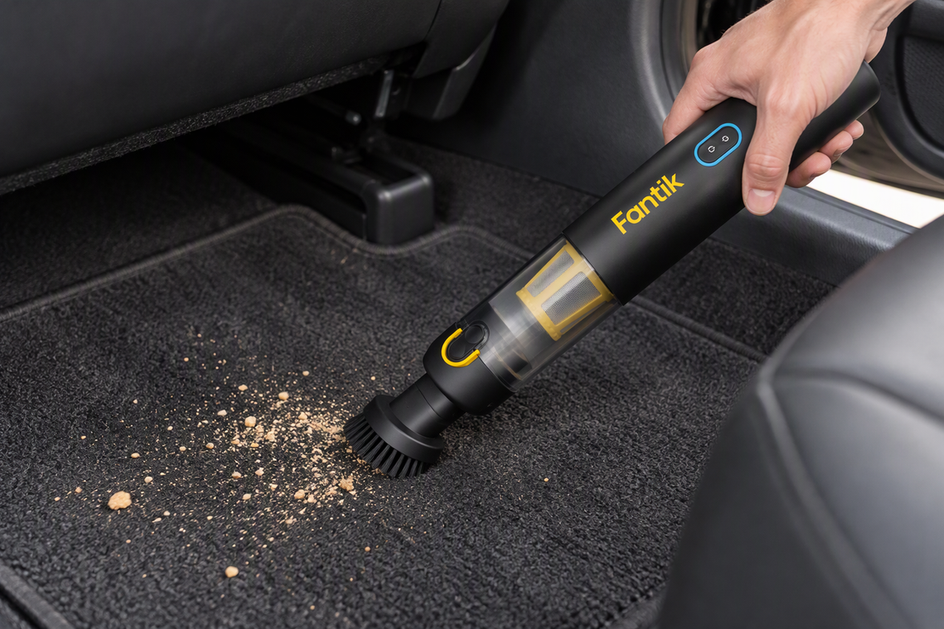 How to Choose a Car Vacuum by the Mess You Need to Clean
A mess-first guide to car vacuums: what matters for upholstery hair, sandy mats, and cupholder crumbs, plus why...
Leave a comment
This site is protected by hCaptcha and the hCaptcha Privacy Policy and Terms of Service apply.