








































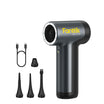



Heat is a plausible reason your car air freshener smells stronger on hot days. Warmth affects how readily fragrance compounds turn into vapor, and research on heated fragrance oil found that temperature changed how much was emitted. That research was not done inside a car, so heat is best treated as a likely contributor, not a proven cause for your specific freshener.

Airflow is a separate issue. It can change how scent reaches your nose, which is not the same as the freshener releasing more fragrance. If the smell is already too strong, don't add more. Scale back the source and air out the cabin instead.
Why Heat Can Make a Car Air Freshener Seem Stronger
Fragrance only reaches your nose after it turns from a liquid or solid into vapor, and temperature can change that step. Scientists describe how easily a substance does this as volatility. According to EPA's explanation of volatility, it is indicated by a substance's vapor pressure. At a given temperature, substances with higher vapor pressure vaporize more readily than substances with lower vapor pressure.
That definition explains why heat is worth considering, but it does not give a release rate for any car air freshener. Fragrance blends contain many different compounds, and each one has its own volatility. So the definition alone can't tell you how much stronger a given scent will get when the cabin warms up.
The closest direct evidence comes from indoor-fragrance research. A study of indoor fragrance diffusers cites experiments on heated tea tree oil emissions. In those tests, researchers collected volatile organic compounds (VOCs, the airborne chemicals that carry scent and other emissions) at three temperatures: about 81°F (27°C) by free diffusion, 140°F (60°C) with a ceramic diffuser, and 212°F (100°C) with thermal ceramic wicks. The results showed that heating temperature greatly affected the amount of VOCs emitted.
Here is what that means for your car. When you open a car that has been parked in the sun and the scent hits harder than usual, warmer fragrance material is a reasonable explanation. Still, the experiments used one essential oil in indoor diffusers, not car fresheners in a vehicle cabin. Different freshener formats and fragrance blends may respond to heat differently, and none of them has a documented "hot day" multiplier.
What Airflow Changes—and What the Evidence Does Not Show
Airflow affects how scent is delivered and perceived, and that is a different question from how much fragrance is released. Consider two moments. In a hot, closed car that has been parked, the air sits still around the freshener. While you're driving with the HVAC running, moving air carries scent through the cabin toward you. You may notice the fragrance differently in each case, but noticing it differently does not show that heat changed the release.
The research on airflow is narrow. In a controlled nasal airflow odor study, researchers delivered odors straight into the nose at set flow rates. Flow significantly altered perception: people rated odors as more pleasant at 2 liters per minute than at 4 liters per minute, while perceived intensity was also recorded separately under the higher flow rate. Crucially, that experiment tested direct nasal airflow rather than air moving through car vents, so it does not prove that vehicle ventilation increases fragrance release.
Moving vent air does not prove that your freshener is actually releasing more scent. It also does not determine how strongly a closed, parked cabin holds the aroma. If the fragrance seems stronger once the fan kicks on, treat that as a possible delivery difference. Don't use it as proof that heat made the freshener release more.
What to Do When the Scent Is Too Strong
When the fragrance is already too strong, the first rule is simple: don't add more. Topping up a scent that already feels overpowering works against what you're trying to fix. These steps are practical ways to bring the scent down:
- Skip the refill or extra unit. Leave the current freshener as is until the intensity settles, and don't hang a second one to "balance" it.
- Reduce the source. Use a smaller amount, a lower setting, or fewer units, following the directions for your particular freshener.
- Remove it for a while. Take the freshener out of the car, especially before a hot day when the cabin will stay closed.
- Air out the cabin. Open the doors or windows for a few minutes before you start driving so the trapped air can clear.
- Follow the placement directions. Put the freshener only where its maker says it belongs, and reinstall it gradually so you can judge how much you actually need.

If the scent still feels too strong after you remove the freshener and air out the car, wait longer before you put it back, then start with less than before.
FAQs
Does heat affect every type of car freshener the same way?
There's no evidence that it does. The temperature finding comes from indoor experiments on heated tea tree essential oil, not from vent clips, hanging cards, gels, or diffusers tested in cars. Fragrance compounds differ in volatility, so two fresheners in the same hot car may not change by the same amount.
Does a stronger smell mean the freshener is releasing more fragrance?
Not necessarily. How strong a scent seems to you is a perception, and emissions are a physical amount that has to be measured. In a controlled lab study, airflow at the nose changed how pleasant people rated odors, which shows that delivery conditions can shape how a smell comes across. Your nose alone can't confirm how much a freshener is emitting.
Will changing my vent settings fix a scent that's too strong?
That hasn't been shown. The airflow research looked at odor delivered straight into the nose, not at car vents or HVAC settings, so no tested vent setting is known to lower freshener intensity. Lowering the fan may change how the scent reaches you, but cutting back the fragrance source itself is the more direct step.
Is a hot parked car the same as the temperatures in the indoor study?
No. The indoor experiments used set temperatures from about 81°F to 212°F with specific diffuser methods, and they didn't measure car cabins. Those numbers explain how temperature affected one oil's emissions. They aren't a guide to how hot your car gets or how your freshener will behave in it.
Continue reading
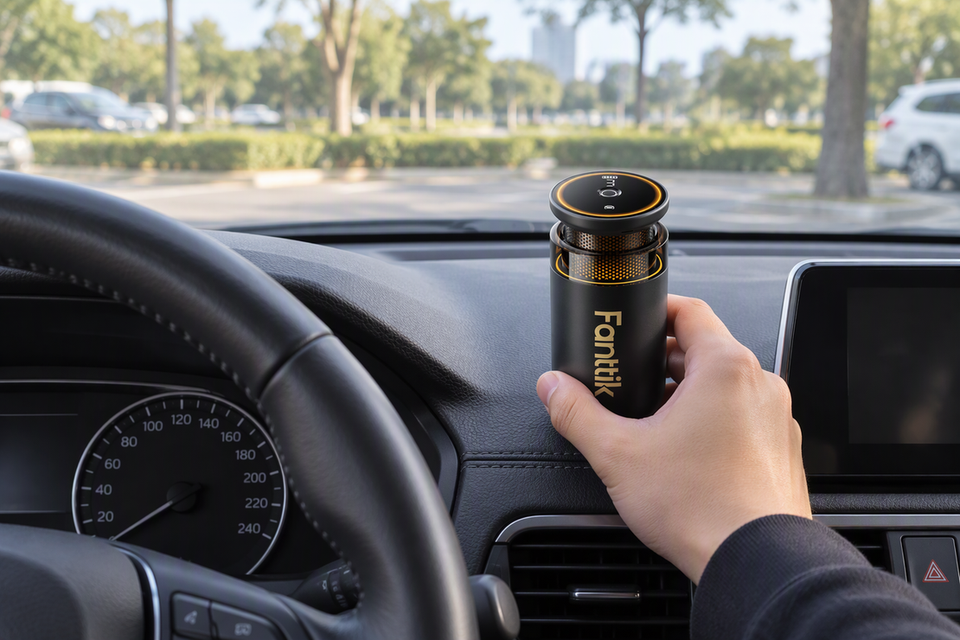 Where to Place a Car Air Freshener Without Blocking the Driver
A step-by-step way to test any freshener spot from the driver's seat, rule out airbag areas with your...
 Where Should a Vehicle’s Jump Starter Connect if the Battery Is Hard to Reach?
A practical guide to locating vehicle-designated jump-start terminals, checking them against your jump starter manual, and knowing when...
Leave a comment
This site is protected by hCaptcha and the hCaptcha Privacy Policy and Terms of Service apply.