











































For a shared family vehicle, pick a fragrance that suits the person who wants the least scent. If everyone agrees on a light scent, a mild fixed-intensity freshener keeps things simple. If preferences differ, an option with documented intensity controls is the better fit.

Either way, treat a shared car air freshener as optional scent, not a fix for odors or a way to clean the air. Mount it only where the product's own directions and your vehicle allow. Skipping fragrance entirely is also a fair choice when one regular rider would rather have none.
How to Choose Between Mild and Adjustable Scent
Start with the people who actually ride in the car, not with the scent you like. A family car often carries a parent who enjoys fragrance, a teen who finds it too strong, and a grandparent who would rather have none. One fixed level won't suit all of them, and the person who dislikes it can't just leave.
| Passenger preference | Option to favor | Why |
|---|---|---|
| Everyone agrees on a light scent | Mild fixed-intensity freshener | Nothing to adjust or argue over |
| Riders want different strengths | Documented adjustable intensity | Level can change by trip or rider |
| Someone wants no added scent | Skip fragrance | Respects the strictest preference |

A fixed option works when the regular riders already agree on a subtle scent. There's no dial to remember and no setting to reset after someone else drives. The tradeoff is that you can't turn it down if a new passenger finds it too much.
Adjustability matters more when the riders change from trip to trip, such as a car that switches between a school run and a weekend drive with relatives. Look for controls the product actually documents on its packaging or product page. Don't count on a description like "light" or "fresh" to tell you how strong a scent will seem.
With an adjustable freshener, a practical approach is to start at the lowest available setting. Ask riders after a few trips whether it feels comfortable. Raise it one step only if everyone agrees, and turn it off when a passenger who prefers no scent is along.
What Fragrance Can—and Can't—Do
A car air freshener adds scent. That's the whole job you should expect from it. If the real problem is a smell from spilled milk, a gym bag, or a pet, fragrance only sits on top of it.
UMass Environmental Health & Safety notes that air-freshener odor-removal claims are difficult to verify, and that using these products does not address the source of an odor. So if a product promises to clean or purify the air, don't make that the reason you pick it.
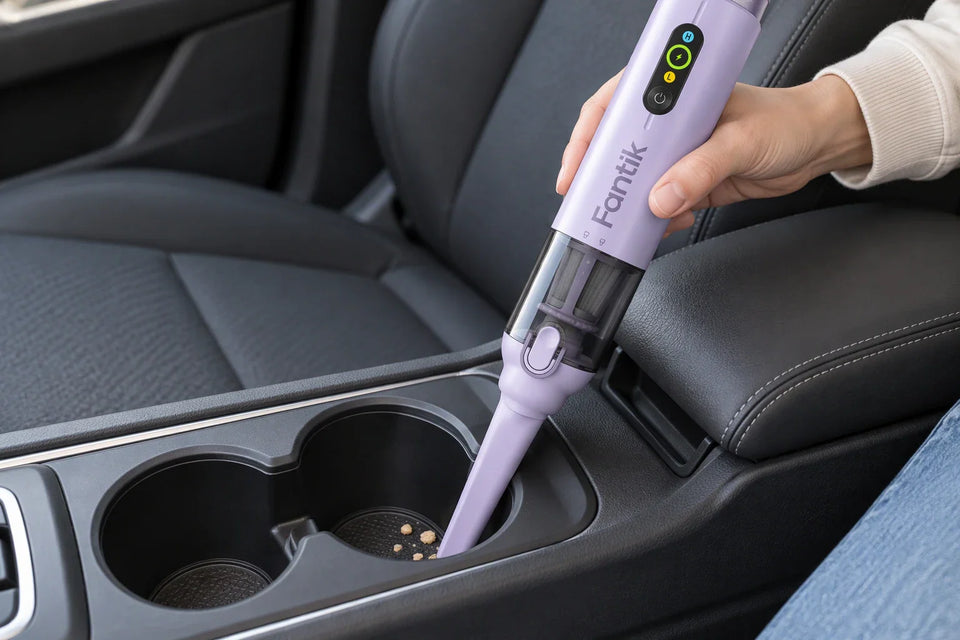
Air purification is a separate function. In its guide to home air cleaners, the EPA describes air purifiers as devices designed to filter the air in a single room or area. That guidance covers home devices, but the distinction holds: filtering air and adding fragrance are different jobs. Choose a freshener for the scent your passengers want, and handle odors separately, for example by cleaning up crumbs and spills with a portable car vacuum.
How to Follow the Freshener's Placement Directions
No single spot suits every freshener in every car. The product's own directions decide how and where it attaches, and your vehicle decides what's off-limits. Work through these steps for each spot you're considering:
- Identify the mounting style. Is it a hanging freshener, a vent clip, one that sits on a surface, or one that sticks on? Each has its own attachment method and limits.
- Follow that product's packaging. If it names surfaces to avoid, vent types it fits, or a way to secure it, use those directions. Don't apply one freshener's directions to a different product or format.
- Check from the driver's seat. Sit in your normal driving position. The freshener should stay out of your view through the windshield, windows, and mirrors, and should not get in the way of the wheel, signals, shifter, screen, or pedals.
- Compare the spot with your owner's manual. Find the airbag section, which may be labeled SRS, and note any areas the manufacturer says to keep clear. Use the manual for your exact make, model, and year.
- Confirm it stays secure. A vent clip that won't grip or a freshener that slides on its surface fails. Don't add tape, wedges, or extra clips to make it work.
- Reject any spot that fails. If the directions rule out a location, or it fails any check above, move to the next candidate and repeat every step.
If no spot passes with your current freshener, try a different format and test it the same way, or skip fragrance.
FAQs
What can I do if an odor remains in the vehicle?
Look for the source instead of adding more scent. UMass lists source removal, ventilation, and cleaning among alternatives to air fresheners for indoor spaces. In a car, that means finding and removing what smells, opening the windows, and cleaning and vacuuming regularly. That advice is general indoor guidance, not a car-specific test.
Does adjustable intensity mean the fragrance is mild?
No. Adjustability tells you that you can change the level. It doesn't tell you how strong the scent will seem at its lowest setting or whether every rider will like it. Choose based on the documented controls and what your passengers say after a few trips.
Do placement directions carry over when I switch cars or fresheners?
No. A spot that passed in one vehicle may fail in another, because cabin layout and airbag guidance change by make, model, and year. A new freshener can fail in the same car if it's larger or attaches differently. Run the full set of checks again whenever the vehicle, the freshener, or the driver's seating position changes.
Is it okay to skip an air freshener in a shared car?
Yes. Fragrance is optional. If one regular passenger prefers no added scent, leaving it out is a simple way to keep every ride comfortable, and a clean cabin with good ventilation doesn't depend on fragrance at all.
Continue reading
 Where to Store a Tire Inflator in Your Car for Roadside Use
Pick a spot you can reach with the car fully loaded, strap it so it can't slide, check...
 Cleaning Dry Crumbs From Car Cup Holders With a Handheld Vacuum
A step-by-step method for pulling loose crumbs out of cup holders with a handheld vacuum, a clearance check...
Leave a comment
This site is protected by hCaptcha and the hCaptcha Privacy Policy and Terms of Service apply.