












































To prepare a new driver to use a portable jump starter, sit down with the exact vehicle, the exact starter, and both owner's manuals before anything goes wrong. Together, confirm that the starter is documented for that vehicle, find the connection points the vehicle maker specifies, and learn what each starter warning means and what it tells you to do.

Preparing also means knowing when to stop. If you can't confirm any one of those answers, don't connect the starter. Call roadside assistance or get qualified help. You never need to practice on a weak, damaged, or unsuitable battery to be ready.
Check the Exact Starter Against the Vehicle
Compatibility means a documented match between one specific starter and one specific vehicle. A product category or a single headline number doesn't settle it. Work through this check at home:
- Write down both identities. Record the vehicle's year, make, model, and engine. Then record the starter's full model name, taken from the unit or its manual.
- Pull the limits from each manual. Note the vehicle types, battery types, engine sizes, and exclusions that the starter manual lists. Then note anything the vehicle manual says about jump-starting or about using an outside power source.
- Compare only what is written. Line up the vehicle's details against the starter's stated limits and exclusions. If a manual doesn't address a detail, leave that detail open. Don't assume it's fine.
- Mark the result. Use one of three labels: documented match, documented mismatch, or unresolved. A mismatch or an unresolved result means you don't use that starter on that vehicle.
Here's how a headline rating fits into the check. Our Potent T10 is listed for engines up to 7.0L gasoline or 5.0L diesel. That figure is one limit to compare against the engine size. On its own, it doesn't confirm that the starter suits a particular vehicle. The starter manual's other conditions and exclusions still have to line up. Whatever starter you own, use its engine-size figure the same way: as one item on the checklist, not the final answer. For an overview of how lithium-ion units handle risks such as reverse polarity, see our guide to lithium-ion jump starter safety.
Find the Vehicle's Prescribed Connection Points
Each vehicle maker tells you where to attach jumper clamps. On some vehicles, those spots are remote connection points instead of the battery posts. That's why one car's layout can't stand in for another's. Find the correct points while the car is parked at home:
- Get the owner's manual for that exact vehicle. Use the printed copy that came with the car or the automaker's official digital version for that year and model.
- Find the jump-starting directions. Check the index or table of contents for jump-starting, battery, or roadside emergency sections.
- Record the positive point and the ground point. Write down where the manual says each one is. If the manual specifies remote points, write those down instead and note any restrictions it gives.
- Locate the points on the car. With the engine off, open the hood and match what you see to the manual's description or diagram. Photos can help, but label them with the vehicle's year and model.
If the manual's directions don't clearly match what you see under the hood, treat the connection point as unresolved. Don't guess at a nearby metal surface or copy a layout from a video about another car. Leave the starter unconnected.
Learn What the Starter's Indicators Require
Warning lights, codes, and screens are specific to each model. Even two starters from the same brand can use different signals. Use the exact starter's manual to build a short warning-to-action list:
- List every indicator state the manual defines. That includes lights, icons, error codes, and alarms.
- Write the meaning beside each one. Use the manual's wording, not your own guess about what a symbol looks like.
- Write the action the manual prescribes. Note whether the manual says to continue, stop, fix a condition first, or seek help.
- Mark a ready state only if the manual names one. A display that lights up or shows a voltage isn't, by itself, permission to proceed.
- Mark any undefined or unclear state as unresolved. That state means stop, not continue.
Practice reading the list out loud with the new driver until they can match an indicator to its action without hunting through the manual. To see what model-specific support material can look like, compare our T8 APEX troubleshooting guide. It covers one model only, so don't apply its details to a different starter.
Know When to Stop and Get Help
The rule for a new driver is simple: when a required answer is missing, the clamps stay off. Don't proceed if any of these is true:

- A manual rules it out. Either manual documents a mismatch or prohibits use in your situation.
- The match is unresolved. You couldn't confirm that the starter suits this vehicle.
- A connection point is unclear. You can't identify the positive or ground point the vehicle maker prescribes.
- A warning is unresolved. The starter shows a state you can't decode, or the manual's required response is unclear.
In each of these cases, the next step is roadside assistance or qualified help, not improvising. Preparation is done on paper and at the parked car. It never requires a test jump, and it should never involve practicing on a battery that's damaged, leaking, or otherwise unsuitable. If the car still won't start after a properly prepared attempt, our guide on why a car won't start explains when to stop and call for help.
FAQs
What information does the Potent T10 display show?
The display on our Potent T10 shows real-time voltage, battery level, and operating status. That's useful at-a-glance information, but it isn't a warning guide. Take the meaning of any warning and the action it requires from the T10 manual, and add them to your reference list.
How can a Ford owner find the manual for the exact vehicle?
Ford's official owner's manual lookup lets you choose a vehicle by year and model or search by VIN. The lookup only gets you to the right document. The jump-start directions and connection points are in the manual itself. Other automakers have their own lookup tools, so use the one from your vehicle's maker.
What if the manual's jump-start directions are hard to find or unclear?
Search the index or the digital search for terms such as "jump," "jump starting," "battery," and "roadside emergencies." If you still can't confirm the direction, contact the vehicle maker or a dealer service department before you need it. Until someone answers the question, mark that item unresolved on your card. At the roadside, that means calling for help.
Should a parent supervise the first real use?
If you can, yes. Use it as a chance to walk through the written reference together. Supervision doesn't replace the manuals. An experienced driver should follow the same stop rule when an item is unresolved.
Finish a Quick-Reference Card Before the Trip
Before the starter goes into the car, fill out a card and keep it with the starter or in the glove box:
- Vehicle and starter: Year, make, model, and engine, plus the starter's full model name.
- Compatibility result: Match, mismatch, or unresolved, along with the limit or exclusion that decided it.
- Connection points: The positive point and ground point the vehicle maker prescribes, including any remote points.
- Warning guide: Each indicator state, its meaning, and the action the manual prescribes.
- Help path: Your roadside assistance number and who to call. Mark every unconfirmed item "not confirmed." While any item still carries that label, the setup isn't ready.
Continue reading
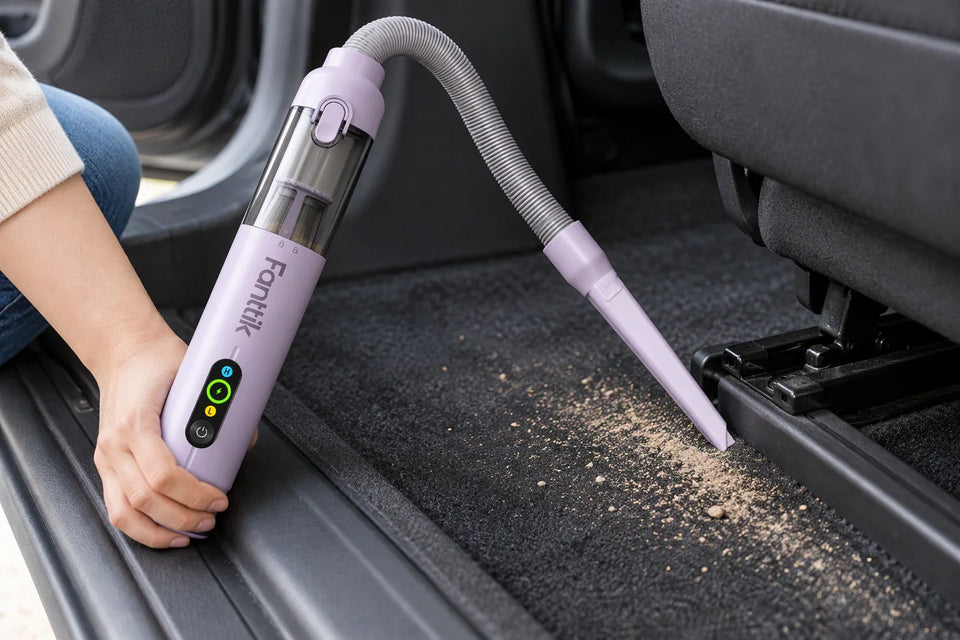 Vacuuming Beach Sand From Fixed Car Carpet and Seat Tracks
A step-by-step method for clearing beach sand from fixed car carpet and the reachable parts of seat tracks...
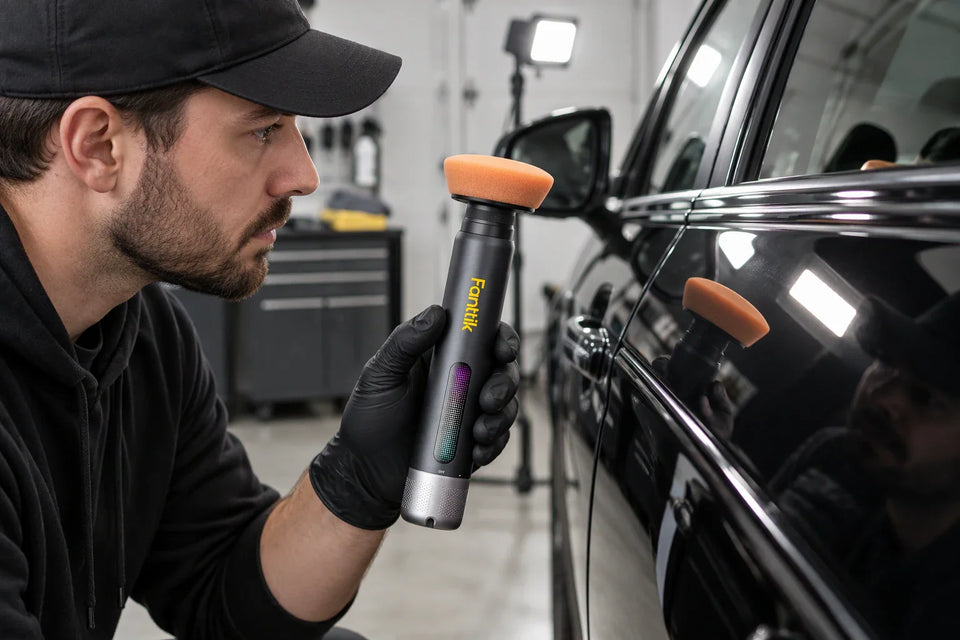 Can a Mini Polisher Be Used on Gloss-Black Car Trim?
Gloss-black trim varies by substrate. Based on interior piano-black trim guidance, see which light marks may improve, how...
Leave a comment
This site is protected by hCaptcha and the hCaptcha Privacy Policy and Terms of Service apply.