












































To get beach sand out of fixed car carpet, let any damp grit dry first. Then loosen the top layer with a soft brush and vacuum it up in slow, controlled passes. Around the seat tracks, vacuum only the parts you can see and reach easily, and never force a nozzle or brush into the seat hardware.
The carpet and the tracks need different handling. You can work carpet from the surface down, but a seat track has moving parts, so it's an access-limited area. If sand is still stuck after a gentle pass, stop. Pressing harder or taking the seat apart is not part of this job.
How to Vacuum Sand From Fixed Carpet and Seat Tracks
Let Damp Grit Dry, Then Vacuum the Carpet
Wet sand clumps together and clings to carpet fibers. If you brush or vacuum it while it's still wet, you can smear it deeper into the pile. Start with the carpet, because it's the biggest area and usually holds the most sand.
- Wait until the grit is dry. No exact drying time applies to every car. Just wait until the sand looks and feels dry and no longer clumps when you touch it. If you're working right after a beach trip, leaving the doors open in a dry, shaded spot can help. Vacuum once the clumps have broken down into loose grains.
- Take out loose items first. Clear out towels, toys, and floor mats so you can see the fixed carpet underneath. Clean the mats separately. Toyota's guide also lists the trunk with the carpet and mats when you remove loose dirt. If beach bags rode back there, vacuum the trunk carpet the same way.
- Loosen the surface sand gently. Toyota's general car-interior guide recommends a soft-bristle brush for gently agitating dirt and debris in carpet and upholstery. Use short, light strokes to lift sand toward the top of the fibers. Don't scrub hard. Heavy pressure grinds grit into the carpet and the seat fabric next to it.
- Vacuum in slow, overlapping passes. Let the nozzle glide over the carpet instead of pressing it down. Work one small section at a time, and go over each section from more than one direction so the suction reaches grains lying at different angles in the pile.
- Pick an attachment that fits the spot. The same Toyota guide suggests a vacuum with attachments that reach tight spots and crevices. Use a wide tool on open floor and a narrow crevice tool along seams, under seat edges, and where the carpet meets the trim.
- Check your progress. Brush a small patch lightly and look for grains coming to the surface. If you see them, repeat the brush-and-vacuum cycle on that patch only.

This is a dry-debris job. If you're using a cordless unit, keep in mind that many dry-only car vacuums shouldn't take in liquid. That's one more reason to wait until the sand is fully dry instead of vacuuming up wet clumps.
Vacuum Only Exposed Seat-Track Areas
A seat track is not just more carpet. It's a rail with moving parts, so the aim is to remove sand you can reach without pushing anything farther in.
- Slide the seat to open up the track. Move the seat using its normal controls so different sections of the track are exposed, then vacuum what you can see.
- Use suction, not pressure. Hold the crevice tool just above or beside the visible grit and let the airflow pull it up. Pushing the tip into the rail can drive sand deeper into the mechanism.
- Insert tools only where they fit freely. If a nozzle or brush slides in without resistance, use it there. If you'd have to wedge, twist, or force it, stop at that point.
- Use a small detailing brush on visible edges. Toyota's guide lists small interior detailing brushes for crevices and other tight areas. Use one only to flick visible grains toward the nozzle. Never use it to dig into the rail.
- Leave the seat and carpet in place. This method doesn't involve unbolting seats or lifting carpet. Follow your owner's manual for anything specific to your vehicle.

If Sand Still Remains
What you do next depends on where the leftover sand is. If grains are still loose at the carpet surface, repeat the gentle brushing and controlled passes on that area. Several light passes are better than one hard one. Malco's interior detailing guide gives similar general advice: vacuum loose debris from nooks and crevices so you don't push particles deeper. You can also compare suction, runtime, and bin size if your current vacuum fills up or loses power halfway through a sandy cleanup.
If the grit is packed below the part of the carpet you can reach, or it's inside a track where tools won't fit freely, stop. Harder pressure won't fix it, and taking the seat apart is outside this method. For hidden track sections, check your vehicle manual or ask a qualified detailer. To keep sand from building up again, a quick car cleanup routine after each beach day helps.
FAQs
Can I use a crevice attachment near a seat track?
Yes, on the parts that are exposed. Toyota's general guidance recommends attachments for tight spots, but it isn't a seat-track procedure. Run the crevice tool along visible edges and openings. Don't push it into the rail or the hidden hardware.
What if sand remains after gentle carpet passes?
If the sand is loose on the surface, brush lightly and vacuum that patch again. If it doesn't move with gentle work, it may be beyond what surface cleaning can reach. Don't press harder.
Do I need to remove the seat to clean the track?
No. This method only covers areas you can reach with the seat installed. You can slide the seat to expose more of the track. Any removal steps specific to your vehicle belong to your owner's manual or a qualified detailer.
Should I vacuum while the sand is still damp?
No. Wait until the grit is dry and loose. Damp sand clumps and can be pushed into the fibers instead of lifted out.
Continue reading
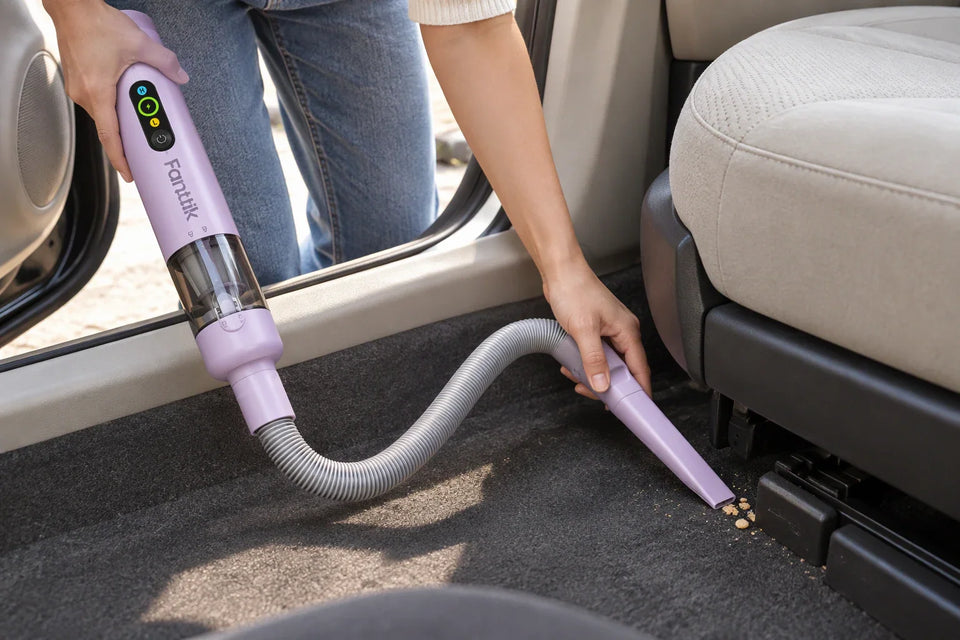 Choosing a Car Vacuum for Cleaning Under Seats and Along Seat Rails
Fit the nozzle tip to the narrowest seat gap, add hose or wand reach only after it clears,...
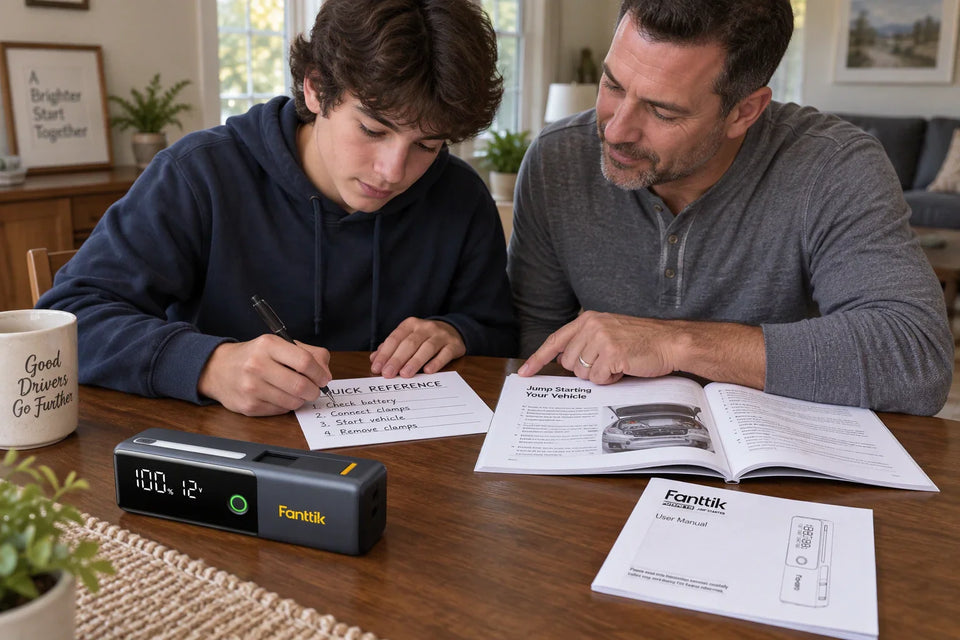 Preparing a New Driver to Use a Portable Jump Starter
A step-by-step guide for new drivers and their parents. Build a vehicle-specific reference card from both manuals before...
Leave a comment
This site is protected by hCaptcha and the hCaptcha Privacy Policy and Terms of Service apply.