










































Don't use a standard dry-only cordless car vacuum to suck up spilled coffee or any other liquid. If a drink spills in your car, stop the vacuum, blot or soak up the loose liquid with a towel first, then clean the surface before you ever go back to dry vacuuming.
A vacuum cleaner for car interiors is built to pull up dust, crumbs, and pet hair, not standing liquid.
Can You Vacuum Spilled Coffee With a Standard Cordless Car Vacuum?
No, not with a standard dry-only model, and that rule holds even if the vacuum looks powerful or has a washable filter. This isn't a claim that every cordless car vacuum is dry-only forever; a specific model can only be used on liquid if its own documentation explicitly says so.
Fanttik's support guidance for the Slim V8 APEX is a useful example of how narrow that exception is: the Fanttik Slim V8 APEX support guidance tells owners to run the unit dry and never vacuum standing water, drink spills, or wet sand, and to let the filter fully air-dry before it's reinstalled. That instruction applies to that specific vacuum and screwdriver combo kit, not to cordless car vacuums in general. If you're shopping for a V8 APEX vacuum and screwdriver kit or already own one, treat this same dry-only boundary as the default until a manual says otherwise.
Why Liquid Can Damage a Dry-Only Cordless Car Vacuum
Liquid threatens a dry-only vacuum in three separate ways: it can reach electrical parts, it can leave behind residue, and it can stay damp inside the vehicle long after the spill looks gone. Each of these has a different consequence, so it helps to treat them as three separate risks rather than one vague "liquid is bad" warning.
Electrical Exposure Is the First Concern
Liquid on electrical equipment is a genuine hazard, not just a marketing warning. According to UL electrical equipment guidance, applying liquid or corrosive substances to equipment that isn't approved for that use can cause shock or arcing hazards, and can degrade components or materials either right away or over the life of the device. A dry-debris path and a dust filter are designed to catch particles, not to keep liquid away from the motor and circuit board, so passing a spill through the intake doesn't isolate it from the parts that matter.
Coffee Leaves More Than Water Behind
Coffee isn't plain water. The sugar, milk, and fine grounds in a typical spill can leave residue on a filter or internal surfaces that plain water wouldn't, which is a practical cleaning problem even before any electrical concern comes into play. Whether that residue leads to longer-term component degradation depends on the specific vacuum and how much liquid actually reached it, so it's a possible outcome worth avoiding rather than a guaranteed one.

Moisture Can Outlast the Visible Spill
The vacuum's moisture problem and the vehicle's moisture problem are two different things. Even after a spill looks dry on the surface, carpet padding, floor mats, and seat cushions can hold moisture underneath for much longer. Trapped moisture in those materials creates conditions where odor or biological growth can develop; it doesn't happen with every spill, but it's a reason to dry the area fully rather than assume a quick pass with any vacuum finished the job.
How to Tell Whether a Car Vacuum Is Wet/Dry Rated
You can only confirm wet/dry capability by checking that exact model's own documentation, not by judging its accessories or design. If the manual, rating label, or official product page doesn't clearly say the vacuum handles liquid pickup or water extraction, treat it as dry-only for this task.
Explicit Rating Labels and Documentation
Look for a direct statement in the current manual, a rating label on the unit, or an official technical page that says the vacuum is approved for wet pickup or water extraction. General category names like "car vacuum" or "handheld vacuum" don't count, and neither does a spec sheet that simply omits any mention of liquid. If you can't find that explicit language for your exact model, the safe default is to assume it's dry-only.
Why Accessories and Form Factor Are Not Enough
A hose, a brush head, a washable filter, a blower function, or strong suction numbers say nothing about whether liquid is safe to run through the machine. A wet/dry rating is about the vacuum's approved operating path and how it's meant to be maintained afterward, not about which attachments come in the box. Upholstery extractors are a separate category too: even a genuine wet/dry shop vacuum needs its own surface-specific approval before you use it on car interior fabric or leather.
How to Clean Spilled Coffee From Car Carpet, Mats, or Upholstery
Treat vehicle cleanup and vacuum safety as two separate jobs, and handle the liquid before any vacuum touches the area. This sequence keeps both the interior and the appliance in good shape:
- Stop the spill at the source and move the cup or container out of the way.
- Remove any loose mats and set them aside so you can clean them separately.
- Blot up the free liquid with a towel or absorbent cloth. Do not run a dry-only vacuum over standing liquid at this stage.
- Follow material-specific cleaning instructions for the surface involved: cloth, carpet, leather, and vinyl often call for different cleaning products.
- If you have a tool explicitly documented for wet extraction, and the vehicle material's own care instructions approve that method, use it now. Otherwise, stick with blotting and an approved cleaning product.
- Manage any remaining residue according to the cleaning product's directions, working from the outside of the stain inward.
- Let the area dry completely before you use a dry-debris vacuum on it again. Damp carpet or padding can hide moisture well below the surface, so give it more time than the top layer suggests.
If the Vacuum Already Sucked Up Liquid
Stop using the vacuum the moment you suspect it took in liquid, and don't run it again to "see if it's fine." If your model allows it, disconnect power or remove the battery; don't go further than what your manual describes, since forcing the unit open can do more harm than the spill itself.
A few signs point to possible liquid ingestion:
- Visible liquid or coffee residue in the dust cup or air path
- A damp or wet filter after use
- Noticeably reduced suction right after a spill incident
Any one of these is a reason to stop and check your exact model's manual or contact its manufacturer's support line, not a reason to keep testing the vacuum. Repeated test runs can spread moisture further into the filter or electrical components, which makes both repair and any warranty review harder later.
What a Warranty Can—and Cannot—Tell You After a Spill
A wet spill by itself doesn't prove your warranty is void, and it doesn't prove it's automatically covered either. What actually applies depends on your specific model, where you bought it, and the exact terms attached to that purchase.
We publish our own warranty terms for Fanttik products, including a free first-year warranty on qualifying items bought through our official website. That published warranty period is a policy fact, not a decision about whether a liquid-damage claim qualifies; that determination comes from reviewing the applicable terms for your exact product. Before you open, repair, or discard a vacuum that may have taken in liquid, hold onto the model name, your proof of purchase, and any notes about how the spill happened, then reach out through the manufacturer's support channel for that model. If you need tools built specifically for liquid recovery or car maintenance, check the verified specs on our cleaning tools collection and car companion lineup to confirm exact model capabilities before buying.

When dealing with cabin spills, make your cleanup choice right away: isolate the mess, blot all moisture by hand, and never turn on a dry-only vacuum until the carpet and padding are completely dry.
FAQs
Can I use a hair dryer to fix a wet vacuum?
No. A hair dryer isn't a repair method for a vacuum that may have taken in liquid, and adding heat to a device with damp electrical parts can make things worse rather than better. Stop using the vacuum, remove the battery only if your model's manual allows it, and follow that model's guidance or contact its support team before doing anything else.
Does a wet spill automatically void my warranty?
No, a spill alone doesn't automatically void or guarantee warranty coverage either way. Coverage depends on your specific model, where you bought it, and the terms that apply to that purchase, so keep your proof of purchase and a note of what happened, then check the applicable warranty terms or contact support before assuming the outcome.
How do I know if my vacuum is wet/dry rated?
Check the current manual, the rating label on the unit, or the manufacturer's official technical page for an explicit statement that it's approved for wet pickup or water extraction. A hose, washable filter, or strong suction number doesn't count as proof. If you can't find that clear statement for your exact model, treat it as dry-only and keep it away from liquid.
Keep the two jobs separate: clean the spill with a liquid-safe method first, and only run a dry-debris vacuum once everything is fully dry. When a vacuum's documentation doesn't explicitly approve wet pickup, that silence is your answer, and if liquid ever does reach the machine, stop using it and let the exact model's guidance decide what happens next.
Continue reading
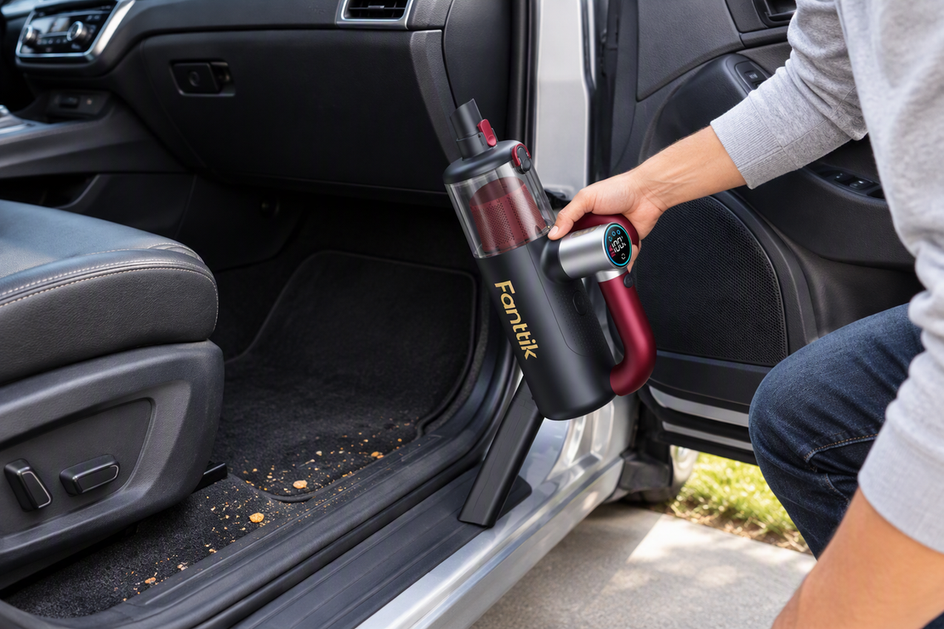 Car Wash That Vacuums for You vs DIY Handheld Detailing: Cost, Thoroughness, and Interior Wear
Compare costs, seat-track thoroughness, and interior wear between a full-service car wash and a DIY handheld vacuum with...
Car Wash That Vacuums for You vs DIY Handheld Detailing: Cost, Thoroughness, and Interior Wear
Compare costs, seat-track thoroughness, and interior wear between a full-service car wash and a DIY handheld vacuum with...

Leave a comment
This site is protected by hCaptcha and the hCaptcha Privacy Policy and Terms of Service apply.