






































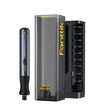



A cordless car vacuum is the better fit for quick, frequent cabin cleanups because it stays charged and ready near the door, with no cord or setup between uses. A shop vac earns its place when a session runs long, debris piles up, or you're cleaning more than one vehicle, since its larger tank and steady wall power don't stop for a drained battery. Neither tool replaces the other outright.
The right pick depends on how you actually clean your car, not on which unit has the biggest spec on the box.
Which Vacuum Fits Your Cleaning Routine?
Match the tool to the job instead of picking one format for everything. Ordinary dry debris, crumbs, dust, pet hair, is the default scope for this comparison.
| Cleaning routine | Cordless car vacuum fit | Full-sized shop-vac fit |
|---|---|---|
| Quick cabin cleanup | Good fit: grab-and-go, no cord, fast for crumbs and dust | Overkill: setup time outweighs a two-minute job |
| Weekend deep detailing | Limited: small dust cup and battery may need repeated stops | Good fit: larger tank and steady power handle a long session |
| Multiple vehicles or large interior | Limited: frequent emptying and recharging slow the work | Good fit: capacity and sustained run time cover more ground |
Choose a cordless car vacuum when most of your cleaning is short, frequent, and dry. Choose a shop vac when most sessions are long or heavy. If you genuinely do both often, for example a quick weekday tidy plus a real weekend detail, keeping one of each removes more friction than forcing one tool to do both jobs. If you're still working out how often that quick tidy should happen, our car cleaning schedule guide can help you plan around your commute, kids, or pets.
What Changes During Deep Detailing?
A longer detail turns capacity and sustained operation into the deciding factors, not suction alone. The real question is how often you'll need to stop and empty a small dust cup, or wait out a drained battery, while you're still working through mats, seats, and cargo areas.
Independent testing of car vacuums has found that battery life and dust-bin capacity are common limiting factors once a job goes beyond quick spot cleaning. That lines up with what a shop vac is built for: a bigger reservoir and a cord that draws steady power from an outlet, so the session isn't interrupted by a recharge. The tradeoff is that a shop vac's bulk and cord management add setup friction you don't get with a handheld unit.
A cordless vacuum is not the right sole tool if you regularly detail for an extended stretch, work through heavy pet hair or embedded dirt, or clean several vehicles back to back. In that pattern, repeated emptying or recharging will interrupt the workflow more than the setup time of a shop vac ever would.

How Do Reach and Runtime Affect the Workflow?
Reach and runtime decide how easy each tool is to actually use around a car, separate from how much debris it can hold. A cordless unit with a short crevice tool reduces the friction of reaching under seats, into consoles, and around dashboards, because there's no hose to drag and no cord to manage.
A shop vac can offer a longer hose path and a broader attachment setup, which helps when you need to reach a trunk, a third row, or a second vehicle without repositioning the whole unit. But that same larger body, cord, and storage footprint can make it less convenient for a two-minute spot clean, which is why it tends to stay in the garage for planned sessions rather than daily use.
Runtime should be matched to how long your actual session runs and which power mode you use, since battery capacity alone doesn't guarantee a specific working time. Before buying either tool, compare the actual nozzle, brush, hose, and extension setup against the surfaces you clean most, rather than assuming one included attachment will handle every job.
How Should You Read Suction and Airflow Specs?
A higher suction number doesn't automatically make a cordless vacuum a shop-vac replacement. Suction and airflow are related but separate specifications, and combining them into a single score isn't something either metric supports on its own.
Peak suction describes pulling force, while airflow affects how quickly debris actually moves through the nozzle and hose. Neither number tells you dust-cup capacity, battery runtime, how well a specific nozzle lifts embedded dirt from carpet, or how far a hose reaches into a back seat. Two vacuums with similar suction ratings can still perform very differently in your car depending on nozzle design, brush type, and filtration.
Instead of comparing one headline figure, look at the complete set that determines whether a vacuum fits your task: debris type, the surface you're cleaning, nozzle and brush design, hose or crevice reach, dust capacity, runtime, filtration, and what the manufacturer documents the unit for. There's no single suction or airflow number that proves a cordless vacuum can stand in for a shop vac, or the reverse.
When Is Each Vacuum Not a Fit?
A cordless car vacuum isn't the right sole tool if your routine regularly needs long uninterrupted sessions, high debris capacity, or a documented material-handling capability, like fine dust or liquid pickup, that your specific model doesn't have. A shop vac isn't a fit for a routine dominated by quick spot cleaning if its cord, bulk, or storage setup means you end up skipping the cleanup altogether.
Two material boundaries matter regardless of which format you choose. Before collecting liquid, confirm your exact model is documented for wet pickup and follow its stated limits; a "wet/dry" label on the category doesn't guarantee that capability on every unit. Before collecting fine hazardous dust, such as from sanding or renovation work, stop unless the vacuum is built as a complete HEPA system with no air bypass around the filter. The EPA's guidance on HEPA vacuum design is explicit that a HEPA filter retrofitted onto an ordinary vacuum isn't the same as a properly sealed system, and that HEPA vacuums must be operated and maintained exactly as the manufacturer instructs.
Ordinary dry cabin debris, crumbs, dust, and pet hair, stays within the normal use case for either format. It's the liquid and fine-dust scenarios where the exact model's documentation, not the category name, decides whether the tool is appropriate.
How Do You Maintain the Tool You Choose?
Keeping either vacuum ready for the next clean starts with clearing obstructions, not reaching for a higher power setting. Run through this before and after a session:
- Empty the dust cup or reservoir once it's noticeably full, not just when suction drops.
- Check the nozzle, hose, and brush area for hair or debris caught at the intake.
- Inspect the filter for buildup or damage.
- Follow your model's instructions for washing, drying, or replacing the filter before reusing it.
- Store the unit charged (cordless) or with the hose and cord coiled (shop vac) so it's ready for the next job.
Filter washing, drying time, and replacement intervals differ by model, so let your unit's manual control those steps rather than assuming a routine that worked for a different vacuum. A neglected filter or a clogged intake path will erase whichever advantage, portability or capacity, made you choose that format in the first place.
Should You Keep Both?
Keep both tools when quick spot cleaning and periodic deep detailing are genuinely separate, recurring jobs in your routine. A cordless unit handles the frequent small messes, and a shop vac takes over for the occasional heavy session, multiple vehicles, or larger debris loads.

Choose only a cordless vacuum if convenience and frequent access are what actually drive your cleaning habits, and longer sessions are rare or manageable with a bit more time. Choose only a shop vac if most of your cleaning already happens in the garage and capacity matters more than instant cabin access.
Start by classifying your own routine: mostly quick and dry, mostly long and heavy, or a genuine mix of both. Then verify the exact model's capacity, attachments, runtime, filtration, and wet/dry documentation before you buy or use it for anything beyond ordinary dry debris.
FAQs
How often should you vacuum your car interior?
Set your vacuuming frequency by driving habits and passenger use rather than a rigid calendar interval. Commuters who eat on the road, parents with young children, and pet owners typically benefit from short weekly touch-ups, while cars driven less frequently can go several weeks until visible dust or crumbs appear.
What should you check if suction drops during a car clean?
Stop and clear the dust bin, intake nozzle, hose, and filter mesh of clogs before assuming the motor or battery is failing. If suction remains weak after clearing physical blockages, let the unit cool down and check model-specific manual instructions for filter washing, drying, or replacement.
Can you wash and reuse a cordless car vacuum filter immediately?
Only wash the filter if your specific product manual explicitly labels it washable, and never reinstall it while damp. A wet filter chokes airflow, drops suction, and risks motor damage, so allow it to air-dry completely according to manufacturer instructions before your next cleaning session.
Continue reading
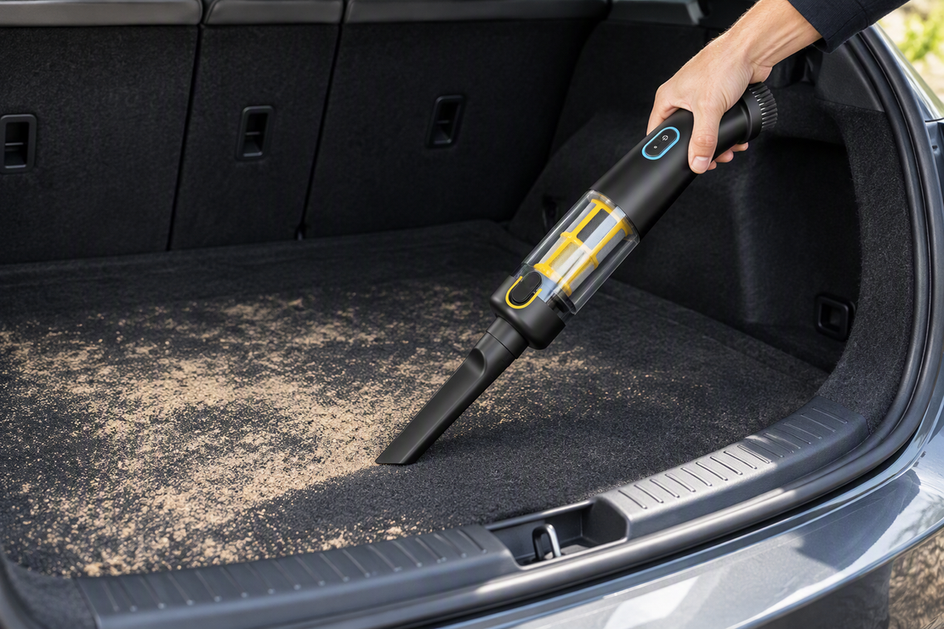 How to Get Sand Out of Car Trunk Carpet: A Practical Cleaning Method
A step-by-step dry cleaning routine helps you clear loose and embedded beach sand from trunk carpet, liners, seams,...
Pressure Washer Car Wash Attachments: A Practical Buying Guide
A scenario-based look at rinse, foam, and wheel attachments for pressure washer car washing, plus a compatibility check...
How to Get Sand Out of Car Trunk Carpet: A Practical Cleaning Method
A step-by-step dry cleaning routine helps you clear loose and embedded beach sand from trunk carpet, liners, seams,...
Pressure Washer Car Wash Attachments: A Practical Buying Guide
A scenario-based look at rinse, foam, and wheel attachments for pressure washer car washing, plus a compatibility check...
Leave a comment
This site is protected by hCaptcha and the hCaptcha Privacy Policy and Terms of Service apply.