











































To vacuum sand and grit from car carpet, first decide which surface you're working on. Fitted carpet that is part of the car and a removable carpeted mat are separate jobs, and each may have its own care instructions. Pull the mats out, vacuum the fitted carpet, including under the seats, and use a stiff-brush attachment on loose dirt only when your vacuum's manual says it can be used on carpet.

Grit worked deep into the carpet pile needs a method that your vehicle, mat, or vacuum maker actually documents. If none of them covers it, stop there. Don't improvise with extra force or switch to a different kind of tool.
A Cautious Vacuuming Sequence for Sand and Grit
This sequence starts with surface-care guidance, then moves from fitted carpet to mats, and ends with a check for leftover grit. Each step says what to do and what you should see before you move on. For an example of how a compact cordless tool handles fine particles, see our Tesla Model Y car vacuum test.
- Read the carpet-care section of your owner's manual. It tells you what the carmaker expects for that car's carpet. For example, the 2002 Honda Accord owner's manual says to vacuum the carpeting frequently and warns that ground-in dirt makes the carpet wear out faster. It gives no set schedule, and the advice applies to that model. For that car, the lesson is clear: get sand out before it gets ground into the pile.
- Take the removable mats out of the car. This opens up the fitted carpet underneath and keeps the mats separate. A mat may be made differently from the fitted carpet, so don't assume the same care guidance covers both.
- Vacuum the fitted carpet, including under the seats. The Simple Green automotive carpet guide says to vacuum the carpet and to be sure to get underneath the seats. Sand collects where you don't see it, so this step matters. If you're cleaning the whole cabin, our car interior detailing workflow shows where carpet fits in the overall order.
- Use a stiff-brush attachment on loose surface dirt, if your vacuum is approved for it. The same Simple Green guide notes that a stiff brush attachment on your vacuum can brush up loose dirt. Use one only if your vacuum came with it and its manual lists it for carpet.
- Vacuum each mat by its own care instructions. Go by whatever the mat maker or your vehicle manual says about that mat, not the fitted-carpet steps above.
- Look closely at the pile before putting the mats back. If the carpet and mats look clean, you're done. If you can still see or feel grit, go to the troubleshooting section below.
The guidance above deals with loose dirt. Neither source gives a technique for sand that has worked down into the carpet fibers, and neither says how many passes to make or which direction to go. When evaluating dedicated car vacuums or accessories for embedded grit, follow a method only if your vehicle, mat, or vacuum documentation describes one.
How to Check the Carpet, Vacuum, and Attachment Fit
Your setup is a go only when both the surface-care guidance and the vacuum's own instructions support it. If either one is silent or says no, don't count the setup as suitable for car carpet vacuuming.
- The surface: Decide whether you're cleaning fitted vehicle carpet or a removable carpeted mat. Then use the care guidance for that surface. Your owner's manual is the place to start for fitted carpet. For a mat, use the mat's own care instructions if it came with any.
- The attachment: Find the attachment you plan to use in your vacuum manual. Check that the manual lists carpet, or car interiors, as a surface it's meant for. If an attachment isn't listed for carpet, leave it out.
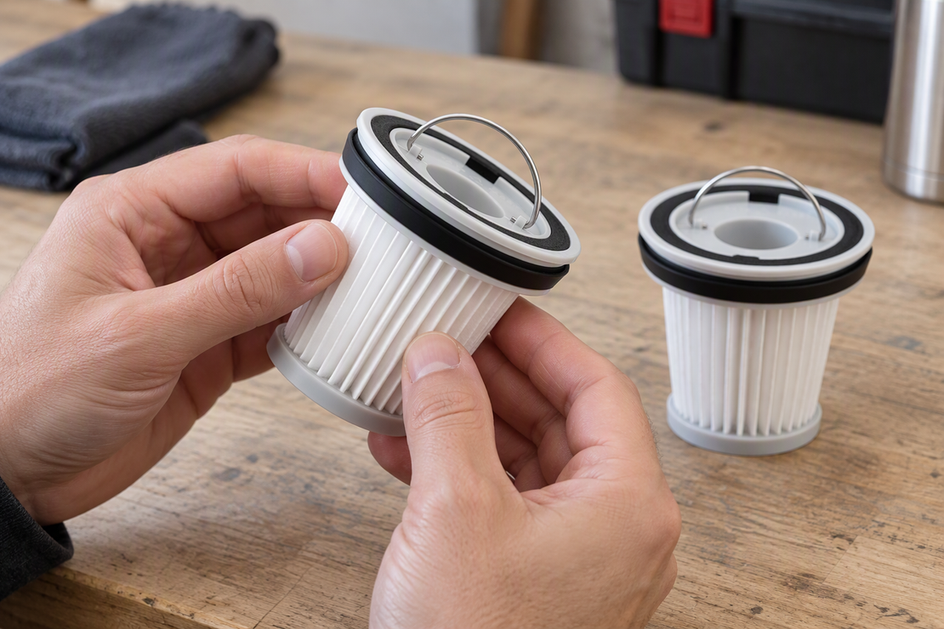
- The debris: Check what the manual says about the kind of debris the vacuum can handle. Also check any filter or dust-bin care it lists, since fine sand ends up there. If the manual rules out fine debris, don't use that vacuum for this job.
- The spec sheet: Don't treat a peak suction number as proof that a vacuum will lift grit from carpet. Suction is only one number. Cleaning results also depend on the attachment, the surface, and how the tool is meant to be used.

If you own one of our vacuums, you can find a Fanttik vacuum manual for your exact model on our support hub. Read it for the attachments, surfaces, and maintenance steps that apply to your unit.
Here's the decision. When the surface guidance and the vacuum manual both cover your surface, debris, and attachment, follow their limits and go ahead with the sequence above. When one of them doesn't address your setup, treat that as a no. Look for guidance that does cover it before you start.
What to Do if Grit Remains
If you still see or feel grit after following a documented method, go back to your manuals and look for a follow-up step. That could be a second pass, a different listed attachment, or a separate procedure for mats. Use that step only if the surface maker or the vacuum maker actually describes it for your carpet or mat.
If neither source says anything about leftover grit, stop improvising. Pressing harder, scrubbing with an attachment that isn't listed for carpet, or switching to a carpet cleaner or another tool type can all go beyond what the carpet or vacuum maker planned for. Contact the vehicle or mat maker, or the vacuum maker's support team, and ask about your specific model. Tell them the surface (fitted carpet or carpeted mat), the vacuum and attachment you used, and what's still left behind. That gives them what they need to point you to a step that fits your setup.
FAQs
How often should I vacuum sand out of my car carpet?
No single interval applies to every vehicle. The 2002 Honda Accord manual, for example, says to vacuum frequently but gives no schedule. Check your own owner's manual for your car's guidance. As a practical habit, remove sand soon after trips that track it in so it doesn't get ground into the carpet.
Can I clean carpeted floor mats the same way as the fitted carpet?
Not automatically. A removable mat may use different materials and have different care instructions from the carpet built into the car. Take mats out, treat them as their own surface, and follow the mat's instructions or your vehicle manual's mat guidance.
Does a vacuum with higher suction pull out more sand?
A higher peak suction figure alone doesn't tell you how well a vacuum cleans car carpet. The attachment, the surface, and the maker's instructions for that debris all affect the result. Choose a setup based on what the manual documents for carpet and fine debris, not just the headline number.
Is a stiff-brush attachment safe to use on embedded grit?
The Simple Green automotive carpet guidance mentions a stiff brush attachment only for loose dirt. It doesn't cover grit deep in the pile. For embedded grit, use an attachment only if your vacuum manual and your carpet or mat care guidance both approve it for that job.
Continue reading
 How to Vacuum Pet Hair From Car Seats
A cautious routine for pet owners: identify fabric or leather seats, confirm attachment use, vacuum loose hair, and...
 Why Won’t a Jump Starter Recognize a Deeply Discharged Battery?
A practical troubleshooting guide to recognition warnings on portable jump starters, covering clamp contact, model detection limits, and...
Leave a comment
This site is protected by hCaptcha and the hCaptcha Privacy Policy and Terms of Service apply.