


























Introduction to Power Safety in High-Humidity Environments
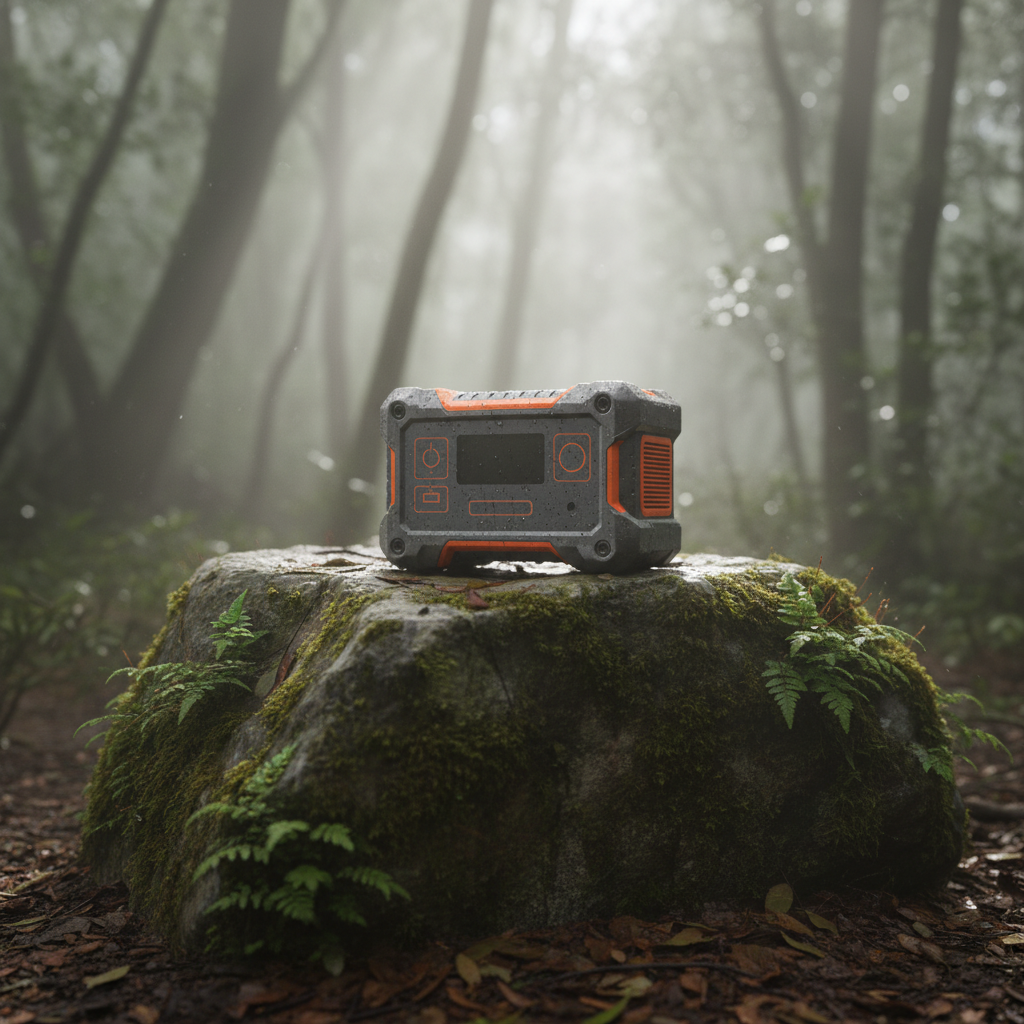
When you are deep in the coastal rainforests of the Pacific Northwest or the misty Appalachian woods, your gear faces a challenge far more insidious than a sudden downpour. While most campers prepare for liquid water—rain, splashes, or accidental drops—the real threat to portable power systems is often invisible: atmospheric moisture. In these environments, relative humidity frequently hovers above 90%, leading to internal condensation that can bypass even the most robust external seals.
At the heart of any reliable portable power station or jump starter is the Battery Management System (BMS). We often describe the BMS as the "brain" of the battery, but in damp woods, it acts more like a high-alert security detail. Its primary mission is to detect the minute electrical anomalies caused by moisture before they escalate into a catastrophic short circuit.
Understanding how a BMS navigates these conditions is not just a matter of technical curiosity; it is a fundamental safety requirement for anyone relying on off-grid power. In this guide, we will break down the mechanisms of moisture-induced failure and the sophisticated logic modern systems use to keep your campsite safe.
The Humidity Paradox: Why IP Ratings Aren't Enough
A common misconception we encounter among outdoor enthusiasts is the belief that an IP67 or IP68 rating provides a "bulletproof" shield against all water-related issues. While these ratings—defined by standards such as IEC 60529—certify a device against liquid ingress at specific depths and durations, they do not account for long-term vapor diffusion.
In damp woods, the primary risk is not a splash, but the "breathing" effect of the device. As the unit powers on and warms up, the air inside the casing expands. When the sun sets and the temperature drops, the internal air contracts, often drawing in moisture-laden air from the outside. Once inside, this vapor can condense into liquid droplets directly on the Printed Circuit Board (PCB) or battery terminals as the temperature hits the dew point.
Logic Summary: The Vapor Diffusion Model Our assessment of environmental risk assumes that internal condensation is a function of temperature cycling rather than direct immersion.
- Assumption 1: Daily temperature swings of at least 15°F (typical for forest environments).
- Assumption 2: Ambient relative humidity remains above 80% for more than 6 hours.
- Boundary Condition: This model does not apply to vacuum-sealed or nitrogen-purged units, which are rare in consumer-grade camping gear.

How Moisture Triggers a Short Circuit
To understand how the BMS protects you, we must first look at how a short circuit forms in a damp environment. It is rarely an instantaneous "bolt of lightning" event. Instead, it is usually a progressive failure.
1. The Formation of Hygroscopic Paste
In our experience analyzing field returns from coastal regions, we've identified a specific "gotcha": the mixture of organic debris and moisture. Pine needles, leaf mold, and salt-air residue can collect around charging ports or external terminals. When combined with high humidity, these materials form a "hygroscopic paste." This paste acts as a bridge, drastically lowering the surface resistance between positive and negative contacts. Pure water is a poor conductor, but this forest-derived paste is highly conductive.
2. Electrochemical Migration and Dendrites
Perhaps the most dangerous mechanism is electrochemical migration. When moisture sits across two conductors with a voltage difference, metal ions can begin to move from one to the other, growing tiny, needle-like structures called dendrites. According to research on reliability issues in high humidity, these dendrites can form at voltages as low as 10V. They can eventually bridge the gap between circuits, causing a short that a standard fuse might not detect until the heat has already caused damage.
The BMS Defense Strategy: Detection and Intervention
A sophisticated BMS does not just wait for a fuse to blow. It employs multiple layers of active monitoring to intercept a short circuit in its infancy.
High-Impedance Leakage Detection
While most basic systems only look for "hard" shorts (where current spikes to massive levels), advanced units monitor for "leakage current." This is a tiny flow of electricity—often in the milliamp range—that shouldn't be there. If the BMS detects that current is "leaking" across a path that should be insulated, it flags a high-impedance fault.
In practice, this means the BMS might shut down the unit even if it appears to be working fine. On our repair bench, we often see event logs showing multiple "leakage warnings" before a final shutdown. This is the BMS telling you that condensation has reached a critical level inside the housing.
Rapid Overcurrent Protection (OCP)
If a hard short occurs—perhaps due to a wet cable being plugged into the output port—the BMS must act within microseconds. Standard mechanical breakers are often too slow for sensitive lithium cells. The BMS uses MOSFETs (Metal-Oxide-Semiconductor Field-Effect Transistors) to cut the circuit electronically.
| Parameter | Typical Value (Estimated) | Unit | Rationale |
|---|---|---|---|
| Detection Threshold | 110–125% of Max Rated | Amps | Prevents nuisance tripping while ensuring safety. |
| Response Time | < 200 | Microseconds | Based on standard lithium-ion protection IC specs. |
| Leakage Sensitivity | 5–10 | Milliamps | Heuristic for detecting moisture bridges. |
| Temp. Shutdown | 60–65 | Celsius | Prevents thermal runaway during a short. |
| Humidity Shutdown | 85–90 | % RH | Only available on units with internal sensors. |
Thermal Monitoring
Short circuits generate heat. A BMS typically monitors the temperature of the battery cells and the MOSFETs themselves. If a short circuit is occurring deep within the pack where sensors might not immediately see the current spike, the rise in temperature will trigger a secondary safety shutdown. This is aligned with safety engineering principles outlined in The 2026 Modern Essential Gear Industry Report, which emphasizes that trust is built through redundant safety margins.

Expert Practice: The "Warm-Up Cycle"
In our work with professional guides in coastal rainforests, we have discovered a non-obvious technique that significantly reduces the risk of moisture-related faults. We call it the "Warm-Up Cycle."
If your power station has been sitting in a cold, damp tent overnight, do not immediately plug in a high-draw device like a coffee maker or a heater. The sudden surge of current can bridge any existing condensation.
The Protocol:
- Place the unit inside a sealed dry bag with a few desiccant packets (silica gel).
- Power on the unit's internal display or a low-draw USB light.
- Let it run for 10–15 minutes.
- The small amount of heat generated by the internal electronics will help drive off residual moisture from the PCB before you put the system under heavy load.
This practice is particularly effective because most consumer BMS units lack dedicated internal moisture sensors. By manually creating a "dry microclimate," you are assisting the hardware in maintaining its operational integrity. For more on preparing your gear, see our guide on Pre-Trip Power System Checks.
Maintenance and Early Warnings
A short circuit in the woods isn't just an inconvenience; it can be a fire hazard. Therefore, proactive maintenance is essential.
Inspecting the "Hygroscopic Bridge"
Regularly clean your device's ports using compressed air or a soft, dry brush. Pay close attention to the area between the pins. If you see a greenish or white powdery residue, that is a sign of "creeping" corrosion caused by moisture. This residue is highly conductive when damp and is a leading cause of the BMS triggering a fault.
Reading the Event Log
If your device supports a smartphone app or a detailed digital display, check the "Event Log" or "Fault History" after any unexplained shutdown. Look for terms like:
- Short Circuit Protection (SCP): A hard short was detected.
- Over-Current Protection (OCP): The load was too high, or a partial short occurred.
- Under-Voltage Lockout (UVLO): Sometimes triggered if a short causes a sudden voltage drop.
If you see a pattern of these warnings even when no devices are plugged in, it is a clear indicator that internal moisture has compromised the circuitry. At this point, the unit should be moved to a dry, climate-controlled environment for at least 48 hours before being used again.
Compliance and Regulatory Standards
To ensure the highest level of safety, always look for gear that complies with international standards. Reliable manufacturers will provide documentation showing their products meet:
- UN 38.3: Specifically covers the safety of lithium batteries during transport, including short-circuit testing.
- IEC 62133-2: The global standard for the safety of portable sealed secondary lithium cells.
- EU General Product Safety Regulation (EU) 2023/988: This ensures that products sold within the EU meet stringent safety requirements, including protection against electrical hazards.
When a brand is transparent about these certifications, it demonstrates a commitment to the "Trust Architecture" described in recent industry whitepapers. It moves the conversation from "marketing claims" to "verifiable engineering."

Managing Off-Grid Power Expectations
Managing power in remote travel requires a shift in mindset. You are not just a user; you are a system administrator for your own mini-grid. The BMS is your most valuable tool in this role, but it requires your cooperation.
By understanding that damp woods present a unique electrochemical challenge, you can take steps to mitigate risk. Use the warm-up cycle, keep your terminals clean of forest debris, and never ignore a "nuisance" shutdown from your BMS. These shutdowns are rarely glitches; they are more often the sound of a safety system working exactly as designed to prevent a fire in the middle of the wilderness.
For further reading on how these systems protect your investment over the long term, consider exploring how BMS deep discharge protection and thermal management work in tandem to ensure reliability.
Disclaimer: This article is for informational purposes only and does not constitute professional engineering, fire safety, or legal advice. Battery systems can be hazardous if mishandled. Always refer to your specific product's user manual and consult with a qualified technician for repairs or safety assessments. If a battery shows signs of swelling, leaking, or extreme heat, cease use immediately and follow local hazardous waste protocols for disposal.



Leave a comment
This site is protected by hCaptcha and the hCaptcha Privacy Policy and Terms of Service apply.