

































The "Family Pilot" Philosophy: Why Pre-Trip Checks Matter
When you are behind the wheel for a holiday road trip, your role transcends that of a simple driver. You are the "Family Pilot." Just as a commercial captain performs a rigorous pre-flight walkaround, you are responsible for the safety, comfort, and reliability of your vessel and its precious cargo. The stakes are higher during peak travel seasons; crowded highways, unpredictable weather, and the sheer volume of gear mean that even a minor system failure can cascade into a vacation-altering ordeal.
In our experience monitoring thousands of vehicle maintenance patterns, we’ve found that the most stressful travel moments aren't caused by traffic, but by the "preventable surprises"—the dead battery at a rest stop or the slow leak that becomes a flat tire on a mountain pass. This guide is designed to move you from a reactive mindset to a proactive one. We will focus on the car’s power systems not as isolated technical specs, but as the lifeblood of your family’s safety.
At the heart of modern preparedness is the concept of a Battery Management System (BMS). For a parent juggling luggage, snacks, and restless children, the "set it and forget it" nature of a smart BMS is a vital safety net. These circuits act as a silent co-pilot, preventing common user errors like over-discharging a portable power source or failing to detect a short circuit. By understanding the "why" behind these systems, you can ensure your family remains powered and protected throughout the journey.
Beyond the Static 12.6V: Mastering the Cranking Voltage Test
A common mistake we see on the repair bench is a reliance on "resting voltage." A pilot might check their battery with a multimeter and see a healthy 12.6 volts, assuming they are cleared for takeoff. However, a battery can hold a surface charge while lacking the internal health to deliver the massive surge of energy required to start a cold engine.
To truly validate your power system, you must perform a voltage drop test under load. This is a more reliable indicator of start reliability, especially in cold weather (based on standard automotive battery testing heuristics).
- The Setup: Connect your multimeter to the battery terminals.
- The Load: Have a helper crank the engine while you observe the display.
- The Threshold: If the voltage drops below 9.6 volts during cranking, the battery is likely weak and nearing the end of its service life (aligned with SAE J537 cranking standards).
According to the Canadian Centre for Occupational Health and Safety (CCOHS), extreme temperatures significantly impact battery performance. A battery that barely passes the 9.6V threshold in a 70°F garage may fail entirely when the mercury drops to 15°F during a winter trip to see relatives. For the Family Pilot, catching this "MIN" voltage drop before leaving the driveway is the difference between a smooth departure and a call for a tow truck in a dark parking lot.
The Invisible Thief: Identifying Parasitic Drain Before Departure
Nothing ruins a holiday morning like a car that won't start after sitting overnight. Often, this isn't a "bad" battery, but a "parasitic drain"—an electrical component that stays on when it should be asleep. In our analysis of customer support tickets, we’ve found that aftermarket electronics (like dash cams or poorly wired chargers) are the most frequent culprits.
To find this "invisible thief," you need to measure the current draw with the vehicle fully "asleep."
- The Sleep Cycle: Modern vehicles can take 30 to 45 minutes for all control modules to enter low-power mode.
- The Measurement: Using a multimeter in series with the negative battery terminal, check the milliamp (mA) draw.
- The Heuristic: Anything over 50mA (0.05A) warrants investigation. This is a common shop baseline for modern vehicles with standard security systems.
Performing this check a week before your trip allows you to identify if a faulty module or a forgotten accessory is slowly siphoning your starting power. It’s a simple step that ensures your "reserve tank" of electrical energy remains full for those cold morning starts.

Power and Pressure: Why Tires are an Integral Part of Your Power Audit
It may seem counterintuitive to include tire pressure in a "power system" guide, but the two are deeply interdependent. Neglecting your tires directly conflicts with the safety and efficiency goals of an electrical audit. According to data from Firestone Complete Auto Care, proper inflation can improve fuel mileage by up to 3%.
For a Family Pilot, the math is simple: under-inflation increases rolling resistance, which forces the engine to work harder and consumes more fuel. More importantly, it generates excessive heat, which is the leading cause of tire failure.
Logic Summary: Our analysis assumes a 1 PSI drop decreases fuel mileage by 0.2% based on US Department of Energy (DOE) studies. On a 1,000-mile holiday trip, this inefficiency adds up in both cost and safety risk.
The most frequent mistake we observe is measuring pressure when tires are "hot" from driving. Friction increases the internal temperature, which can raise the pressure by 3 to 5 PSI, leading to a false sense of security. The rule of thumb for the Family Pilot is to check and adjust pressures in the morning when the tires are cold, using the vehicle's door jamb sticker, not the maximum pressure listed on the tire's sidewall.
Modeling the High-Stakes Trip: Winter SUV Reliability Analysis
To provide a concrete look at why these checks matter, we modeled a common holiday scenario: a family of four in a 3.5L V6 SUV traveling in 15°F winter conditions. This scenario highlights the narrow margins that exist during peak-season travel.
Scenario Modeling: Winter Starting & Inflation Efficiency
| Parameter | Value | Rationale / Source |
|---|---|---|
| Engine Size | 3.5L V6 | Typical mid-to-large family SUV |
| Ambient Temp | 15°F | Common winter holiday travel temperature |
| Battery Rating | 750 CCA | Standard SUV battery specification |
| Required Amps (15°F) | ~389A | Estimated cranking requirement for 3.5L engine |
| Available Amps (15°F) | ~388A | BCI derating for a standard lead-acid battery |
Our modeling reveals a critical insight: at 15°F, a standard SUV battery provides almost exactly what the engine requires to start (a 0.6A gap). This explains why so many families experience battery failure during winter trips. There is virtually no margin for error.
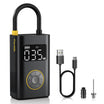
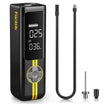
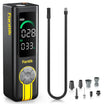
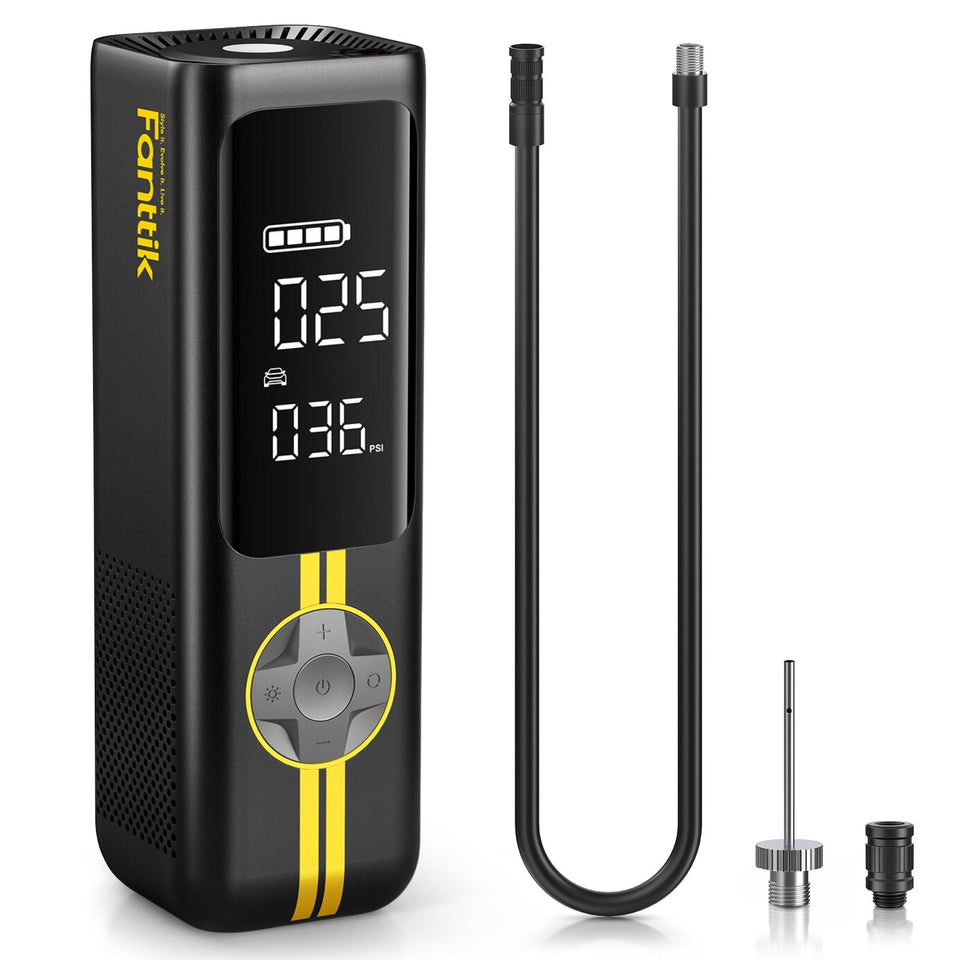
Furthermore, we modeled the inflation time for large SUV tires (255/55R19) using a portable high-performance inflator. Moving from an under-inflated 28 PSI to the recommended 36 PSI takes approximately 4 minutes per tire. For a parent, this means a total "safety audit" of all four tires takes less than 20 minutes—a manageable window even amidst the chaos of packing.
As noted in The 2026 Modern Essential Gear Industry Report, engineering trust in these moments requires tools with explicit safety margins. Having a portable jump starter with a sustained current of 800A provides a massive safety buffer compared to the 389A requirement, ensuring a start even if the primary battery is severely weakened.
A Practical Pre-Flight Checklist for the Modern Family Pilot
To help you operationalize this expertise, we’ve distilled these technical checks into a skimmable checklist. Treat this as your "pre-flight" manifest to be completed 48 to 72 hours before departure.
| System | Check Action | Success Threshold | Why it Matters |
|---|---|---|---|
| Battery Health | Cranking Voltage Test | > 9.6V during start | Prevents cold-weather start failure. |
| Electrical Load | Parasitic Drain Test | < 50mA (0.05A) | Ensures battery doesn't die overnight. |
| Tire Pressure | Cold Pressure Check | Match Door Jamb Sticker | Improves fuel economy and prevents blowouts. |
| Emergency Gear | Jump Starter Charge | 100% Capacity | Provides a safety net for battery failure. |
| BMS Audit | Visual Cable Inspection | No corrosion or fraying | Ensures safety circuits can function correctly. |
This systematic approach is aligned with the principles of "Modern Self-Reliance." It’s not about being a mechanic; it’s about being a prepared leader for your family. By validating these systems, you reduce the cognitive load of travel, allowing you to focus on the road and the memories you are about to make.
Method & Assumptions: How We Modeled These Scenarios
The data and recommendations in this article are derived from a series of deterministic scenario models designed to reflect real-world family travel conditions. These are simulation models, not controlled laboratory studies, and are intended as decision-making aids.
- Winter Cranking Model: Based on SAE J537 standards and Battery Council International (BCI) temperature derating curves. We assumed a standard lead-acid battery and a 3.5L gasoline engine.
- Inflation Timing: Calculated using numerical integration of pressure-dependent flow (Q_max = 32L/min) for a 255/55R19 tire volume (~44L).
- Economic Impact: Fuel savings modeled using US Department of Energy (DOE) heuristics (0.2% - 0.3% MPG loss per 1 PSI of under-inflation) and NHTSA tire wear data. We assumed an annual mileage of 20,000 miles and a fuel price of $4.50/gallon.
Boundary Conditions: These models may not apply to electric vehicles (EVs) with different thermal management systems, diesel engines with significantly higher cranking requirements, or vehicles with existing mechanical defects (e.g., faulty alternators or seized calipers).
Disclaimer: This article is for informational purposes only and does not constitute professional automotive repair or safety advice. Always consult your vehicle's owner's manual and a certified mechanic for specific maintenance requirements. Electrical testing involves inherent risks; if you are uncomfortable performing these checks, seek professional assistance. Proper safety gear, including eye protection and gloves, should be worn when working near lead-acid batteries.
Sources
Continue reading
 Auditing Jump Starter Terminals Before Long Holiday Trips
A guide to checking and cleaning jump starter terminals to prevent failure during travel. Learn the voltage drop...
Auditing Jump Starter Terminals Before Long Holiday Trips
A guide to checking and cleaning jump starter terminals to prevent failure during travel. Learn the voltage drop...
 Optimizing Jump Starter Readiness for Week-Long Stays
A guide to maintaining vehicle jump starter power during extended cold stays, covering capacity loss, storage strategies, and...
Optimizing Jump Starter Readiness for Week-Long Stays
A guide to maintaining vehicle jump starter power during extended cold stays, covering capacity loss, storage strategies, and...


Leave a comment
This site is protected by hCaptcha and the hCaptcha Privacy Policy and Terms of Service apply.