
































Precision Drift: Why Cabin Heat Cycles Affect Sensor Accuracy
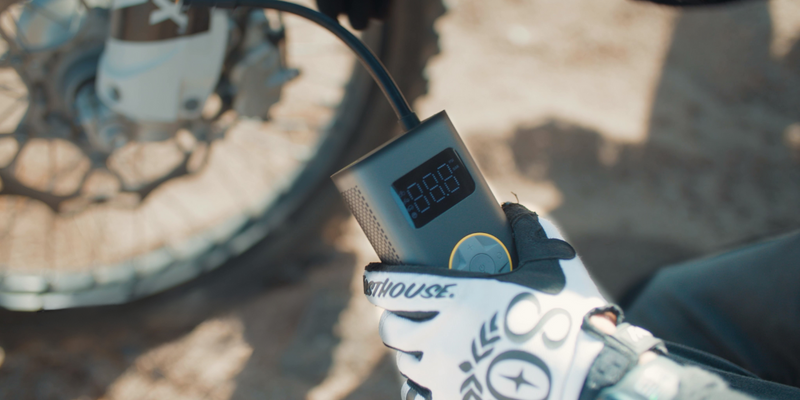
For the modern driver, a portable tire inflator is more than a convenience; it is a critical component of a vehicle’s emergency preparedness kit. We often assume that as long as the device is stored in the trunk or glovebox, it will function with factory-spec precision when needed. However, based on our observations from field-data feedback loops and repair bench patterns, the environment inside a parked vehicle is one of the most hostile settings for precision electronics.
The core of this issue lies in "Precision Drift." While high-performance portable inflators are engineered for durability, the physics of micro-electronics and material science dictate that extreme temperature fluctuations—common in automotive cabins—can alter the behavior of internal sensors. Understanding the mechanics of these heat cycles is essential for professionals and DIY enthusiasts who rely on these tools for safety-critical maintenance.
The Physics of MEMS: Why Heat Alters Measurement
Most modern digital inflators utilize Micro-Electro-Mechanical Systems (MEMS) pressure sensors. These are microscopic structures etched into silicon that detect minute changes in air pressure. While highly efficient, these sensors are sensitive to thermal energy.
Thermal Expansion and Internal Stress
Every material has a specific Coefficient of Thermal Expansion (CTE). In a pressure sensor, the silicon die, the ceramic or plastic packaging, and the metallic solder joints all expand and contract at different rates. According to the ISO Standards Catalogue regarding electronic components, non-uniform thermal expansion can introduce mechanical stress into a sensor's architecture.
When a vehicle sits in the sun, cabin temperatures can easily exceed 50°C (122°F). This heat causes the internal components of the sensor to expand. If the expansion is not perfectly uniform, it creates "parasitic stress" on the MEMS diaphragm. This stress can be misinterpreted by the device's firmware as actual air pressure, leading to an offset in the reading—a phenomenon known as thermal drift.
The Problem with Rapid Transients
While many high-end devices include temperature compensation algorithms, these are often designed for steady-state environments. In a car cabin, temperatures are rarely steady. They fluctuate rapidly as the sun moves or when the air conditioning is turned on.
Logic Summary: Standard compensation models often struggle with rapid, non-uniform transients because the sensor package and the bonding materials have different thermal masses. This creates internal thermal gradients that standard firmware may not fully account for, leading to uncompensated error during the heating or cooling cycle itself.
Compounding Factors: Beyond the Sensor
The sensor is not the only component affected by the "cabin oven." To maintain professional-level trust, we must look at the system as a whole, including the mechanical seals and the power source.
Rubber Desiccation and Seal Integrity
Practitioners in automotive testing have noted a recurring pattern: the most common point of failure for stored-in-vehicle electronics isn't always the circuitry, but the gradual desiccation of rubber components.
- O-Rings: High heat cycles strip the plasticizers from rubber O-rings and seals.
- Result: Over time, these seals harden and develop micro-cracks.
- Impact: During inflation, these cracks allow air to bypass the internal plumbing. This doesn't just slow down the process; it can cause the sensor to detect a "pressure drop" that doesn't exist in the tire, leading to erratic shut-off behavior.
Battery Voltage Sag and Signal Noise
The lithium-ion batteries powering these tools are also susceptible to thermal stress. According to research on 18650 Battery Performance, extreme temperatures can affect the internal resistance of the cells.
If a battery has been degraded by repeated "shallow cycling" in a hot car (storing it at 100% charge in 40°C+ heat), it may experience significant voltage sag under load. Because the sensor and its signal conditioning circuit rely on a stable reference voltage, a sagging power supply can introduce electronic noise. This noise mimics sensor drift, causing the digital display to flicker or report inaccurate PSI levels.
Quantifying the Drift: A Field Heuristic
To help users manage these physical limits, we have developed a practical rule of thumb based on common patterns observed in automotive maintenance hardware.
The "20-Degree Rule" for Sensor Drift: For every 20°C (36°F) that a tool’s internal temperature rises above the standard calibration baseline (typically 25°C or 77°F), the calibrated accuracy window can widen by approximately ±0.5 to 1.0 PSI.
| Internal Temp (°C) | Internal Temp (°F) | Estimated Potential Drift (PSI) |
|---|---|---|
| 25°C | 77°F | 0.0 (Baseline) |
| 45°C | 113°F | ±0.5 to 1.0 |
| 65°C | 149°F | ±1.0 to 2.0 |
Note: This is a field heuristic for quick self-checking, not a lab-certified constant. Actual drift depends on the specific sensor grade and housing insulation.
Case Study: The Desert Fleet Scenario
To demonstrate how these factors intersect in the real world, we modeled a scenario involving a commercial fleet operator in an extreme climate (e.g., Arizona or the Middle East). This operator uses high-performance portable inflators to maintain heavy-duty work trucks (275/70R18 tires).
Modeling Note: Method & Assumptions
This analysis uses a scenario model to project performance under extreme stress. It is not a controlled lab study but a deterministic calculation based on the following parameters:
| Parameter | Value | Unit | Rationale |
|---|---|---|---|
| Tire Size | 275/70R18 | ISO-Metric | Standard heavy-duty work truck |
| Target Pressure | 80 | PSI | Load Range E specification |
| Ambient Temp | 45 | °C | Extreme desert cabin environment |
| Continuous Runtime | 40 | Min | Typical high-end tool limit |
| Flow Rate (Max) | 32 | L/min | Professional-grade portable spec |
The Findings
In this scenario, inflating a single under-inflated truck tire (from 25 to 80 PSI) would theoretically take ~171 minutes. However, the adiabatic compression of air—combined with the 45°C ambient heat—generates internal exit temperatures that could reach over 200°C if the tool were run continuously.
The Reality of the Job:
- Duty Cycle Violations: To prevent permanent sensor damage, the operator would need approximately 25 cooldown cycles (15 minutes each).
- Compounded Error: Mid-way through the job, the heat-soaked sensor would likely drift beyond a ±2 PSI threshold.
- Operational Risk: Without cross-checking against a mechanical gauge, the operator might unknowingly under-inflate the tires, compromising the vehicle’s load-bearing safety.
This highlights the importance of Engineering Trust in a Cordless World, as outlined in recent industry whitepapers. Reliability is not just about the tool's maximum PSI; it's about how the tool manages heat and maintains accuracy under pressure.
Practical Mitigation: How to Maintain Precision
While we cannot change the laws of physics, we can adopt maintenance habits that minimize the impact of thermal drift.
1. The "Ambient Shade" Acclimation
If your inflator has been sitting in a hot trunk, do not use it immediately for precision work. Allow the tool to acclimate to the ambient shade temperature for at least 30 to 60 minutes. This allows the internal MEMS structure and the electronic components to return to a state closer to their calibration baseline.
2. The Mechanical Cross-Check
For safety-critical applications (such as towing or high-speed highway driving), we recommend a periodic verification. Cross-check your digital tool’s reading against a high-quality, recently calibrated mechanical "stick" or dial gauge.
- The Threshold: If you observe a discrepancy greater than ±2 PSI after the tool has cooled down, it may indicate that the internal sensor has suffered "permanent offset" due to excessive heat cycling.
3. Optimized Storage Strategies
To extend the life of the internal seals and battery health, storage location matters.
- Avoid the Glovebox: In many vehicles, the glovebox is a heat trap with poor ventilation.
- Prefer the Trunk Floor: Storing the tool in a padded case on the trunk floor (under a mat) typically provides better thermal insulation than leaving it exposed on a seat.
- The 50% Charge Rule: If storing the device for long periods in a vehicle, try to keep the battery at approximately 50% charge. Storing a lithium battery at 100% in high heat accelerates chemical degradation up to three times faster than at a partial charge.
Engineering for Resilience
The transition to cordless, portable maintenance gear represents a major leap in automotive mobility. However, as we move away from bulky, garage-bound compressors, the responsibility for maintaining accuracy shifts to both the manufacturer and the user.
Manufacturers are increasingly moving toward "lifetime-calibrated" sensors that are characterized across the full AEC-Q100 temperature range during production. This involves embedding complex compensation curves directly into the hardware's firmware. While this reduces the need for user calibration, it does not eliminate the need for careful storage and sensible operation.
By treating your portable inflator as a precision instrument rather than a "set and forget" appliance, you ensure that when the moment of need arrives, the numbers on the screen represent reality, not a heat-induced illusion.
Disclaimer: This article is for informational purposes only. Tire pressure maintenance is a critical safety task; always refer to your vehicle manufacturer’s recommended PSI settings found on the driver-side door jamb or in the owner's manual. If you suspect your measurement tools are inaccurate, consult a certified automotive technician.
Sources
Continue reading
 Internal Condensation: How Temperature Swings Corrode Circuits
Explores physics of dew point, CAF growth, plastic fatigue, and protective measures like conformal coatings and ePTFE vents...
Internal Condensation: How Temperature Swings Corrode Circuits
Explores physics of dew point, CAF growth, plastic fatigue, and protective measures like conformal coatings and ePTFE vents...
 Why Humid Air Affects Tire Inflator Cooling Efficiency
Covers the 70/30 Rule for duty cycles, adiabatic compression physics, and the 2cm Elevation Rule to prevent motor...
Why Humid Air Affects Tire Inflator Cooling Efficiency
Covers the 70/30 Rule for duty cycles, adiabatic compression physics, and the 2cm Elevation Rule to prevent motor...
Leave a comment
This site is protected by hCaptcha and the hCaptcha Privacy Policy and Terms of Service apply.