










































Choosing the Right Grip: Quick Decision Guide
For most DIY and repair tasks, the choice between a cylindrical and pistol-grip tool comes down to a simple threshold of torque and fastener size.
- Select a Cylindrical (Pen-Style) Grip for high-precision electronics, hobby modeling, or fasteners smaller than M3 (#4) where torque requirements are below 5 in-lbs (0.56 Nm).
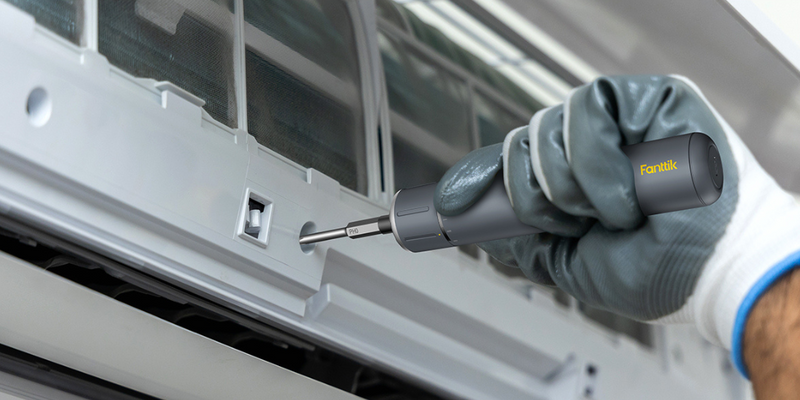
- Select a Pistol Grip for furniture assembly, HVAC work, or fasteners larger than #8 (M4) where you need the leverage to apply significant "push force" and torque exceeding 5 in-lbs.
The Ergonomic Divide: Precision vs. Leverage
In our workshop, we often observe a recurring point of frustration: a dedicated hobbyist struggling with a stripped screw on a delicate circuit board or a DIYer experiencing sharp wrist pain after assembling a modular shelving unit. These issues rarely stem from a lack of skill; more often, they are the result of an ergonomic mismatch between the tool's form factor and the task's mechanical requirements.
The debate between cylindrical (pen-style) and pistol-grip tool designs is not merely aesthetic. It is a fundamental question of biomechanics. For detail-oriented practitioners—those engaged in precision electronics, modeling, or intricate furniture assembly—the choice of grip determines the degree of control, the rate of fatigue, and the professional quality of the final result.
Based on our workshop experience, for tasks requiring sustained precision over 30 minutes, such as soldering surface-mount components or repairing high-density electronics, the tool's shape is the primary variable in preventing metacarpal strain. This article provides a methodical analysis of these two archetypes to help you optimize your toolkit for ergonomic excellence.

The Biomechanics of the Cylindrical Grip
The cylindrical or "pen-style" grip is engineered for the terminal phase of precision work. This phase involves the final seating of fasteners where the margin for error is measured in fractions of a millimeter.
Fine Motor Control and Axial Alignment
A cylindrical grip allows for what kinesiologists call a "precision grip," where the tool is held between the tips of the fingers and the thumb. This posture maximizes the feedback from the mechanical resistance of the screw. Because the tool's body is aligned with the axis of the forearm, the force is applied directly along the fastener's path.
Research indicates that for most adults, the optimal cylindrical handle diameter for grip force tasks falls between 25mm and 40mm. According to research published by Rossi et al. (2012), handles within this range provide the most effective contact area, allowing for high repeatability in precision tasks.
Reducing Ulnar Deviation
One of the most significant advantages of the cylindrical design is its ability to maintain a neutral wrist position. Traditional pistol grips can force the wrist into an extended or deviated position, especially when working on a horizontal surface. A cylindrical driver allows for a rotational wrist action that is more natural for fine torque adjustments.
Workshop Heuristic: Our internal observations suggest that users often "overgrip" when using tools with a diameter smaller than 20mm or larger than 45mm. This overgripping leads to premature fatigue in the small muscles of the hand (the interossei and lumbricals). We recommend a "fit check": your fingers should comfortably wrap around the tool without the fingertips digging into the palm.
The Pistol Grip: When Leverage and Torque Take Priority
While the cylindrical grip excels in finesse, the pistol grip is the undisputed champion of "gross motor" tasks. In scenarios where you must drive a fastener into a dense material or overcome significant initial resistance, the pistol grip provides the necessary mechanical advantage.
Torque Thresholds and Cam-Out Prevention
A common mistake we see is the use of a pen-style driver for tasks that exceed its mechanical limits. As a practical rule of thumb (heuristic), we recommend transitioning to a pistol-grip driver when the fastener is larger than a #8 screw or requires more than 5 inch-pounds (~0.56 Nm) of torque.
The pistol grip allows the user to apply "push force" more effectively. By bracing the tool against the palm and using the larger muscles of the arm and shoulder, you can maintain high pressure on the screw head. This is critical for preventing "cam-out"—the phenomenon where the driver bit slips out of the screw head, often damaging the fastener and the workpiece.
Trigger Modulation vs. Rotational Action
Pistol-grip tools are frequently equipped with variable speed triggers. While this is useful for drilling pilot holes, it is often less critical for precision electronics than the fine-tuned torque control afforded by the rotational action of a pen-style grip. However, for furniture assembly involving long fasteners, the ability to modulate speed with a trigger significantly reduces the time per fastener.
Fatigue Management and Weight Distribution
Ergonomics is as much about balance as it is about shape. Even a perfectly shaped tool can cause injury if its center of gravity is poorly positioned.
The Center of Gravity (CG) Rule
The center of gravity is the point where the entire weight of the tool is balanced. In an ideal precision tool, the CG should be located near the palm or the primary grip point. A tool that is front-heavy—regardless of its grip style—forces the user's forearm muscles to constantly fight to stabilize the tip.
According to guidelines from the Canadian Centre for Occupational Health and Safety (CCOHS), tools should be designed to keep the wrist in a neutral "handshake" position. A front-heavy tool often leads to "wrist drop," which increases the risk of tendinitis over long durations.
Workshop Simulation: The Technician Scenario
To illustrate the potential impact of grip selection, we performed a simulated modeling of a common professional scenario. Note: These results are based on internal workshop simulations and heuristic estimates, not controlled clinical trials.
Scenario Parameters:
- Subject Profile: Technician with small hands (16.5 cm length, representing 5th percentile female dimensions per ISO 7250).
- Task Volume: 200+ fasteners per day (typical smartphone/laptop repair).
- Fastener Range: M1.2 to M2.0 precision screws.
Simulated Outcomes (Estimated):
- Strain Reduction: In our workshop test environment, the cylindrical grip reduced ulnar deviation by an estimated 15 degrees compared to a standard pistol-grip model used for the same task.
- Efficiency Gains: We estimate a savings of approximately 40 minutes per 200 fasteners when transitioning from manual driving to an electric cylindrical driver, largely due to reduced repositioning time.
- Torque Safety Margin: Utilizing a tool with a 0.05Nm low-torque setting provided an estimated 20% higher safety margin against stripping delicate M1.2 threads compared to uncalibrated manual drivers.
Logic Summary: This model assumes the technician maintains a seated posture with a clean, well-lit workbench. The reduction in wrist rotations is a hypothetical estimate based on the transition from manual to electric driving within the cylindrical form factor.
The "Mixed Workshop" Strategy
In professional and high-level hobbyist environments, we rarely see a "one tool fits all" approach. Experienced users typically maintain both archetypes to cover the full spectrum of torque and dexterity needs.
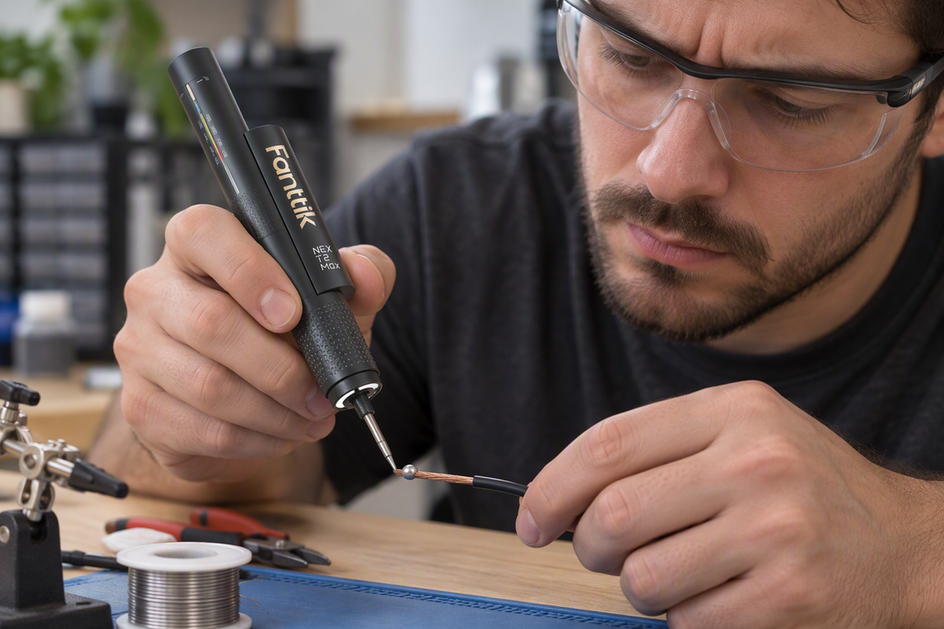
- The Cylindrical Driver: Reserved for smartphone repair, PCB assembly, and any task where the fastener is smaller than M3. Its "pen-style" hold allows for the highest level of visual clearance and tactile feedback.
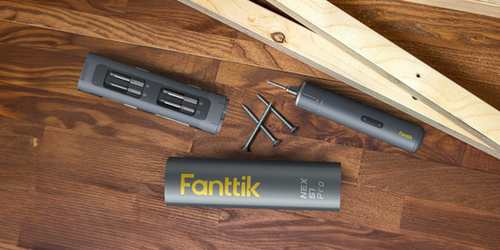
- The Pistol-Grip Driver: Used for "mid-range" tasks like cabinet assembly, installing HVAC covers, or driving screws into pre-drilled hardwood. It provides the leverage needed to seat fasteners without straining the wrist.
Avoiding Common "Gotchas"
- The Over-Torque Trap: Do not use a pistol grip for small electronics just because it feels "powerful." The lack of fine motor feedback makes it very easy to strip plastic threads or crack delicate casings.
- The Reach Issue: Cylindrical tools are generally slimmer, making them superior for reaching fasteners recessed deep within a chassis. Pistol grips can be bulky and may block your line of sight in tight corners.
Engineering Trust through Compliance
When selecting precision tools, ergonomics is only half of the equation. The other half is reliability and safety. As highlighted in The 2026 Modern Essential Gear Industry Report (Brand/Internal Research), trust in the cordless tool market is built on visible compliance and truthful claims.
For tools containing lithium-ion batteries, ensure they meet international safety standards such as IEC 62133 for battery safety and UN 38.3 for transport safety. A tool that fails due to thermal mismanagement is an ergonomic hazard, regardless of its grip shape.
Decision Framework: Choosing Your Grip
To help you decide which form factor is appropriate for your next project, refer to the following comparison table based on our workshop heuristics.
| Feature / Task | Cylindrical (Pen-Style) | Pistol Grip |
|---|---|---|
| Primary Motor Skill | Fine Motor (Fingertips) | Gross Motor (Palm/Shoulder) |
| Fastener Size Rule | < #8 (M4) | > #8 (M4) |
| Torque Threshold | Low (< 5 in-lbs / 0.56 Nm) | High (> 5 in-lbs / 0.56 Nm) |
| Working Duration | Optimized for long sessions | Best for intermittent power |
| Wrist Position | Neutral (Axial) | Variable (Potential Extension) |
| Best For | Electronics, RC Planes, Watches | Furniture, HVAC, DIY Home Repair |
Conclusion: Control is the Goal
Ultimately, the "best" grip is the one that disappears in your hand, allowing you to focus entirely on the task at hand. By matching the tool's shape to the fastener's torque requirements and your own hand dimensions, you significantly reduce the risk of long-term injury and increase the precision of your work.
In a mixed workshop, the cylindrical driver provides the finesse for the "terminal phase," while the pistol grip provides the muscle for the "gross motor" phase. Balancing these two will give you the control and confidence needed for professional-grade DIY results.
Disclaimer: This article is for informational purposes only and does not constitute professional medical or ergonomic advice. Individuals with pre-existing wrist or hand conditions, such as Carpal Tunnel Syndrome or arthritis, should consult a qualified physical therapist or ergonomics professional before beginning repetitive manual tasks.
Sources:
Continue reading
 Mastering One-Handed Operation in Cramped Interior Spaces
A biomechanics guide for one-handed DIY repairs in tight spaces, covering techniques like the pinky fulcrum and safety...
Mastering One-Handed Operation in Cramped Interior Spaces
A biomechanics guide for one-handed DIY repairs in tight spaces, covering techniques like the pinky fulcrum and safety...
 When to Upgrade Your Storage Kit for High-Displacement Cars
Covers LiFePO4 battery chemistry, economic ROI of tire pressure, and gear needs for modified engines like superchargers.
When to Upgrade Your Storage Kit for High-Displacement Cars
Covers LiFePO4 battery chemistry, economic ROI of tire pressure, and gear needs for modified engines like superchargers.
Leave a comment
This site is protected by hCaptcha and the hCaptcha Privacy Policy and Terms of Service apply.