














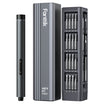


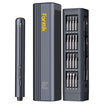
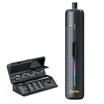

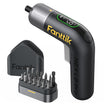











Mastering One-Handed Operation in Cramped Interior Spaces
Living in a modern urban apartment often means trading sprawling workshops for compact utility. For the home DIYer, this shift presents a unique set of challenges. Some of the most frustrating projects aren't the largest, but those located in "inaccessible" corners—tight voids under a kitchen sink, the narrow gap behind a stacked washer-dryer, or the intricate internals of a desktop computer.
In these environments, traditional two-handed tool operation is a luxury you rarely possess. One hand is often required to stabilize your body or hold a light, leaving the other to perform high-precision tasks. Mastering one-handed operation is about understanding the mechanics of your body and the limits of compact gear.
Quick Summary: Key Techniques for Tight Spaces
If you are currently stuck under a sink, here is the "cheat sheet" for success:
- Brace Your Body: Lean your non-working shoulder or hip against a wall to stop micro-wobbles.
- The Pinky Fulcrum: Use your pinky finger against the workpiece to stabilize the tool like a pen.
- Avoid Lateral Force: Don't lean into the tool at an angle; this is the primary cause of stripped screws.
- Cooling Cadence: For power tools, pause for 30–60 seconds after every few minutes of use to prevent overheating in unventilated gaps.
- Pre-Assemble: Do as much work as possible on the counter before moving into the cramped space.
The Biomechanics of Confined Space Manipulation
When we work in an open space, our bodies naturally distribute force across large muscle groups. However, in a cabinet or behind an appliance, your range of motion is restricted. A common mistake is focusing entirely on the hand and wrist, which leads to early fatigue and loss of control.
The Kinetic Chain and Bracing Mechanics
Mastering one-handed operation is often more about bracing than grip strength. The human body functions as a closed-chain kinetic system. When movement is restricted, force transfer through your hips, shoulders, and torso creates stable fulcrums.
Based on common patterns observed in repair scenarios, DIYers who consciously brace their non-working shoulder or hip against a solid surface can significantly improve their stability. By creating a stable anchor point, you help prevent the micro-wobbles that often lead to tool slippage. We treat this as a practical rule of thumb: at least two points of body contact (feet and one shoulder/hip) should be maintained to stabilize the working arm in a standard 15-inch to 24-inch cabinet.
The "Pinky Fulcrum" Technique
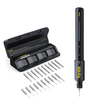
When working with precision electric screwdrivers, we often recommend the "pinky fulcrum." Instead of gripping the tool like a hammer, hold it like a large pen. Extend your pinky finger to rest against the workpiece itself. This creates a secondary stabilization point only inches away from the bit.
While specialized, heavy-duty equipment is ideal, this improvisation technique can provide a level of stability that makes many difficult tasks manageable in emergency or temporary scenarios.

Technical Precision: Torque, Speed, and Lateral Force
In cramped quarters, sensory feedback is muffled. You can’t always see the screw head clearly, and the acoustics of a small space can make a motor sound more strained. This often leads to the application of excessive lateral force.
Avoiding the "Strip-Out" Risk
When a screw is stubborn, the instinct is to lean into the tool. In a confined space, this pressure is rarely perfectly vertical. Any slight angle creates lateral (side-to-side) force, which can strip the screw head or strain the internal gearing of a compact power tool.
We suggest a "Weight and Torque" approach:
- Select the correct torque setting: Let the tool’s electronics do the heavy lifting rather than your wrist.
- Apply "Seating Pressure" only: Use just enough downward force to keep the bit fully engaged.
- Monitor the "Kick": If the tool starts to twist, you have reached the limit of that torque setting. Do not fight the twist; instead, re-check the bit alignment.
Speed Control for Rotary Tasks
For sanding or grinding in tight corners, high RPMs can lead to "walking"—where the tool skips across the material.
A reliable heuristic is to use the lowest speed that still removes material. This maintains tactile feedback. Furthermore, because air circulation is poor in cramped spaces, we recommend a "Cooling Cadence": pause operation for 30–60 seconds after every 2–3 minutes of heavy use. This helps manage the thermal limits of the motor and battery.
Performance Modeling: Precision vs. Speed
To understand the impact of technique in tight spaces, we can look at general ergonomics and manipulation principles. Accuracy-focused approaches in restricted spaces typically yield more consistent results than speed-focused ones.
| Performance Metric | Speed-Focused Approach | Accuracy-Focused Approach (Heuristic) | Rationale |
|---|---|---|---|
| Error Rate | Higher risk of stripped heads | Lower risk; higher success rate | Precision is critical when movement is limited. |
| Tool Longevity | Lower (Potential heat buildup) | Higher (Controlled cycles) | Pausing prevents thermal throttling in dead-air spaces. |
| User Fatigue | High (Muscle tension) | Moderate (Braced posture) | Using the kinetic chain reduces localized wrist strain. |
| Completion Time | Unpredictable (Due to rework) | Consistent | Avoiding "rework" is often the fastest way to finish. |
Note: This model assumes a "Confined Space" definition as a volume less than 3 cubic feet with a single entry point, common in under-sink repairs.
The Cognitive Load of "In-Situ" Repairs
Expert technicians often suggest that the hardest part of a repair isn't the physical act, but the mental "choreography." Planning your movements in sequence can help reduce errors and frustration.
In the context of home DIY, this translates to a simple rule: Minimize "In-Situ" Time.
Whenever possible, pre-assemble components loosely outside the cramped cavity. For example, if you are installing a new faucet, attach the supply lines to the faucet body on your kitchen counter where you have full visibility. Then, move the assembly into the dark void under the sink for the final tightening. Attempting a full assembly "in-situ" (in place) often increases the risk of cross-threading or dropped parts.
Compliance and Safety Standards
Working in small spaces often involves proximity to electrical wiring or plumbing. It is important to ensure your tools meet recognized safety standards.
- Electrical Safety: Ensure tools used near electronics comply with IEC Standards for electromagnetic compatibility and insulation.
- Battery Integrity: Compact tools rely on high-energy-density lithium batteries. Look for products that adhere to IATA Lithium Battery Guidance regarding thermal stability.
- General Safety: In the EU, the General Product Safety Regulation (EU) 2023/988 provides a framework for ensuring that consumer products are designed with user protection in mind.
Strategic Tool Selection for Apartment Living
When space is limited, prioritize tools that offer a small footprint without sacrificing ergonomics. When selecting gear for one-handed, cramped-space work, look for:
- Integrated Lighting: LEDs positioned near the bit are essential when your body blocks ambient light.
- Weight Distribution: A tool that is balanced toward the handle is often easier to stabilize one-handed than one that is "nose-heavy."
- Tactile Grip Materials: High-friction coatings allow for a more secure hold if your hands become damp or dusty during a repair.
Final Thoughts on Confined Space Mastery
Mastering the tight corners of your home is a rite of passage for the urban DIYer. It requires a blend of physical awareness, technical patience, and the right equipment. Remember to brace your body, use your pinky as a stabilizer, and respect the thermal limits of your tools.
By following these practical heuristics and grounding your work in recognized safety standards, you can turn a stressful repair into a successful home improvement project.
Disclaimer: This article is for informational purposes only and does not constitute professional engineering, electrical, or safety advice. Always disconnect power and water supplies before attempting repairs in confined spaces. If you are unsure of your ability to complete a task safely, consult a licensed professional.
References
- Canadian Centre for Occupational Health and Safety (CCOHS) - Hand Tool Ergonomics
- Cornell University - Hand Tool Design Guidelines
- EU General Product Safety Regulation (EU) 2023/988
- IATA Lithium Battery Guidance
- Minnesota Rate of Manipulation Test (General Principles)
- The 2026 Modern Essential Gear Industry Report
Continue reading
 The Impact of Tactile Switch Design on Precision DIY Tasks
Covers engineering mechanics, ergonomic trade-offs, cold environment effects, acoustic wear indicators, and compliance standards like ISO 898.
The Impact of Tactile Switch Design on Precision DIY Tasks
Covers engineering mechanics, ergonomic trade-offs, cold environment effects, acoustic wear indicators, and compliance standards like ISO 898.
 Comparing Cylindrical vs. Pistol Grips for DIY Precision
An ergonomic guide comparing grip styles for electronics repair and fine tasks, analyzing wrist strain, torque limits, and...
Comparing Cylindrical vs. Pistol Grips for DIY Precision
An ergonomic guide comparing grip styles for electronics repair and fine tasks, analyzing wrist strain, torque limits, and...
Leave a comment
This site is protected by hCaptcha and the hCaptcha Privacy Policy and Terms of Service apply.