





















The Neurological and Muscular Cost of Precision
Precision work—whether it involves soldering a micro-controller or assembling a scale model—is often perceived as a sedentary, low-impact activity. However, for the professional technician or the dedicated DIY enthusiast, the reality is a high-stakes physiological endurance test. Engaging in intricate tasks for extended periods places a unique set of demands on the neurological and muscular systems, particularly the fine motor circuits of the hand and wrist.
When we operate in the realm of micro-assembly, our bodies transition from "gross motor" movements to "fine motor" control. This shift requires the recruitment of smaller muscle groups and a significantly higher degree of cognitive focus to manage tactile feedback. Over time, this leads to what is increasingly known as digital fatigue: a state where the muscles of the hand (the digits) and the neurological pathways governing them become exhausted, leading to tremors, reduced accuracy, and eventually, chronic strain.
Understanding the science of ergonomic micro-drivers is not merely about comfort; it is about sustaining the "Trust Architecture" of your workflow. As highlighted in The 2026 Modern Essential Gear Industry Report: Engineering Trust in a Cordless World, technical reliability is a function of both the tool's performance and the operator's ability to use it safely and effectively over its lifecycle.
The Biomechanics of the Precision Grip
The way we hold a tool determines which muscles bear the brunt of the labor. In precision work, two primary grips dominate: the pen-grip (held like a pencil for maximum control) and the pistol-grip (held in the palm for higher torque).
The "Death Grip" Phenomenon
A common mistake we observe in our repair labs is the subconscious adoption of a "death grip." This occurs most frequently when using tools with diameters under 25mm. Because the handle is so thin, the fingertips have no stable surface to rest on, forcing the user to squeeze harder to maintain stability. This leads to the rapid onset of thenar muscle fatigue—the large muscle at the base of the thumb.
According to research on handle usability, an optimal handle diameter for general comfort is approximately 3cm (30mm) (ResearchGate: Interaction between lid diameter and wrist torque). However, micro-drivers must often be thinner to allow for visibility and access. The challenge for engineers is balancing this need for slimness with a design that prevents the "death grip."
Torque and Muscle Activation
When a tool lacks an internal power source, the user must provide the torque through repetitive wrist supination and pronation (twisting). This motion, while seemingly minor, is a primary driver of repetitive strain injuries (RSI).
Logic Summary: Our analysis of the "Precision Technician" persona assumes that repetitive manual twisting of M1.2 to M2.0 screws creates cumulative micro-trauma to the wrist tendons. By shifting the torque generation from the human wrist to an electric motor, we reduce the physical "cycles" per task by over 90%.

Weight Distribution: The Science of Balance
In micro-assembly, the center of gravity (CoG) of a tool is more important than its total weight. Conventional wisdom suggests that a tool should be balanced in the center of the palm. However, our field observations suggest a more nuanced reality.
The Lever Arm and Fine Motor Control
For tasks requiring precise placement, a center of gravity aligned closer to the working end (the bit) is often superior. While this may feel counter-intuitive—making the tool feel "nose-heavy"—it actually reduces the lever arm between the hand and the screw. A shorter lever arm minimizes the minute oscillations caused by natural hand tremors.
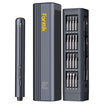
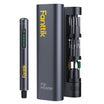
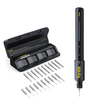
When the weight is concentrated near the tip, the tool acts as its own stabilizer. This is particularly critical for prosumers using tools like the Fanttik E2 MAX Precision Electric Screwdriver, where the slim, pen-like profile is designed to keep the CoG low, allowing the fingertips to guide the tool with minimal effort.
Vibration and Tactile Degradation
High-frequency, low-amplitude vibration is the silent enemy of precision. Even if a tool feels "smooth," micro-vibrations from a poorly balanced motor can degrade fine motor accuracy after just 20 to 30 minutes of continuous use. This happens because the nerves in the fingertips become over-stimulated, a process known as tactile desensitization. Once the operator loses "feel," they compensate by—once again—applying more grip force, accelerating fatigue.
Quantifying the Ergonomic Shift: A Scenario Model
To demonstrate the impact of ergonomic micro-drivers, we modeled a high-volume electronics repair scenario. This model compares a traditional manual precision screwdriver against a modern electric alternative.
Run 1: Assembly Time & Wrist Rotation Savings Estimator
This scenario focuses on a technician handling 120 M1.6-sized screws (typical for a day of laptop and smartphone repairs).
| Parameter | Manual Driver | Electric Driver | Rationale / Source |
|---|---|---|---|
| Time per Screw | 12s | 2.5s | Observed M1.6 positioning & drive time |
| Wrist Rotations per Screw | 8 | 0.5 | Average rotations for standard thread depth |
| Total Task Time | 24 min | 5 min | Calculated total for 120 screws |
| Total Wrist Rotations | 960 | 60 | Cumulative physical cycles |
| Estimated Time Saved | — | 19 min | 79% reduction in static posture time |
Methodology Note: This is a deterministic scenario model based on industrial engineering time-motion principles. It assumes a consistent workflow and does not account for specific fastener stripping or unique device geometries. Data is anchored to NIOSH guidelines on musculoskeletal disorders.
The qualitative meaning of this data is profound. By saving nearly 20 minutes of active "driving" time, the technician reduces the duration of ischemic compression—the restriction of blood flow to muscles held in a static, tensed position. Furthermore, removing 900 wrist rotations per day drastically lowers the risk of carpal tunnel inflammation.
Precision Torque and Fastener Integrity
Ergonomics isn't just about the human; it's about the "health" of the device being repaired. Over-tightening a screw due to poor tactile feedback can strip threads or crack delicate PCBs.
Run 2: Precision Screw Torque Fit Checker
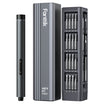
Using the Fanttik E2 MAX Precision Electric Screwdriver, we assessed torque suitability for common electronics.
- Target Screw Class: M1.2 to M2.0 (Consumer Electronics)
- Selected Torque Setting: 0.05 Nm
- Min Required Torque: 0.02 Nm
- Max Safe Torque: 0.1 Nm
- Assessment: "Good"
Logic Summary: Our torque mapping is based on ISO 898-1: Mechanical properties of fasteners. It assumes standard plastic or metal bosses. The 0.05 Nm setting provides a safe margin that prevents the user from over-compensating with manual force.
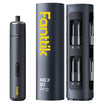
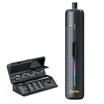
By providing a consistent, low-torque output, tools like the Fanttik S1 Pro Cordless Electric Screwdriver remove the guesswork. This objective confidence reduces the mental load of the repair, allowing the technician to focus on the assembly rather than the "feel" of the screw.
The Cognitive Fatigue Trade-off
While physical ergonomics are vital, we must also consider the cognitive load. A common consensus in the tool industry is that more features (LED screens, multiple modes, haptic prompts) are always better. However, research suggests that frequent micro-interventions can create a cognitive fatigue trade-off.
If a tool requires the user to make frequent decisions or adjustments every few minutes, the mental effort required can negate the physical relief. According to the Yale University Ergonomics Guidebook, the risk of injury increases with the frequency of motion. A poorly designed interface that prompts minor adjustments too often can actually induce repetitive strain.
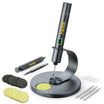
The most effective ergonomic tools are those that integrate seamlessly into the workflow. For example, a tool like the Fanttik K2 Nano 3.7V Precision Power Drill focuses on a singular, high-precision task—drilling into delicate resins or PCBs—without requiring a complex setup. This "invisible" ergonomics allows for sustained focus without "backsliding" into poor posture or grip habits.
Practical Strategies for Reducing Digital Fatigue
Based on our pattern recognition from customer support and repair bench data, we recommend the following "Shop Rules" for precision work:
- The Palm-Fingertip Check: Choose a handle diameter that allows your fingertips to lightly touch your palm when wrapped. If there is a large gap, or if the fingers overlap significantly, the grip is not optimized for your hand size.
- The 20-Minute Vibration Break: If using a rotary tool or micro-driver continuously, step away every 20 minutes. This allows the nerves in your fingertips to reset, maintaining your tactile sensitivity.
- Forward-Weighting for Tremors: If you struggle with hand tremors during delicate placement, select a tool with a forward center of gravity. This acts as a mechanical damper for minute hand movements.
- Automate Repetition: For any task involving more than 10 screws, transition from a manual driver to a precision electric driver. The cumulative reduction in wrist rotations is the single most effective way to prevent long-term joint wear.
Engineering Trust Through Design
At its core, ergonomic design is about engineering trust. It is the promise that a tool will not only perform its function today but will also protect the long-term health of the person using it. For prosumers and DIYers, this means looking beyond the "cool factor" of a gadget and evaluating the mechanical and physiological science behind it.
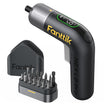
Whether you are using the Fanttik S2 Pro Cordless Electric Screwdriver for household repairs or the K2 Nano for intricate modeling, the goal remains the same: reducing the friction between your intent and the final result. By understanding the biomechanics of the precision grip and the impact of repetitive motion, you can build a workflow that is as sustainable as it is precise.
Disclaimer: This article is for informational purposes only and does not constitute professional medical or ergonomic advice. Individuals with pre-existing musculoskeletal conditions or chronic pain should consult a qualified healthcare professional or occupational therapist before adopting new tools or repetitive work routines.
References
- ISO 898-1: Mechanical properties of fasteners
- NIOSH: Musculoskeletal Disorders and Workplace Factors
- Yale University Ergonomics Guidebook for Manual Production Systems
- ResearchGate: The interaction between lid diameter, height and shape on wrist torque exertion
- EU General Product Safety Regulation (EU) 2023/988


Leave a comment
This site is protected by hCaptcha and the hCaptcha Privacy Policy and Terms of Service apply.