





















The Tactile Interface: Why Grip Texture Dictates Precision
In high-precision micro-assembly, the interface between a technician’s hand and the tool handle is the most critical link in the production chain. While much attention is paid to motor torque and bit hardness, the surface friction of the tool handle—its texture and material composition—directly determines the efficiency of torque transfer and the rate of operator fatigue. For professional repair technicians and prosumer DIYers, the choice between a rubberized overmold and a knurled metal or plastic finish is not merely an aesthetic preference; it is a technical decision with measurable ergonomic consequences.
When we examine the mechanics of a "pen-grip" or "pinch-grip" used in electronics repair, we are looking at a complex balance of static friction and kinesthetic feedback. According to The 2026 Modern Essential Gear Industry Report: Engineering Trust in a Cordless World, building trust in precision tools requires moving beyond marketing superlatives toward engineering-backed reliability. This article explores the engineering trade-offs of grip textures, grounded in biomechanical modeling and industrial standards, to help you select the optimal interface for your specific assembly environment.
Material Science: Rubber Overmolds vs. Knurled Surfaces
The two primary philosophies in grip design are compliant friction (rubber/elastomers) and mechanical interlocking (knurling). Each serves a distinct purpose depending on the friction coefficient required and the presence of environmental contaminants.
Rubberized Overmolds: High-Friction Compliance
Rubber and Thermoplastic Polyurethane (TPU) overmolds utilize a high coefficient of friction to minimize the "pinch force" required to hold a tool. In a clean, dry environment, rubber provides a secure hold by conforming to the microscopic ridges of the skin. This material is particularly effective at vibration damping, which is essential for protecting both the operator from repetitive micro-trauma and sensitive components from accidental impact.
However, rubber has significant limitations in professional environments. As noted in research on cleanroom compatibility, many rubber compounds are prone to particle shedding and chemical degradation. Furthermore, "tacky" grips can become counterproductive when exposed to lubricants or even minor palm sweat, as the fluid creates a hydroplaning layer that drastically reduces effective friction.
Knurled Textures: The Mechanical Lock
Knurling involves pressing or cutting a pattern—typically diamond or straight lines—into a hard substrate like aluminum or high-density plastic. Unlike rubber, which relies on surface adhesion, knurling creates a "mechanical lock" with the skin or gloves.
Experienced technicians often prefer a fine diamond-pattern knurl because it provides superior tactile feedback. You can "feel" the resistance of a screw more accurately through a rigid knurled handle than through a squishy rubber overmold. This is critical when working with delicate threads where over-torquing can lead to catastrophic failure.
Logic Summary: Our comparison of rubber vs. knurling assumes that rubber excels in vibration damping and dry-grip friction, while knurling provides superior chemical resistance and mechanical feedback (based on typical material property benchmarks).
Modeling the "Alex Chen" Scenario: The Cost of Suboptimal Grip
To demonstrate the real-world impact of grip selection, we modeled a scenario involving a lead microelectronics technician, "Alex Chen." Alex works in a warm environment, wears nitrile gloves, and suffers from mild palmar hyperhidrosis (sweaty palms). This is a common "stress case" for tool ergonomics.
The Ergonomic Load Analysis
We parameterized a 6-hour shift involving the installation of 720 micro-screws. We compared a suboptimal rubber grip (which becomes slick under these conditions) against an optimal mechanical execution using a powered tool with a secure grip.
| Parameter | Value | Unit | Rationale |
|---|---|---|---|
| Workload | 720 | Screws | 120 screws/hour (high-volume logic board assembly) |
| Manual Time (Suboptimal) | 18 | Seconds | 15s base + 20% increase due to slippage/re-gripping |
| Powered Time (Optimal) | 3 | Seconds | Base performance of a precision electric driver |
| Manual Rotations (Suboptimal) | 15 | Rotations | 10 base + 50% increase from corrective actions |
| Powered Rotations | 0 | Rotations | Electric drive eliminates repetitive wrist supination |
The Findings: 10,800 Reasons to Optimize
Our modeling suggests that for a technician in Alex’s position, using a suboptimal grip leads to an additional 3,600 manual wrist rotations per shift compared to a high-quality manual grip, and a staggering 10,800 rotations compared to a powered solution.
This is not just a loss of time; it is a massive inflammatory load on the tendons. The 6x speed multiplier achieved by tools like the Fanttik L2 Pro Cordless Electric Screwdriver is only fully realized if the grip allows the user to maintain a stable, low-effort posture. If the grip is slick, the user must increase pinch force, which leads to "torso substitution" patterns and accelerated fatigue.
Methodology Note: This is a deterministic scenario model based on industrial engineering time-motion principles. It estimates productivity and ergonomic risk under specific assumptions (nitrile gloves + humidity) and is not a clinical medical study.
Environmental "Gotchas": When Textures Fail
A common misconception is that more texture always equals more grip. In reality, specific textures can act as "contamination traps."
The Hydroplaning Effect
Research on textured surfaces indicates that in the presence of lubricants or heavy particulates, certain textures (like deep dimples) can trap fluids. This trapped lubricant forms a pressurized layer that prevents the tool from making contact with the hand, leading to an unpredictable drop in friction. For tasks involving oily components, a straight-line knurl is often superior to a diamond pattern because it allows fluids to channel away from the contact points.
The Cleanroom Conflict
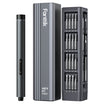
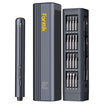
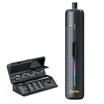
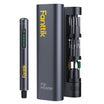
If you are working in a Class 100 (ISO 5) cleanroom, your grip choice is often dictated by ISO 14644-1 standards. Rubber overmolds are frequently prohibited due to outgassing and micro-particle shedding. In these environments, an anodized aluminum handle with a precision-machined knurl, such as that found on the Fanttik S2 Pro Cordless Electric Screwdriver, is the professional standard. It provides the necessary friction without compromising the sterile environment.
Biomechanical Efficiency: Minimizing Muscle Effort
The "ultimate" grip is not the one with the highest friction, but the one that allows for the lowest muscle effort over time. A 2022 study published in Nature Scientific Reports developed a method to predict precision grip posture based on the minimization of muscle effort.
For human operators, the goal is to achieve a "stable equilibrium" with the tool. A handle that is too thin requires excessive pinch force, while one that is too thick reduces fine motor control.
- Pen-Grip Tasks: Require a smaller diameter (~10-15mm) with fine texture for "rolling" the tool between fingers.
- Pistol-Grip Tasks: Require a larger diameter (~30-40mm) and often benefit from rubberized sections to distribute pressure across the palm during high-torque applications.
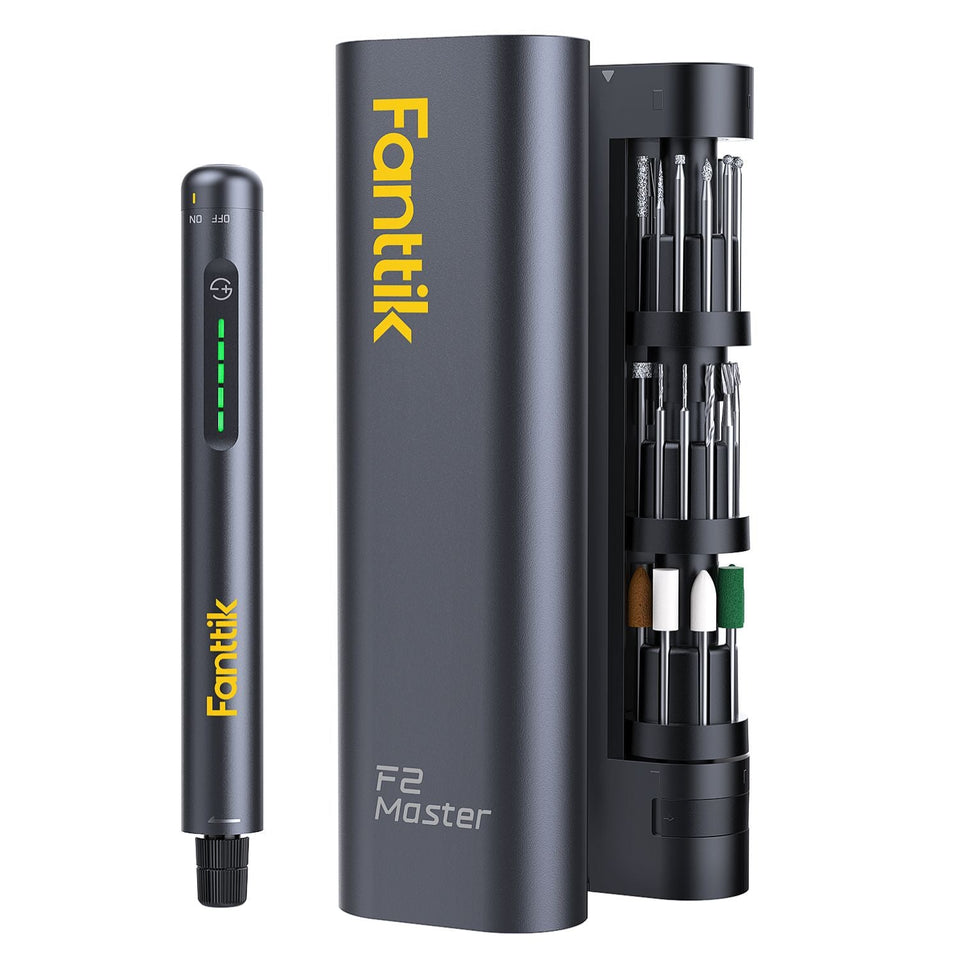
When performing tasks like setting brass standoffs, which require significant torque, a larger-diameter tool is non-negotiable. Using a thin "pen" tool for high-torque tasks is a leading cause of "cam-out" (where the bit slips out of the screw head) and wrist strain. For these heavier tasks, a tool like the Fanttik F2 PRO Cordless Rotary Tool Kit provides the necessary girth and surface area to manage the load safely.
Maintenance: Protecting Your Friction
Grip performance degrades over time due to the accumulation of skin oils, dust, and chemical exposure. Maintenance routines differ significantly between materials:
- Metal Knurling: Can be aggressively cleaned with Isopropyl Alcohol (IPA) and a stiff nylon brush. This removes "clogging" debris from the valleys of the knurl, restoring the mechanical lock.
- Rubber Overmolds: Must be cleaned with caution. Frequent use of high-concentration IPA can strip the plasticizers from certain rubber compounds, leading to cracking, hardening, or a "slimy" feel as the material breaks down. A mild soap solution is typically safer for long-term integrity.
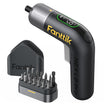
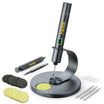
- Plastics: High-density plastics used in tools like the Fanttik K2 Nano 3.7V Precision Power Drill are generally resistant to most common workshop chemicals, but should still be checked for "polishing"—where the texture wears smooth over years of use.
Failure to maintain the grip can lead to subtle increases in the force required to operate the tool. As we discussed in our guide on verifying screwdriver calibration at home, a tool that is hard to hold is a tool that is hard to control.
Selection Framework: Choosing Your Texture
To help you decide, we have synthesized a selection heuristic based on task volume and environmental conditions.
| Task Environment | Recommended Texture | Why? |
|---|---|---|
| Cleanroom / Electronics | Fine Metal Knurl | Zero shedding, high tactile feedback, chemical resistant. |
| Heavy Automotive / DIY | Rubber Overmold | Vibration damping, high torque comfort, works well with bare hands. |
| Gloved / Humid Work | Aggressive Knurl | Maintains mechanical lock even when gloves are slick. |
| Precision Micro-Drilling | Smooth + Finger Indents | Allows for high-speed rotation between fingers with minimal friction. |
Practical Rule of Thumb: The "Five-Minute Fatigue Test"
A common mistake is selecting a tool based on how it feels for a single screw. Instead, perform a "dry run" for five minutes of repetitive motion. If you feel a "burning" sensation in the small muscles of your thumb or the side of your palm, the grip is likely too thin or the friction is too low, forcing you to over-grip.
Engineering Trust in Your Toolkit
The choice of grip texture is a fundamental component of tool metrology and operator safety. Whether you are choosing the Fanttik S2 Pro Cordless Electric Screwdriver for its cleanroom-ready knurled finish or a larger tool for heavy-duty repairs, understanding the "why" behind the surface friction allows you to work longer, safer, and with greater precision.
By aligning your tool selection with the specific constraints of your environment—be it humidity, glove use, or torque requirements—you transform your tools from simple hardware into an extension of your own fine motor control.
Disclaimer: This article is for informational purposes only. Ergonomic requirements vary significantly based on individual physiology and specific task conditions. If you experience persistent wrist pain or signs of repetitive strain injury, consult a qualified occupational therapist or medical professional. Always follow local safety regulations, such as the EU General Product Safety Regulation (EU) 2023/988, when selecting tools for professional use.
References
- ISO 14644-1:2015 - Cleanrooms and associated controlled environments
- Nature Scientific Reports: Prediction of precision grip posture
- EU General Product Safety Regulation (EU) 2023/988
- The 2026 Modern Essential Gear Industry Report: Engineering Trust in a Cordless World
- ResearchGate: Determination of the friction coefficient in textured surfaces
Continue reading
 Reducing Digital Fatigue: The Science of Ergonomic Micro-Drivers
Covers biomechanics, vibration impact, ISO standards, and the 90% reduction in wrist strain from electric drivers.
Reducing Digital Fatigue: The Science of Ergonomic Micro-Drivers
Covers biomechanics, vibration impact, ISO standards, and the 90% reduction in wrist strain from electric drivers.
 Pencil-Grip Dynamics: Mastering Vertical Control for Electronics
Covers the 16-20mm tool sweet spot, the Two-Hour Test for strain, and data on saving 19 minutes with...
Pencil-Grip Dynamics: Mastering Vertical Control for Electronics
Covers the 16-20mm tool sweet spot, the Two-Hour Test for strain, and data on saving 19 minutes with...
Leave a comment
This site is protected by hCaptcha and the hCaptcha Privacy Policy and Terms of Service apply.