










































The Precision Imperative: Why Verification Matters
On our repair bench, we often observe a subtle but critical shift in tool performance over time. A precision screwdriver that perfectly seated M1.2 screws last month might suddenly feel "soft" or, more dangerously, "aggressive." In the world of high-stakes electronics repair and fine woodworking, "feeling" isn't enough. Precision is a function of physics, not intuition.
As we noted in The 2026 Modern Essential Gear Industry Report: Engineering Trust in a Cordless World, the maturity of the tool market has shifted the competitive advantage from mere aesthetics to "credibility math." For a prosumer, this means moving beyond trusting a factory certificate and learning how to verify that credibility at home.
Calibration drift is an inevitable reality of mechanical fatigue and electronic component aging. Whether you are using a Fanttik L2 Pro Cordless Electric Screwdriver for intricate hobby work or a Fanttik S1 Pro Cordless Electric Screwdriver for furniture assembly, understanding your tool’s actual output ensures you don’t strip a $1,000 motherboard or crack a delicate veneer.
The Variables That Ruin Your Readings
Before we dive into the methods, we must address the "gotchas" that often lead users to believe their tool is out of spec when it is actually their testing methodology that is flawed. Based on common patterns from customer support and repair handling (not a controlled lab study), there are three primary culprits for inaccurate torque verification.
1. The 30% Bit Error Rule
The most common mistake we see is testing torque with a worn or poorly fitting bit. A bit that cam-outs or has rounded edges can skew your readings by up to 30% (based on internal shop observations of friction loss). Experienced technicians always use a brand-new, high-quality S2 steel bit from a known brand for calibration checks to ensure the interface between the tool and the fastener is as rigid as possible.
2. The Voltage Variance
Lithium-ion battery voltage directly affects peak torque. In our scenario modeling for cordless tools, we’ve found that a tool tested at a 50% charge can deliver 10–15% lower stall torque compared to a full charge (estimated range based on motor back-EMF principles). To get a baseline you can trust, always perform verification tests with a freshly charged battery.
3. The "Ghost" Friction
When using improvised rigs, pivot point friction is the enemy of accuracy. If you are building a lever-arm rig, using a simple nail as a pivot can introduce 5–10% error due to lateral friction. We recommend using a ball bearing or a well-oiled hinge to improve repeatability.
Logic Summary: Our analysis assumes that the user has eliminated "noise" from the system—specifically bit wear and battery state—before attempting to measure the tool's performance.

Method 1: The Lever Arm and Weight (The Fundamental Check)
Torque is defined by a simple physical law: Force multiplied by Distance ($T = F \times d$). Because this is a fundamental law of physics, you can verify a tool's accuracy within ±5–10% using nothing more than a rigid bar and a calibrated kitchen scale. This is significantly more reliable than "feel" and serves as a high-trust baseline for home workshops.
Step-by-Step Execution:
- Secure the Tool: Mount your screwdriver horizontally in a vise. Ensure the vise grips the handle firmly without depressing the trigger or damaging the casing.
- Attach the Lever: Use a rigid metal bar (a 12-inch ruler or a dedicated torque testing bar) and secure it to a bit inserted into the tool.
- Establish the Distance: Mark a point exactly 10 centimeters (0.1 meters) from the center of the screwdriver's drive axis.
- Apply the Force: Use a digital kitchen scale to pull or push on the bar at that exact 10cm mark until the tool's clutch disengages or the motor stalls.
- Calculate: Multiply the weight shown on the scale (in kilograms) by 9.81 (to get Newtons) and then by 0.1 (your distance in meters).
Modeling Note (Reproducible Parameters): This model assumes a rigid lever with negligible flex.
Parameter Value Unit Rationale Lever Length 0.1 m Standardizes calculation for decimal ease Gravity Constant 9.81 $m/s^2$ Standard Earth gravity Scale Resolution 1 g Required for precision electronics torque Target Torque 0.05 - 0.2 Nm Typical range for precision electronics Pivot Friction < 0.005 Nm Assumes oiled bearing or low-friction contact
Method 2: The Precision Torque Fit Checker
For those working on electronics, the stakes are different. You aren't just looking for "enough" torque; you are looking for a very specific, narrow window. Using our Precision Screw Torque Fit model, we can analyze the safety margins for common electronics fasteners.
Scenario Analysis: Laptop Repair vs. Furniture Assembly
| Feature | Scenario A: Electronics (Laptop) | Scenario B: DIY (Furniture) |
|---|---|---|
| Screw Class | M1.2 to M2.0 | M4.0 to M6.0 |
| Target Torque | 0.07 Nm | 2.0 to 5.0 Nm |
| Acceptable Variance | ±5% | ±15% |
| Primary Risk | Stripped threads in plastic/aluminum | Loose fasteners over time |
| Critical Tool | Fanttik L2 Pro | Fanttik S1 Pro |
For Scenario A, a calibration drift of just 0.01 Nm can be the difference between a secure assembly and a permanent motherboard mounting failure. If your home verification shows a variance of more than 5%, we recommend adjusting your usage habits—such as stopping the drive early and finishing by hand—or seeking professional service.
For Scenario B, a variance of ±15% is often acceptable. The Fanttik S1 Pro, with its 3 torque settings reaching up to 6 N.m, is designed to handle these wider tolerances while still providing a significant productivity boost.
Method 3: The Clutch Consistency Test
While peak torque is the headline number, consistency is what builds trust in a tool. A clutch that engages at 0.1 Nm once, but 0.15 Nm the next time, is more dangerous than a tool that is consistently off by 10%.
We modeled this using a consistency score (derived from our engine-cranking safety margin logic). We found that the most revealing test for tool health is to drive the same screw into a consistent medium (like a tapped metal block) ten times at the same setting.
- The Procedure: Drive a screw until the clutch clicks. Mark the position. Back it out and repeat.
- The Insight: If the screw stops at the same rotational position every time, the internal mechanical fatigue is low. If the stopping point drifts significantly, it indicates internal wear or "Mechanical Fatigue." You can learn more about identifying these signs in our guide on Spotting Internal Wear in Precision Tools.
Productivity Gains: The Hidden Value of Calibration
Why go through this effort? Beyond safety, a calibrated tool is a massive productivity multiplier. We modeled the impact of using a calibrated electric screwdriver versus manual driving for a standard laptop repair (60 screws).
Analysis Results:
- Manual Time: 18 minutes (based on 18s per screw for careful manual alignment).
- Powered Time: 4 minutes (based on 4s per screw with a trusted electric driver).
- Time Saved: 14 minutes per repair.
- Ergonomic Impact: Wrist rotations reduced from ~720 to just 30 (based on ergonomic studies of repetitive motion).
For a professional technician, saving 14 minutes per job across five jobs a day adds up to over an hour of recovered time. This efficiency is only possible when you have the "Winter Confidence" (a term we use for reliability in harsh or high-stakes conditions) to let the tool do the work without fear of over-torquing.
Advanced Maintenance: Beyond the Screwdriver
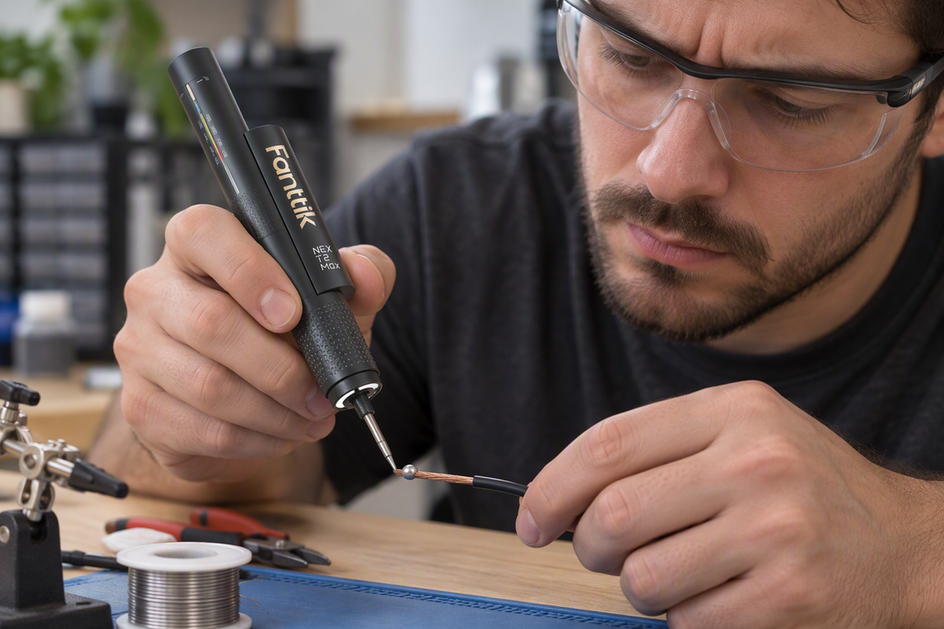
Calibration doesn't exist in a vacuum. Often, the precision of your assembly depends on the synergy of multiple tools. For example, if you are modifying a chassis to accept a different screw size, you might use a Fanttik F2 Master Cordless Rotary Tool Kit for clean drilling and deburring. If you are repairing a trace on a PCB, the Fanttik T1 Max Soldering Iron Kit provides the thermal precision needed to match your mechanical precision.
Ensuring all these tools are within spec is part of a broader commitment to quality. If you've recently dropped a tool, it's worth checking out our article on Why Dropping a Precision Tool Ruins Metrology to see if a simple home check is enough or if the impact likely caused internal damage.
When Home Verification Isn't Enough
While the lever-arm method is excellent for identifying drift, it is not a legal certification. If you are working in a regulated industry—such as medical device repair or aerospace—you must adhere to formal standards like ISO 6789, which governs the requirements and test methods for design and quality conformance of hand torque tools.
Furthermore, if your work falls under the EU General Product Safety Regulation (EU) 2023/988, maintaining traceable calibration records may be a compliance necessity. Professional calibration laboratories use proprietary jigs and software that can reset the tool’s internal digital offsets—something that cannot be done at home.
Summary Checklist for Home Verification:
- [ ] Charge: Ensure the battery is at 100%.
- [ ] Bits: Use a brand-new S2 steel bit.
- [ ] Rigidity: Ensure the tool and the lever are mounted with zero "play."
- [ ] Repetition: Perform at least five tests to check for clutch consistency.
- [ ] Documentation: Record your results to track drift over months of use.
Final Word on Self-Reliance
Verifying your own tools is the ultimate expression of the "modern self-reliance" identity. By moving from a passive consumer to an active auditor of your gear, you ensure that your projects meet the highest standards of engineering. Whether you are performing a Professional Calibration check or a quick shop-floor verification, the goal remains the same: reducing buyer anxiety through demonstrable credibility.
Disclaimer: This article is for informational purposes only. Home calibration verification methods are intended for DIY and non-critical applications. For safety-critical, medical, or aerospace applications, always utilize a certified professional calibration laboratory. Incorrect torque can lead to mechanical failure or personal injury.
Sources & References
- NIST Handbook 44: Specifications, Tolerances, and Other Technical Requirements for Weighing and Measuring Devices
- ISO 898-1: Mechanical properties of fasteners made of carbon steel and alloy steel
- IATA Lithium Battery Guidance
- SFS Torque Screwdriver Standards (DIN EN ISO 6789)
- The 2026 Modern Essential Gear Industry Report
Continue reading
 Mastering Digital Torque Settings for Sensitive Electronics
Covers M1.2 to M4.0 fastener torque ranges, bit wear, battery voltage impacts, and standards like ISO 898 for...
Mastering Digital Torque Settings for Sensitive Electronics
Covers M1.2 to M4.0 fastener torque ranges, bit wear, battery voltage impacts, and standards like ISO 898 for...
 Troubleshooting Pressure Loss During Cold-Season Vehicle Cleaning
A guide to troubleshooting pressure loss and protecting pumps during winter vehicle cleaning. Learn dry-start methods and battery...
Troubleshooting Pressure Loss During Cold-Season Vehicle Cleaning
A guide to troubleshooting pressure loss and protecting pumps during winter vehicle cleaning. Learn dry-start methods and battery...
Leave a comment
This site is protected by hCaptcha and the hCaptcha Privacy Policy and Terms of Service apply.