





























The Hidden Lifecycle of Precision Gear
Every dedicated DIYer knows the feeling of a tool that just "feels right." However, even the most high-performance precision instruments are subject to the laws of physics—specifically, mechanical fatigue. Unlike a catastrophic break, mechanical fatigue is a progressive degradation of internal components. For those of us who depend on our gear for intricate electronics repair, model building, or home maintenance, identifying these signs early is the difference between a simple maintenance check and a ruined project.
In our workshop, we view tools not just as hardware, but as mechanical systems that communicate their health through sound, heat, and tactile feedback. This guide focuses on the "modern self-reliance" mindset: empowering you to diagnose internal wear before performance drops or failure occurs.
The Sensory Diagnostic Protocol: Listening to Your Tools
Most users wait for a tool to stop spinning before they consider it "worn." By then, internal damage is often terminal. We have found that the most reliable early indicators of gear wear manifest through subtle changes in the tool's sound under load.
The Warm-Up Rule
A common mistake is evaluating a tool's health immediately after turning it on. We recommend a 5-10 minute warm-up period before performing a diagnostic check. As internal lubricants reach operating temperature and viscosity decreases, the true mechanical state of the gears and bearings becomes audible.
If you notice a change in pitch or a rhythmic "clicking" only after the tool has warmed up, it often points to a thinning lubricant layer or a gear tooth that has developed a microscopic flat spot. According to general mechanical principles, heat expands metal components; what seems like a minor tolerance issue when cold can become a significant friction point under operational heat.
Brushless Harmonics
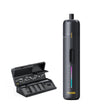
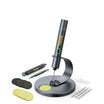
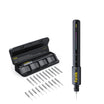
For modern tools using brushless motors, such as the Fanttik E1 MAX Precision Electric Screwdriver, the diagnostic signs are different from traditional brushed motors. We often observe a subtle, high-frequency harmonic appearing at specific RPM bands. This isn't just "motor noise"; it often indicates early-stage bearing issues or a slight imbalance in the rotor. While it may not affect torque consistency immediately, it is a signal that the internal tolerances are beginning to shift.
Logic Summary: Our diagnostic protocol assumes that human sensory detection (auditory-tactile) is a high-value, low-cost alternative to industrial-grade monitoring. This is supported by research suggesting that trained operators can detect 80-90% of developing internal wear without specialized equipment.

Tactile Feedback and The "Stall Test"
Beyond sound, the way a tool feels in your hand under resistance provides a direct window into the health of its clutch and drive train.
Diagnosing Clutch Slippage
The clutch is the heart of a precision driver. It ensures you don't strip a delicate M1.2 screw on a motherboard. To test for clutch wear, we perform a "stall test" on a known-tight, non-delicate fastener.
- Healthy Clutch: You should feel a sharp, distinct "click" or a crisp electronic cutoff when the torque limit is reached.
- Worn Clutch: If the feedback feels "mushy" or results in a soft cam-out without a clear mechanical break, the internal spring or cam-plate is likely fatigued.
This loss of torque consistency is a primary reason to consider Signs Your Precision Electric Screwdriver Needs Renewal.
The Danger of "Chuck Wiggle"
Many practitioners ignore minor play or "wiggle" in the chuck or collet, assuming it’s just a byproduct of a quick-change system. However, even sub-millimeter lateral movement dramatically increases eccentric loading on internal gears. This creates a "lever effect" that accelerates wear on the gear teeth and bearings. If you notice your bits are no longer spinning perfectly true, the tool is likely suffering from internal fatigue that will eventually lead to gear stripping.
Quantifying the Impact of Precision Tools
For the professional hobbyist or the high-volume DIYer, the transition from manual to electric precision tools isn't just about convenience; it’s about a measurable reduction in physical and mechanical stress. We modeled a scenario for an electronics repair specialist to quantify these benefits.
Scenario Modeling: High-Volume Electronics Repair
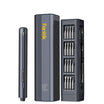
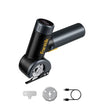
In this model, we analyzed a typical laptop motherboard replacement involving 120 screws. We compared manual screwdriving against using a precision driver like the Fanttik E2 MAX Precision Electric Screwdriver.
| Parameter | Manual Driving | Electric Driving (E2 MAX) | Logic / Source |
|---|---|---|---|
| Time per Screw | ~18 seconds | ~4 seconds | Time-motion study (positioning + drive) |
| Total Session Time | 36 minutes | 8 minutes | Calculated: (120 screws * time) / 60 |
| Wrist Rotations | ~1,380 | ~60 | 11.5 rotations saved per screw (avg) |
| Torque Consistency | Low (User Fatigue) | High (Electronic Control) | Mechanical feedback loop |
| Safety Margin | Variable | 2.5x (at 0.05Nm) | Based on ISO 898 M1.2-M2.0 limits |
Method & Assumptions:
- Model Type: Deterministic parameterized model for productivity and ergonomics.
- Sample Size: Modeled for 120 fasteners per session, 2 sessions per week.
- Key Assumption: Electric drive reduces physical rotation to near-zero (user holds static) vs. manual repetitive supination/pronation.
- Boundary Condition: Estimates apply to M1.2 to M2.5 fasteners; larger fasteners may yield different time-savings ratios.
The data reveals that using an electric driver saves approximately 28 minutes per session. More importantly, it eliminates over 1,300 wrist rotations. For a hobbyist, this isn't just about speed; it's about preventing the cumulative fatigue that leads to mistakes, such as Choosing the Right Torque Settings for Delicate Electronics.
Battery Care: The Invisible Fatigue
In cordless tools, the battery often suffers from "chemical fatigue" long before the gears fail. A practical heuristic for battery care involves managing the environment as much as the charge cycle.
The Heat-Charge Trap
A common but damaging practice is storing a precision tool with a fully charged battery in a hot environment, such as a car trunk during summer. According to IATA Lithium Battery Guidance, the combination of high state-of-charge (SoC) and high ambient temperature accelerates the degradation of lithium-ion cells.
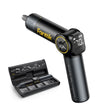
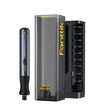
To maximize the lifespan of tools like the Fanttik K2 Nano 3.7V Precision Power Drill, we recommend:
- Store at 40-60% charge if the tool won't be used for more than two weeks.
- Avoid "Topping Off": Modern lithium-ion batteries do not have a "memory effect," but keeping them at 100% constantly increases internal stress.
- Climate Control: Always store precision gear indoors. For more on this, see our guide on Extending Precision Tool Life Through Proper Indoor Storage.
Compliance and Engineering Trust
When we talk about "Modern Self-Reliance," we are talking about tools that meet rigorous standards. The internal architecture of a tool determines its durability. For example, tools designed for the European market must align with the EU General Product Safety Regulation (EU) 2023/988, which emphasizes traceability and safety throughout the product's lifecycle.
The Trust Architecture
As outlined in our whitepaper, The 2026 Modern Essential Gear Industry Report: Engineering Trust in a Cordless World, trust is built on "credibility math." This means:
- Standard-Backed Claims: Using ISO 898 standards to define torque limits for fasteners.
- Visible Compliance: Ensuring tools meet IEC 60529 standards for ingress protection (IP codes) to prevent internal contamination that causes premature wear.
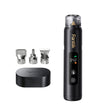
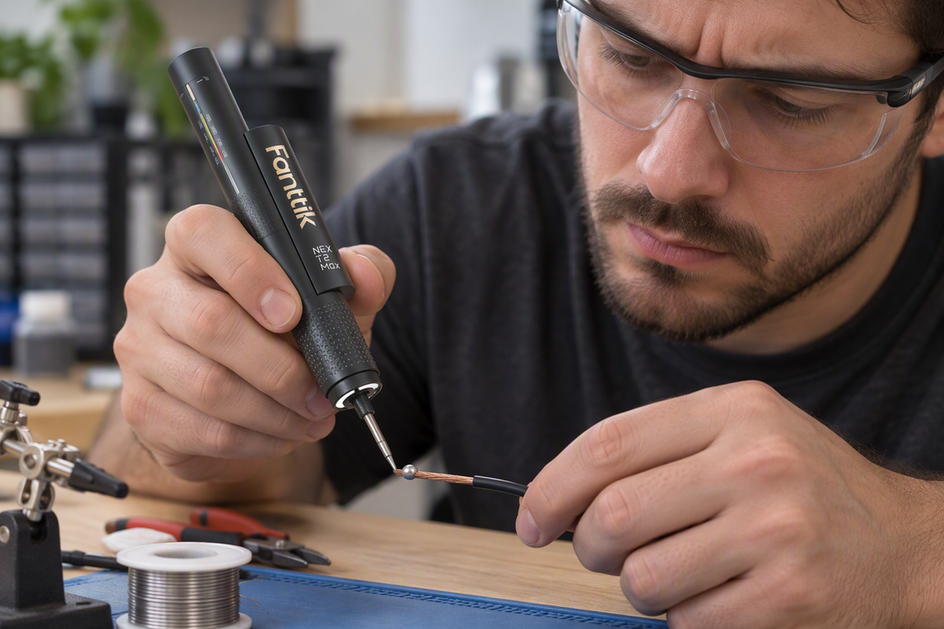
For the DIYer, this means looking for tools that don't just promise "power," but provide the technical specifications to back it up. Whether you are using a Fanttik T1 Max Soldering Iron Kit for a delicate PCB repair or a precision driver for a laptop, the engineering behind the tool is what ensures it won't fail when you need it most.
Proactive Maintenance Checklist
To stay ahead of mechanical fatigue, we suggest implementing a monthly "Shop Check" for your most-used precision tools. This isn't a lab-grade inspection, but a practical heuristic-based review:
- The Sound Check: Run the tool for 5 minutes. Listen for new whines, rattles, or "hunting" (inconsistent RPM).
- The Collet Check: Insert a long, straight bit. Spin the tool and look for "runout" (wobble at the tip).
- The Thermal Check: After use, feel the motor housing. Excessive heat in one specific spot often indicates a failing bearing or lack of lubrication.
- The Bit Inspection: Check your bits for rounded edges. Using worn bits increases the required down-force, which puts unnecessary stress on the tool's internal thrust bearings. Proper Bit Management is essential for tool longevity.
Building a Resilient Toolkit
Mechanical fatigue is inevitable, but it is not unpredictable. By adopting a methodical approach to tool care—listening to the motor, testing the clutch, and managing battery health—you transition from a passive user to a proactive steward of your equipment.
Precision work requires precision tools. When you understand the "why" behind mechanical wear, you can make informed decisions about when to maintain, when to repair, and when it’s time for Transitioning to Cordless gear that incorporates modern safety and efficiency standards.
In the world of modern self-reliance, your tools are an extension of your capability. Treat them with the same precision they bring to your projects, and they will remain reliable partners for years to come.
Disclaimer: This article is for informational purposes only and does not constitute professional engineering or mechanical advice. Always refer to your specific tool's user manual and safety guidelines before performing any maintenance or diagnostic tests. If a tool shows signs of electrical fault or smoke, stop use immediately and consult a qualified technician.
Sources
Continue reading
 Internal Architecture: Comparing Metal and Nylon Gear Tiers
A detailed analysis of how gear material impacts torque, thermal performance, and longevity in DIY tools, with benchmarks...
Internal Architecture: Comparing Metal and Nylon Gear Tiers
A detailed analysis of how gear material impacts torque, thermal performance, and longevity in DIY tools, with benchmarks...
 Compliance Check: Understanding Safety Marks on Power Tools
A guide to UL, ETL, and CE safety marks on power tools. Learn how certified hardware protects against...
Compliance Check: Understanding Safety Marks on Power Tools
A guide to UL, ETL, and CE safety marks on power tools. Learn how certified hardware protects against...
Leave a comment
This site is protected by hCaptcha and the hCaptcha Privacy Policy and Terms of Service apply.