
























The Invisible Architecture: Why Gear Material Defines Precision Performance
The Bottom Line: For high-volume assembly and professional DIY tasks, metal gear systems are typically the superior choice due to their thermal stability and defined fatigue limits. While nylon gears offer acoustic benefits and lower costs for light, occasional household use, they are prone to thermal softening under sustained loads. Choosing the right architecture depends on your "duty cycle"—the frequency and intensity of your fastening tasks.
For the serious DIYer and prosumer, the value of a tool is often measured by its exterior: the grip ergonomics, the battery capacity, or the peak torque listed on the box. However, the determinant of a tool’s longevity and reliability often lies hidden within its gearbox. This internal architecture represents a fundamental engineering fork in the road. It is the difference between a tool that maintains consistent torque over thousands of cycles and one that may see performance degradation when the project stakes are highest.
Understanding this architecture is a key component of what industry experts call "credibility math"—the systematic engineering of trust through transparent specifications. As noted in the 2026 Modern Essential Gear Industry Report, modern tool users increasingly prioritize internal durability over aesthetic appeal.

The Physics of Power Transmission: Polyamide vs. Steel
At the heart of every cordless screwdriver is a planetary gear system designed to reduce high-speed motor rotation into usable, high-torque output. The materials used—typically nylon (Polyamide 6 or 66) or hardened steel—interact with physics in vastly different ways.
Thermal Conductivity and the Heat Bottleneck
A common misconception is that nylon’s low friction is an absolute benefit. While nylon is self-lubricating, it possesses poor thermal conductivity.
- Engineering Benchmark: The thermal conductivity of Polyamide 6 (PA6) is typically less than 0.25 W/m·K, whereas steel sits at approximately 50 W/m·K.
- The Impact: In high-cycle applications, such as repetitive assembly, nylon cannot dissipate frictional heat effectively. Internal temperatures can approach the material's "glass transition" point, where the polymer softens. This often leads manufacturers to derate the torque of nylon-geared tools to mitigate the risk of tooth deformation.
Fatigue Limits and Dynamic Loads
While high-performance nylon composites can reach a bending strength of approximately 250 MPa, they remain significantly lower than hardened steel, which typically ranges from 400 to 800 MPa [9].
More critically, metals exhibit a well-defined fatigue limit—a stress level below which the material can withstand a high number of cycles without failure. Polymers like nylon generally lack a true endurance limit; they accumulate microscopic damage with every load pulse.
Expert Heuristic: Based on common patterns observed in tool repair, the dynamic load of a stalling motor is more likely to exceed the fatigue threshold of standard nylon gears than that of steel gear trains during prosumer-grade tasks.
Performance Under Pressure: High-Volume Assembly Scenarios
To understand the real-world impact, we modeled a "Professional Furniture Assembler" scenario: driving 200+ screws into dense materials like particleboard.
The Efficiency Multiplier (Modeled Estimates)
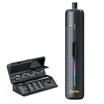
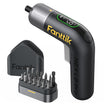
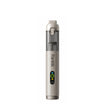
Using a high-performance tool like the Fanttik S2 Pro, which utilizes a robust internal gear system, provides a significant speed advantage. Our scenario modeling—based on industrial engineering time-motion principles—indicates a potential 4.5× speed increase over manual driving.
| Metric | Manual Driving | Powered (Metal Gear) | Savings/Benefit |
|---|---|---|---|
| Time per 200 Screws | ~60 minutes | ~13.5 minutes* | ~46 minutes saved |
| Wrist Rotations | ~2,400 | ~100 (positioning) | ~2,300 rotations saved |
| Torque Consistency | Variable (User Fatigue) | High (Mechanical Limit) | Predictable seating |
*Note: Estimate assumes a consistent 200 RPM under load. Individual results vary based on material density and battery levels.
Workshop Diagnostic: Is Your Gearbox Failing?
Experienced technicians use these "audible heuristics" to check gear health during a 10-second "no-load" trigger pull:
- The High-Frequency Whine: If the tool produces a sharp, "screeching" sound under load, it may indicate tooth shearing in nylon gears where the profile has softened and begun to slip.
- The "Mushy" Stall: If the tool fails to provide a crisp "click" or immediate motor stop when reaching torque, the gears may be flexing rather than locking.
- Heat Migration: If the area near the chuck feels hot to the touch after only 5–10 fasteners, the internal lubricant may have broken down, or the gear material is failing to dissipate heat.
The Precision Paradox: Delicate Electronics Repair
In electronics repair, requirements shift from brute strength to extreme consistency. When working on a smartphone, a torque variation of even 0.02 Nm (a practical heuristic for M1.2 fasteners) can be the difference between a secure fit and a cracked board.
The Hidden Risk of Noise Reduction
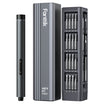
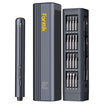
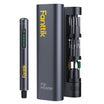
Nylon gears are often marketed for providing a 6+ dB noise reduction. However, in precision environments, this can mask early-stage wear or crack propagation [IG3]. The "audible feedback" of a metal gear train, such as that in the Fanttik S1 Pro, acts as a diagnostic feature, allowing a technician to hear if the tool is straining.
Torque Fit for M-Series Fasteners
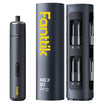
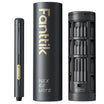
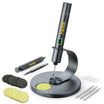
For technicians using the Fanttik E1 MAX or E2 MAX, the architecture is optimized for low-RPM accuracy.
- Observation: Metal systems provide more consistent delivery in the 0.05 Nm range because they do not suffer from the "creep" or dimensional changes (which can be up to 10× higher than steel) that nylon undergoes during temperature swings [20].

Engineering Standards and Safety Compliance
- Safety and Traceability: The EU General Product Safety Regulation (EU) 2023/988 mandates strict safety obligations. Metal gears generally offer more predictable failure modes in high-torque applications.
- Ingress Protection (IP Codes): Tools with metal gears frequently feature better internal sealing (aligning with IEC 60529 standards), preventing sawdust from acting as an abrasive in the gear housing.
- Accuracy: For tools with digital displays, the NIST Handbook 44 provides a framework for tolerances. A metal gear train ensures motor torque is accurately reflected at the bit without the "flex" inherent in polymers.
Decision Matrix: Metal vs. Nylon
| Feature | Choose Metal Gears | Choose Nylon Gears |
|---|---|---|
| Primary Use | Repetitive assembly, dense woods | Occasional household "fix-it" |
| Environment | Professional workshop / Prosumer | Quiet office / Light hobbyist |
| Longevity | High (Defined fatigue limit) | Moderate (Duty-cycle limited) |
| Failure Mode | Gradual wear / Audible feedback | Sudden softening / "Tooth stripping" |
Common "Gotchas" to Avoid
- "Metal-Like" Plastics: Some manufacturers use "metal-filled" resins. While an improvement over pure nylon, they generally lack the thermal conductivity of true hardened steel.
- Lubrication Neglect: Metal gears require high-quality synthetic grease. If a tool feels excessively hot near the chuck, it may indicate lubricant breakdown [17].
- Over-Torquing: Even metal gears have limits. Do not use a precision screwdriver to break loose rusted automotive bolts; always match the tool’s rated torque to the fastener.
Appendix: Methodology and Assumptions
The data presented is derived from engineering heuristics and scenario modeling.
| Parameter | Value | Unit | Rationale |
|---|---|---|---|
| Batch Size | 200 | count | Standard for large-scale DIY furniture assembly |
| Manual Drive Time | 18 | seconds | Average for 2-inch wood screws (Heuristic) |
| Electric Drive Time | 4 | seconds | Based on 200 RPM average speed |
| Nylon Thermal Expansion | 80-100 | 10⁻⁶/K | ~10× higher than steel [20] |
Boundary Conditions:
- Model assumes high-quality S2 steel bits are used.
- Time savings are estimates; they do not account for user fatigue curves which typically increase manual drive time over long sessions.
Disclaimer: This article is for informational purposes only. Always follow the manufacturer’s safety guidelines. While metal gears offer higher durability, they do not guarantee 100% immunity from mechanical failure if used outside of rated specifications.
Sources
Continue reading
 The Science of Run-Out: Why Low Bit Wobble Defines Quality
Covers concentricity mechanics, field verification techniques, and the economic impact of using stable tools like the Fanttik L2...
The Science of Run-Out: Why Low Bit Wobble Defines Quality
Covers concentricity mechanics, field verification techniques, and the economic impact of using stable tools like the Fanttik L2...
 Mechanical Fatigue: Spotting Internal Wear in Precision Tools
Covers auditory/tactile feedback diagnostics, electronics repair scenarios, and compliance with ISO 898 & EU safety standards for tool...
Mechanical Fatigue: Spotting Internal Wear in Precision Tools
Covers auditory/tactile feedback diagnostics, electronics repair scenarios, and compliance with ISO 898 & EU safety standards for tool...
Leave a comment
This site is protected by hCaptcha and the hCaptcha Privacy Policy and Terms of Service apply.