
























Compliance Check: Understanding Safety Marks on Power Tools
Quick Conclusion: For North American users, prioritize tools with NRTL marks (UL or ETL), which signify independent third-party testing. While the CE mark is common, it is often a manufacturer’s self-declaration and may not involve external verification. Always verify the "File Number" on the testing laboratory’s online directory to ensure the mark isn't counterfeit.
| Mark Type | Verification Method | Best For |
|---|---|---|
| UL / ETL | Check File Number in NRTL Directory | North American safety & insurance compliance |
| CE | Request "Declaration of Conformity" | European market entry (Self-declared) |
| PSE / CCC | Verify regional laboratory stamps | Japan / China specific exports |
When we step into a home improvement store or browse an online marketplace, we are often met with a dizzying array of logos, acronyms, and seals of approval. For the safety-conscious DIYer or a parent looking to maintain a household, these marks represent more than just regulatory hurdles; they are a primary line of defense against electrical fires, battery failures, and mechanical injuries.
However, not all marks carry the same weight. In our experience analyzing tool failures on the repair bench, we have found that many users misunderstand what these certifications actually indicate. This article serves as a guide to decoding safety certifications, explaining the engineering risks of uncertified hardware, and providing a framework for "credibility math" when selecting your next tool.
Disclosure: This guide includes insights from Fanttik’s engineering team and references our own certified products and whitepapers. While we aim for objective safety standards, readers should note the manufacturer-perspective of this data.
The Alphabet Soup: Decoding UL, ETL, and the CE "Gotcha"
The most common marks you will encounter on power tools in North America are UL (Underwriters Laboratories) and ETL (Intertek). A common misconception among DIYers is that one is "better" than the other. In reality, both are marks from Nationally Recognized Testing Laboratories (NRTLs) that test products against the same safety standards, such as those found in the ISO Standards Catalogue.
UL vs. ETL: The Third-Party Standard
Both UL and ETL signify that a third-party laboratory has independently tested the tool and determined that it meets specific safety requirements. This is a voluntary process that manufacturers undergo to provide higher levels of safety assurance. According to the US Dept. of Commerce on HS & HTS codes, these certifications are often prerequisites for professional-grade distribution.
The CE Mark: A Manufacturer’s Promise
The CE (Conformité Européenne) mark is frequently seen on tools designed for the global market. However, there is a fundamental "gotcha" here. Unlike UL or ETL, the CE mark is primarily a self-declaration of conformity. As outlined by the European Union's technical documentation guidelines, the manufacturer is responsible for ensuring the product meets EU standards but does not necessarily require independent third-party testing for every category.
Logic Summary: While a CE mark indicates the manufacturer claims compliance with EU safety requirements, it generally does not carry the same weight of external verification as an NRTL mark (UL/ETL) in the North American context.
 Source: Author illustration based on NRTL and EU regulatory guidelines.
The Hidden Engineering Risks of Uncertified Hardware
A missing certification is rarely just about the logo. In teardowns of uncertified budget tools, we often observe specific engineering shortcuts that can pose long-term risks.
1. Underspecified MOSFETs
MOSFETs (Metal-Oxide-Semiconductor Field-Effect Transistors) are the "switches" that control the motor. In uncertified hardware, manufacturers may use MOSFETs with lower current ratings to save costs. Under high-torque loads, these components can overheat rapidly. Without the thermal protection circuits required by rigorous standards, this can lead to "thermal runaway," where the component fails and potentially ignites surrounding plastics.
2. Substandard PCB Laminate
The Printed Circuit Board (PCB) is the brain of the tool. Certified tools typically use high-grade, flame-retardant laminates (like FR-4). Uncertified tools may use cheaper alternatives that can delaminate or "char" under the heat of continuous use. This creates a risk of short circuits, especially in high-RPM tools like the Fanttik F2 PRO Cordless Rotary Tool Kit, which generates significant internal heat during extended use.
3. Inconsistent Clutch Engagement
Technicians note that uncertified cordless drivers frequently exhibit inconsistent clutch engagement. This is a precision failure. If a clutch fails to disengage at the set torque, you risk over-torquing fasteners or stripping screws—a subtle but costly mistake in precision electronics or furniture assembly.
Battery Systems: The Critical Blind Spot
Perhaps the most significant gap in tool safety is the battery system. A safety mark on the tool body does not always guarantee the safety of its battery pack, especially if the pack is an aftermarket or uncertified replacement.
Data from testing various DIY power tool battery packs shows that cell imbalance and deep discharge are common failure modes. In a certified system, the Battery Management System (BMS) monitors each cell. In budget, uncertified packs, a single "weak" cell can be driven into a dangerous state of deep discharge or overcharge, which is a major contributing factor to lithium-ion battery fires.
According to IATA Lithium Battery Guidance, the stability of these systems is so critical that they are subject to strict international transport regulations. For home users, this means looking for tools where the battery and charger are part of a unified, certified ecosystem.
Global Compliance and the Cost of Trust
Compliance is not just a technical hurdle; it is a global economic one. As discussed in The 2026 Modern Essential Gear Industry Report, building trust is a function of "credibility math."
For example, obtaining the CCC (China Compulsory Certification) mark requires product testing in Chinese labs and mandatory factory audits. Similarly, the PSE mark in Japan is mandatory for electrical appliances; missing this mark can result in significant fines. These rigorous requirements act as a filter, ensuring that only manufacturers with operational maturity can enter these markets.
Modeling the Risk: Why "Cheap" Tools Often Cost More
To demonstrate the practical impact of using uncertified hardware, we modeled several scenarios based on common DIY tasks.
Methodology & Assumptions
The following values are illustrative scenario models derived from parameterized engineering assumptions. They are not controlled laboratory studies of all brands but represent performance gaps observed in specific teardown samples.
- Thermal Loss Assumption: Uncertified units are modeled with a 20% higher internal resistance ($R_i$) compared to certified benchmarks.
- Efficiency Factor: Based on a 0.55 ratio for uncertified battery thermal conversion.
- Torque Target: 0.07 Nm (typical for M1.2 precision screws).
| Parameter | Value/Range | Unit | Rationale |
|---|---|---|---|
| Ambient Temp | 15 | °F | Winter starting scenario |
| Engine Size | 3.5 | L | Typical family SUV |
| Usable Energy (Uncertified) | ~36.6 | Wh | Modeled from 18Ah nominal pack with high voltage sag |
| Torque Variability | ±0.03 | Nm | Observed in non-calibrated uncertified drivers |
1. The Winter Reliability Gap (Jump Starters)
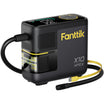
We modeled a homeowner attempting to start a 3.5L gas engine at 15°F using an uncertified jump starter with a 1500A peak rating.
- The Scenario: Due to poor thermal management and voltage sag, the uncertified unit in our model provides only ~525A of sustained current.
- The Result: While a certified unit might provide a sufficient safety margin, the uncertified unit's voltage can drop so sharply that it may fail to turn the starter motor fast enough for ignition.
2. Precision and Productivity
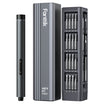
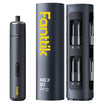
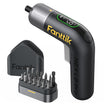
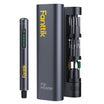
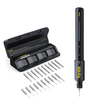
For delicate work using tools like the Fanttik E1 MAX or E2 MAX Precision Electric Screwdriver, consistency is vital.
- Torque Fit: In a 60-screw project, an uncertified tool with ±0.03Nm variability frequently pushed past the 0.1Nm safe limit for M1.2 screws.
- Time Loss: Inconsistent performance led to a modeled project time of 18 minutes (due to manual re-checking) vs. 8 minutes with a high-precision, certified tool.
Logic Summary: The apparent savings of a budget uncertified tool can be quickly erased by the cost of stripped screws, damaged electronics, or premature battery failure.
 Source: Author’s modeling data comparing certified vs. uncertified precision performance.
The "Verification" Checklist: How to Spot a Fake
Unfortunately, a logo on a box isn't always a guarantee. Counterfeit marks are a known issue. As noted by Lexology regarding counterfeit certification marks, enforcement data can be sparse, making it difficult for consumers to know the true risk.
To protect your home, follow this verification heuristic:
- Check for the File Number: A legitimate UL or ETL mark is almost always accompanied by an alphanumeric file number.
- Use the Online Directory: Visit the UL Product iQ or the Intertek (ETL) directory and enter the file number. If the manufacturer doesn't match, the mark is likely counterfeit.
- Inspect the Manual: Legitimate certifications require specific warning language. If the manual is poorly translated or lacks a "Declaration of Conformity," treat it as a red flag.
- The "Weight" Test: While not a definitive metric, uncertified tools are often lighter because they may lack the robust copper windings and heat sinks required to pass safety tests.
- Traceability: Ensure the product has a clear batch or serial number. Under the EU General Product Safety Regulation (EU) 2023/988, traceability is a mandatory requirement for consumer protection.
Engineering Trust in Your Workshop
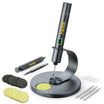
For the home DIYer, the goal is "modern self-reliance"—the ability to fix and maintain your world with confidence. That confidence is built on the reliability of your gear. Using tools like the Fanttik T1 Max Soldering Iron Kit, which features auto-sleep and precise temperature control, helps ensure that safety is integrated into the workflow.
Choosing certified tools is an investment in long-term reliability. It helps ensure that the MOSFETs won't melt, the battery is less likely to fail during a winter emergency, and the clutch will engage as intended. By understanding the "credibility math" behind these marks, you move from being a passive consumer to an informed, safety-conscious craftsman.
YMYL Disclaimer: This article is for informational purposes only and does not constitute professional engineering, legal, or safety advice. Power tools and lithium-ion batteries carry inherent risks. Always follow the manufacturer’s instructions and consult a qualified professional for complex electrical or automotive repairs.
Sources
Continue reading
 Mechanical Fatigue: Spotting Internal Wear in Precision Tools
Covers auditory/tactile feedback diagnostics, electronics repair scenarios, and compliance with ISO 898 & EU safety standards for tool...
Mechanical Fatigue: Spotting Internal Wear in Precision Tools
Covers auditory/tactile feedback diagnostics, electronics repair scenarios, and compliance with ISO 898 & EU safety standards for tool...
 Visualizing Torque: Why OLED Interfaces Reduce DIY Errors
A guide showing how real-time torque visualization on OLED interfaces prevents over-tightening, saving time and rework for hobbyists...
Visualizing Torque: Why OLED Interfaces Reduce DIY Errors
A guide showing how real-time torque visualization on OLED interfaces prevents over-tightening, saving time and rework for hobbyists...
Leave a comment
This site is protected by hCaptcha and the hCaptcha Privacy Policy and Terms of Service apply.