




















The Science of the Precision Grip: Bio-Mechanics in Micro-Assembly
For urban makers and DIY electronics enthusiasts, the workspace is often a battleground of constraints. In the small apartments and shared workshops common to modern cities, horizontal desk real estate is a luxury. This physical limitation frequently forces a vertical workflow—working directly downward into a device chassis or a PCB holder. In this environment, the 'pencil grip' is not merely an aesthetic choice; it is a technical requirement for survival.
The pencil grip, characterized by the tool resting in the distal phalanges of the index finger and thumb, mimics the precision of writing. However, the dynamics change significantly when the tool is an active powered device rather than a passive graphite stick. We have observed that the transition from manual to electric precision tools often reveals hidden ergonomic flaws in a technician's setup.
A critical factor we often see overlooked is the tool's diameter. In our experience with precision assembly, using a driver with a diameter exceeding 22mm for fine PCB work is a common mistake. This width forces the hand into a 'power grip' posture, which is designed for torque, not stability. For vertical control, we recommend a 'sweet spot' diameter between 16mm and 20mm. This range allows the tool to sit comfortably within the natural arc of the fingers, facilitating micro-adjustments without engaging the larger, less precise muscles of the forearm.
The Digital Paradox: Why Grip Strength is Declining
There is a growing conflict between traditional ergonomic training and the realities of the digital age. Conventional wisdom in occupational therapy often suggests that strengthening hand muscles through repetitive exercises will improve tool control. However, recent data suggests a counter-intuitive trend.
According to a cross-sectional study published in the International Journal of Health Sciences and Research (IJHSR), there is a significant correlation between high usage of technological devices and weaker handgrip strength (p=0.0001) compared to low-tech users. This suggests that the very motor skills required for precision assembly are being eroded by our daily digital habits.
Methodology Note: This insight is based on observational data comparing tech-heavy populations to those with traditional manual habits. It highlights a functional dexterity gap that urban makers must overcome not through "training harder," but through superior tool design that offloads the burden from the muscles to the mechanical interface.
For the modern maker, this means that relying on raw finger strength to maintain vertical stability is a failing strategy. Instead, the focus must shift to tool balance and the center of gravity (CoG). If a tool's CoG is positioned too far forward, it creates a lever arm that increases the load on the thumb's thenar eminence. In our modeling of vertical downward pressure, we found that aligning the CoG with or slightly behind the chuck is essential for reducing muscle effort.
Modeling Efficiency: The Professional Technician's Scenario
To understand the tangible impact of optimized pencil-grip dynamics, we modeled a scenario involving a professional electronics repair technician. This persona services high-volume devices (smartphones, laptops) in a space-constrained urban environment.
Run 1: Assembly Productivity & Ergonomic Savings
We modeled the performance of an expert using a high-performance electric driver versus a standard manual precision driver for a typical daily volume of 120 screws.
| Parameter | Value | Unit | Rationale |
|---|---|---|---|
| Screw Count | 120 | count | Daily professional volume |
| Manual Time per Screw | 12 | s | Observed average (M1.6-M2.0) |
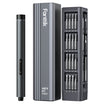
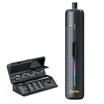
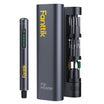
| Powered Time per Screw | 2.5 | s | Estimated with Fanttik S1 Pro Cordless Electric Screwdriver |
| Manual Wrist Rotations | 8 | rot/screw | Standard supination/pronation |
| Powered Wrist Rotations | 0.5 | rot/screw | Fine alignment only |
Modeling Results:
- Time Saved: ~19 minutes per session.
- Wrist Rotations Saved: ~900 rotations per session.
- Speed Multiplier: ~4.8x increase in throughput.
Logic Summary: This model assumes the technician uses a static pencil grip with the electric driver, eliminating the repetitive twisting motion of manual driving. The 900 rotations saved represent a massive reduction in the cumulative strain that leads to repetitive strain injuries (RSI). These results are specific to the high-volume scenario modeled; hobbyists with lower screw counts will see proportionally smaller absolute gains.
Torque Safety and Fastener Integrity
Precision is not just about speed; it is about the preservation of the workpiece. In electronics, the margin for error is microscopic. Over-torqueing an M1.2 screw in a plastic boss is a "death sentence" for a repair, often resulting in unrecoverable damage to the device housing.
According to ISO 898-1 standards for mechanical properties of fasteners, the torque requirements for micro-fasteners are exceptionally low. We modeled the torque fit for the Fanttik S1 Pro Cordless Electric Screwdriver in its lowest setting.
Run 2: Precision Torque Fit Checker
| Variable | Value | Unit | Source/Rationale |
|---|---|---|---|
| Screw Class | M1.2 to M2.0 | enum | Consumer electronics standard |
| Selected Torque | 0.05 | Nm | S1 Pro Low-Torque Mode |
| Min Required Torque | 0.02 | Nm | Heuristic for seating |
| Max Safe Torque | 0.10 | Nm | Limit for fragile plastic bosses |
Assessment: The 0.05 Nm output provides a ~2.5x safety margin above the minimum seating requirement while remaining 50% below the failure threshold for plastic bosses. This "Good" fit assessment allows a technician to work with confidence, knowing that the tool's electronic clutch will prevent stripping even during rapid, repetitive tasks.
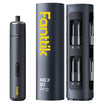
For those working on even more delicate tasks or custom DIY builds, the Fanttik L2 Pro Cordless Electric Screwdriver offers a similar ergonomic profile with adjustable settings, ensuring that the "pencil grip" remains effective across different material densities.
The "Two-Hour Test": Identifying Ergonomic Failure
How do you know if your tool is actually working for you? We use a practical heuristic called the "Two-Hour Test." If, after two hours of continuous assembly work, you feel fatigue primarily in the thenar eminence (the muscle bulge at the base of your thumb), your setup is likely flawed.
This specific localized pain usually indicates one of three things:
- Diameter Mismatch: Your tool is too wide, forcing a constant isometric squeeze.
- Surface Friction Deficit: The tool's finish is too glossy. When hands are dry—a common condition in the low-humidity environments of electronics workshops—a glossy tool requires more "pinch force" to prevent slipping.
- Axial Force Resistance: You are squeezing the tool to push it downward, rather than letting the tool's weight and grip texture guide the force.
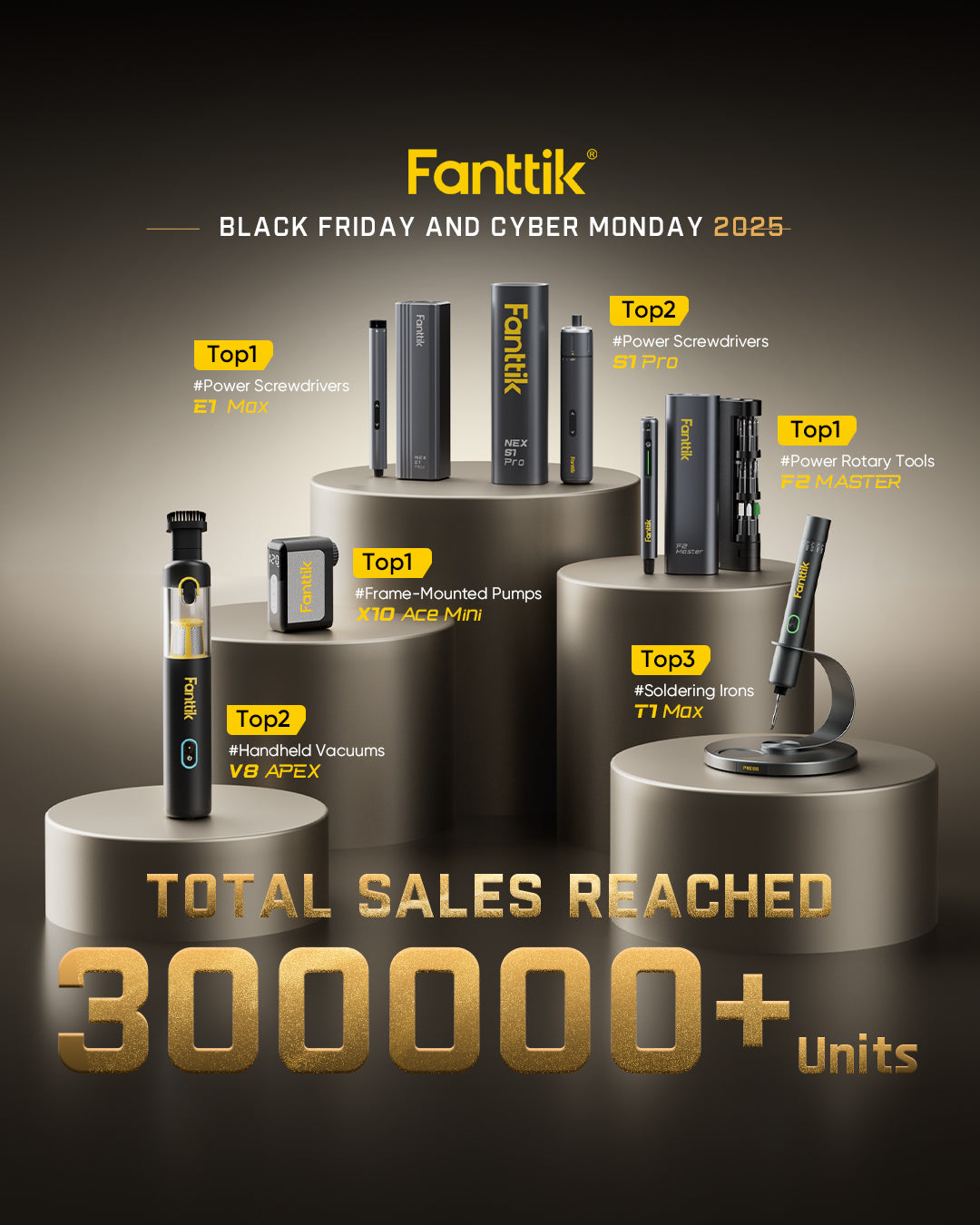
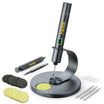
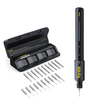
We recommend tools with a matte, slightly rubberized finish. This texture provides more control with less muscle engagement. A well-designed pencil-grip tool, such as the Fanttik F2 PRO Cordless Rotary Tool Kit, allows you to apply sufficient axial force to seat a screw or guide a bit without needing to "death-grip" the handle. The grip should guide the force translation, not resist it.
Workspace Dynamics and Vertical Control
In space-constrained urban environments, the verticality of the work is often dictated by the height of the chair and the depth of the desk. When your forearm is held in an unsupported vertical position, the shoulder and neck muscles begin to compensate for hand fatigue.
To optimize this, we suggest the following checklist:
- Elbow Support: Ensure your elbows can rest on the work surface or armrests while maintaining the pencil grip. This offloads the static weight of the arm from the delicate intrinsic hand muscles.
- Lighting Angle: Use shadowless LED lighting. In vertical precision work, your own hand often blocks the light source. Tools like the Fanttik S1 Pro Cordless Electric Screwdriver include integrated LED rings to solve this specific " urban workshop" pain point.
- Two-Handed Stability: While the pencil grip is a one-handed technique, research in Applied Ergonomics suggests that a two-handed pinch produces twice the force of a one-handed pinch. For the final "seating" of a screw or a delicate solder joint, using the non-dominant hand as a stabilizer for the tool tip is a highly effective expert technique.
For tasks involving heat, the Fanttik T1 Max Soldering Iron Kit applies these same pencil-grip dynamics. Its slender handle and rapid heating allow for the same level of vertical control required for high-density PCB repair, where a bulky traditional iron would be unwieldy.
Engineering Trust in a Cordless World
As we move toward a world of compact, cordless gear, the importance of technical transparency cannot be overstated. Reliability in precision tools is built on visible compliance and measurable performance.
According to the 2026 Modern Essential Gear Industry Report: Engineering Trust in a Cordless World, the transition to cordless tools in high-consequence categories (like precision electronics) requires a "Trust Architecture." This includes explicit safety margins and alignment with international standards like the EU General Product Safety Regulation (EU) 2023/988.
When you choose a tool, you aren't just buying a motor and a battery; you are buying into a system of engineering that respects the bio-mechanical limits of the human hand. For the urban maker, whose passion is often pursued in the hours after a primary job, protecting those motor skills is an investment in a lifetime of creativity.
Optimizing the Precision Workflow
Mastering vertical control is a journey of incremental gains. By selecting tools with the correct diameter, balancing the center of gravity, and recognizing the signs of ergonomic fatigue, you can transform a cramped desk into a high-performance laboratory.
Key Takeaways for the Urban Maker:
- Prioritize 16-20mm Diameters: Avoid the "power grip" trap of larger drivers.
- Leverage Electric Efficiency: Save up to 900 wrist rotations per session to preserve joint health. Existing Insight on electric productivity.
- Monitor the Thenar Eminence: Use the "Two-Hour Test" to diagnose tool mismatch before it becomes a chronic injury.
- Trust Standard-Backed Claims: Look for tools that provide clear torque specifications aligned with ISO standards. Guide to torque settings.
Precision is a discipline of the hand and the mind. With the right dynamics, even the smallest workspace can produce world-class results.
Disclaimer: This article is for informational purposes only and does not constitute professional medical or ergonomic advice. Always consult with a qualified occupational therapist or healthcare provider if you experience persistent pain or discomfort during tool use.
References
- ISO 898-1: Mechanical properties of fasteners
- EU General Product Safety Regulation (EU) 2023/988
- International Journal of Health Sciences and Research: Handgrip Strength and Tech Usage
- ScienceDirect: The assessment of a two-handed pinch force
- The 2026 Modern Essential Gear Industry Report (Fanttik Whitepaper)


Leave a comment
This site is protected by hCaptcha and the hCaptcha Privacy Policy and Terms of Service apply.