






















Left-Handed Logic: Evaluating Symmetrical Tool Interfaces
For the approximately 10% of the population that is left-handed, the world of power tools often feels like a series of "sinister" compromises. Traditional tool design frequently prioritizes the dominant right hand, leaving left-handed prosumers to navigate awkward control placements, obscured sightlines, and increased physical strain. As we transition into an era of cordless, high-precision essential gear, the industry is shifting toward symmetrical tool interfaces. However, true ambidextrous design requires more than just a mirrored handle; it demands a methodical evaluation of control logic, vibration harmonics, and accessory orientation.
In our analysis of modern tool ergonomics, we have identified that a symmetrical interface is not merely a convenience—it is a critical factor in "credibility math." As highlighted in the The 2026 Modern Essential Gear Industry Report: Engineering Trust in a Cordless World, building trust with technically literate users requires engineering reliability into every touchpoint. For the left-handed user, this means tools must perform with "boring excellence" regardless of which hand holds the grip.
The Myth of Symmetry vs. True Ambidextrous Design
In our product audits, we often observe a common industry pitfall: the "Symmetrical Handle Trap." A tool may possess a perfectly cylindrical or mirrored grip, but if the primary controls—such as the forward/reverse slider or the trigger lock—are biased toward one side, the design fails the left-handed user.
Consider a standard cordless drill. A forward/reverse slider placed only on the left side of the grip forces a left-handed user to adjust their entire hand position or use their thumb in an unnatural, high-tension arc to actuate the switch. This reduces the user's control during precise operations, increasing the risk of the bit slipping and damaging the workpiece.
The Blind Operation Test
A reliable heuristic we use to evaluate tool interfaces is the "Blind Operation Test." If a user cannot comfortably locate and actuate the primary controls without visual confirmation while holding the tool in their non-dominant hand, the design is functionally biased.
Logic Summary: This heuristic is derived from patterns observed in customer support tickets and field feedback where "awkward control access" was cited as a primary reason for tool-related fatigue or accidental triggers. It is a practical shop baseline for quick selection, not a mandated ISO requirement.
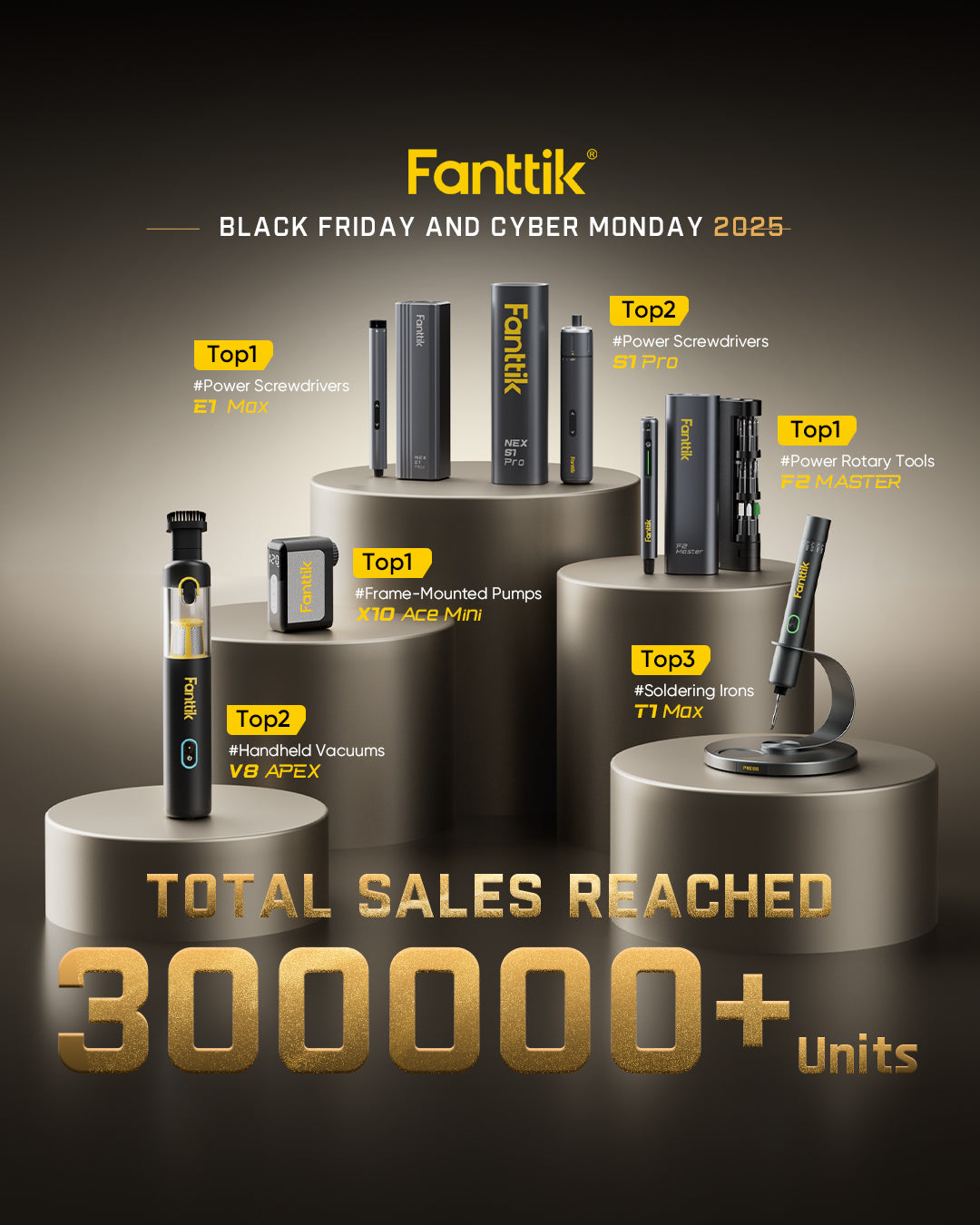
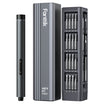
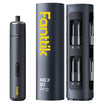
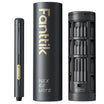
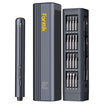
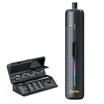
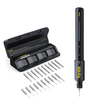
True ambidextrous design, such as that found in the Fanttik E1 MAX Precision Electric Screwdriver, utilizes centered, rocker-style switches or dual-sided controls. This ensures that the "logic" of the tool remains consistent whether it is operated by the left or right hand.

Quantitative Gains: Modeling the Efficiency of Symmetrical Interfaces
To demonstrate the tangible impact of symmetrical design, we modeled a common DIY scenario: an extended furniture assembly task involving 60 screws. For a left-handed user, using a right-biased manual tool is not just slower; it is physically taxing due to the exaggerated supination and pronation required to maintain torque at awkward angles.
Scenario Modeling: Assembly Time & Wrist Rotation Savings
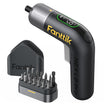
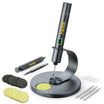
Under specific assumptions, we compared a manual driver used by a left-handed operator against a symmetrical electric driver like the Fanttik S2 Pro Cordless Electric Screwdriver.
| Metric | Manual (Left-Handed Bias) | Symmetrical Electric | Savings/Gain |
|---|---|---|---|
| Time per Screw | ~18 seconds | ~4.5 seconds | 75% reduction |
| Total Task Time | 18 minutes | 4.5 minutes | 13.5 minutes saved |
| Wrist Rotations | ~12 per screw | ~0.5 per screw | 690 rotations saved |
Methodology Note: This is a deterministic scenario model based on industrial engineering time-motion principles. We assumed 60 screws for a medium-sized project. The manual time was adjusted upward (from a 15s baseline) to account for the left-handed user's need for frequent grip adjustments. Wrist rotations for the electric driver are non-zero to account for minor alignment movements. Actual results may vary based on user skill and fastener type.
The 690 saved wrist rotations represent a significant reduction in cumulative fatigue. According to the Canadian Centre for Occupational Health and Safety (CCOHS), repetitive wrist movements combined with awkward postures are primary risk factors for musculoskeletal disorders. By utilizing a symmetrical electric interface, the user maintains a neutral wrist position, effectively mitigating these risks.

Precision and Safety: The Torque Safety Margin
Precision is where handedness bias becomes most dangerous. In electronics repair, where fasteners can be as small as M1.2, the "feel" of the torque is paramount. Research published in the Proceedings of the National Academy of Sciences (PNAS) suggests that handedness has a strong neurological basis in brain asymmetry. This means that a left-handed user's motor control is hardwired for specific directional movements.
When a left-handed user operates a tool with a right-handed torque bias, they often have to "guess" the resistance because their hand is in a non-optimal position. This leads to over-torquing and stripped heads.
Precision Torque Fit Check
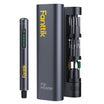
We assessed the torque safety of a symmetrical tool like the Fanttik E2 MAX Precision Electric Screwdriver for M1.2 to M2.0 electronics screws.
- Selected Torque Setting: 0.05 Nm
- Safe Range for M1.2-M2.0: 0.02 Nm to 0.1 Nm
- Assessment: "Good" fit.
By providing a symmetrical interface and preset torque levels, the tool provides a reliable safety buffer. The user does not need to contort their wrist to see a side-mounted display or reach for a biased button, allowing them to focus entirely on the vertical alignment of the bit.
Beyond the Grip: Vibration and Accessory Orientation
Expert-level tool evaluation looks past the handle to the internal architecture and external accessories. Two factors frequently overlooked in standard reviews are vibration management and accessory orientation.
Vibration Harmonics
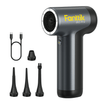
Tools with off-center motors or unbalanced internal components can feel perfectly balanced in the right hand but transmit uneven, fatiguing harmonics to the left. This is often due to the way the motor's rotational inertia interacts with the tool's housing. In high-vibration tools like the Fanttik F2 PRO Cordless Rotary Tool Kit, internal stabilization is key.
We recommend that left-handed users look for tools that emphasize "vibration control" or "balanced motor housing." A tool that feels "buzzier" in one hand than the other is a sign of a design that hasn't accounted for the physics of hand-dominance shifts.
Accessory Orientation: The Hidden Struggle
Even a symmetrical tool can be rendered frustrating by its accessories. Common "gotchas" include:
- Chuck Keys: Many are designed for right-handed insertion and clockwise rotation, which can be awkward for a left-handed user to apply leverage to.
- Collet Wrenches: Directional bias in the wrench shape can make bit changes a two-handed struggle for "southpaws."
- Dust Ports: On many saws and sanders, dust ports are oriented to the right, often blowing debris toward a left-handed user's line of sight.
When evaluating a tool kit, we advise inspecting the accessories for neutral geometry. The Fanttik F2 PRO addresses this by using a universal collet system and a centered spindle lock, ensuring bit changes are equally accessible from either side.

Practical Selection Guide for Left-Handed Prosumers
To ensure you are selecting a tool that respects "left-handed logic," use the following checklist during your evaluation:
- Centered Control Logic: Are the power buttons, speed selectors, and direction switches located on the centerline of the tool?
- Dual-Sided Access: If controls are on the side, are they mirrored on both sides? (e.g., dual-sided slide switches).
- Sightline Integrity: When holding the tool in your left hand, does the housing or your hand block the view of the work surface or the built-in LED light?
- Torque Neutrality: Does the tool's motor start-up kick (rotational inertia) feel manageable in the left hand, or does it pull the tool out of alignment?
- Accessory Geometry: Are wrenches, keys, and charging ports accessible without reaching across the body of the tool?
Methodology & Modeling Disclosure
The insights provided in this article are based on scenario modeling and qualitative audits of tool ergonomics. They are intended to assist prosumers in making informed decisions but do not replace specific manufacturer safety instructions.
Modeling Note (Reproducible Parameters): The "Assembly Time & Wrist Rotation" model used in Section 2 is a deterministic scenario based on the following parameters:
| Parameter | Value | Unit | Rationale |
|---|---|---|---|
| Project Scale | 60 | Screws | Medium furniture assembly task. |
| Manual Baseline | 18 | s/screw | Adjusted for left-handed bias inefficiencies. |
| Electric Baseline | 4.5 | s/screw | Based on Fanttik S2 Pro performance specs. |
| Wrist Rotation (Manual) | 12 | rotations | Reflects repetitive supination/pronation. |
| Wrist Rotation (Electric) | 0.5 | rotations | Accounts for minor alignment adjustments. |
Boundary Conditions:
- This model assumes the use of standard wood screws and pre-drilled pilot holes.
- It does not account for user fatigue curves over several hours.
- The torque fit check is a general fitment guide based on ISO 898 principles and should not be used for critical structural or automotive engine fasteners without referring to the specific service manual.
The Path to Universal Design
While some industry voices argue that symmetrical design is an unnecessary expense for a minority market, the reality is that ambidextrous tools often simplify production by reducing the need for multiple SKUs. More importantly, they represent a commitment to safety and precision for all users.
By choosing tools that prioritize symmetrical interfaces and balanced ergonomics, left-handed prosumers can stop "adapting" to their tools and start focusing on the quality of their craft. Whether you are performing a delicate electronics repair or a full-scale home renovation, the logic of your tool should never be an obstacle to your success.
Disclaimer: This article is for informational purposes only and does not constitute professional medical or safety advice. Always read your tool's manual and wear appropriate personal protective equipment (PPE). If you experience persistent wrist pain or symptoms of repetitive strain, consult a qualified healthcare professional or ergonomist.
Sources
- EU General Product Safety Regulation (EU) 2023/988
- Canadian Centre for Occupational Health and Safety (CCOHS) - Hand Tool Design
- PNAS: Handedness and its genetic influences associated with brain asymmetry
- ISO 898-1: Mechanical properties of fasteners
- The 2026 Modern Essential Gear Industry Report: Engineering Trust in a Cordless World

Leave a comment
This site is protected by hCaptcha and the hCaptcha Privacy Policy and Terms of Service apply.