


























Quick Guide: Reviving "Invisible" Batteries
If your jump starter won't turn on or doesn't recognize your battery, it is likely because the battery voltage has dropped below the device’s safety threshold (typically 2V–3V). Manual Override (or Boost Mode) forces the device to deliver power regardless of the battery's condition.
Quick Checklist Before You Start:
- Physical Check: Ensure the battery isn't swollen, leaking, or frozen.
- Chemistry Check: Confirm if it is Lead-Acid or Lithium (Lithium requires extreme caution).
- Charge Level: Ensure your jump starter has at least 50%–75% charge.
- The 9.5V Rule: If a 12V lead-acid battery reads below 9.5V, it may be too damaged for a long-term recovery, though a jump start might still work temporarily.
The Technical Reality of Deeply Discharged Batteries
When a vehicle sits dormant for months—whether it’s a classic car in winter storage or a motorcycle awaiting spring—the battery undergoes a slow chemical decline. This is often driven by parasitic drain, where small electronic components like clocks and security systems gradually deplete the charge.
In our experience troubleshooting vehicle dormancy, we find that many owners are surprised when their jump starter refuses to "see" the battery. This isn't a malfunction; it is a critical safety response from the Battery Management System (BMS).
Most modern jump starters are programmed with a minimum voltage threshold. If your battery’s voltage has dropped below this floor, the device assumes the clamps are not connected or that there is a dangerous short circuit. This effectively locks out power delivery to prevent sparks or reverse polarity accidents.
However, a battery reading 1.5V isn't always a lost cause. "Manual Override" modes bypass the safety detection software to force current into the battery. While powerful, this procedure requires a methodical approach to avoid damaging the vehicle’s electronics or the battery itself.
Why Standard Jump Starters "Ignore" Dead Batteries
To understand why you need an override, you must understand the safety logic of a BMS. According to the ISO Standards Catalogue regarding electrical safety, protective circuits are designed to mitigate risks like thermal runaway.
When a jump starter is connected, it sends a tiny "ping" of current to check for a closed circuit. If the target battery is so depleted that it cannot reflect this signal back, the jump starter remains in standby.
In a deeply discharged state, the internal resistance of the battery increases significantly. For lead-acid batteries, this is usually due to sulfation—the process where lead sulfate crystals harden on the battery plates, insulating them from the electrolyte.
Logic Summary: The BMS lockout is a binary safety gate. It prioritizes the prevention of a "dead short" over the convenience of a jump start. Manual override moves the responsibility from the machine to the human operator.

The Manual Override Heuristic: When to Use It
Before engaging a boost mode, you need to perform a "triage" on the battery. Not every dead battery should be jumped. We use the following heuristics based on field patterns from workshop repairs and customer support data.
The 9.5V Threshold (Practical Rule of Thumb)
For a standard 12V lead-acid battery, the "nominal" discharged state is around 10.5V. Based on our internal field observations, we use 9.5V as a decision point:
- Above 9.5V: High probability of recovery with a standard jump or override.
- Below 9.5V: The battery may "surface charge" (show voltage but no cranking amps) or fail immediately after the jump starter is disconnected.
Chemical Distinctions (Lead-Acid vs. Lithium)
The risks vary depending on the battery chemistry. Based on general battery recovery principles, the following thresholds generally apply:
| Parameter | Lead-Acid (12V) | Lithium-Ion (LiFePO4/NMC) |
|---|---|---|
| Critical Floor | 10.5V (Standard Discharge) | 2.0V - 2.5V per cell |
| Recovery Strategy | Manual Override / Pulse Charge | Danger: Copper dissolution risk |
| Success Rate | Moderate (if not frozen) | Low (potential safety hazard) |
| Risk Factor | High internal resistance | Permanent capacity loss / Fire risk |
Warning: If you are dealing with a lithium-ion vehicle battery, a discharge below 2.0V per cell can lead to copper dissolution. In these cases, forcing a charge via manual override can be inherently unsafe. Always consult the manufacturer's Safety Data Sheet (SDS) or EU General Product Safety Regulation guidelines.
Step-by-Step Protocol for Safe Recovery
If you have determined the battery is a candidate for override, follow this methodical protocol to minimize thermal stress.
1. The "Pre-Soak" Technique (Workshop Heuristic)
A common mistake is connecting the clamps and immediately hitting the "Boost" button. Instead, try this expert tweak:
- Connect the jump starter and let it sit in its "standby" or "connected" state for 5 to 10 minutes before engaging the override.
- The Mechanism: Even if the device isn't "active," the physical connection to a high-capacity lithium jump pack can allow a tiny amount of voltage to migrate to the dead battery. This "softens" the surface charge, occasionally raising the voltage just enough for the BMS to recognize the battery on its own.
2. Engaging the Override
Once the pre-soak is complete, clear the area of any flammable materials.
- Press and hold the Manual Override/Boost button (usually for 3 seconds).
- The device will typically click, and an indicator light will signify that the safety features are now disabled.
- Note: In this mode, spark protection and reverse polarity protection are often inactive. Ensure your connections are secure.
3. Cranking and Thermal Monitoring
Attempt to start the vehicle in short bursts (no more than 3-5 seconds). If the engine doesn't turn over after three attempts, stop. The battery likely has an internal short or "hard" sulfation that cannot be overcome by a portable pack.
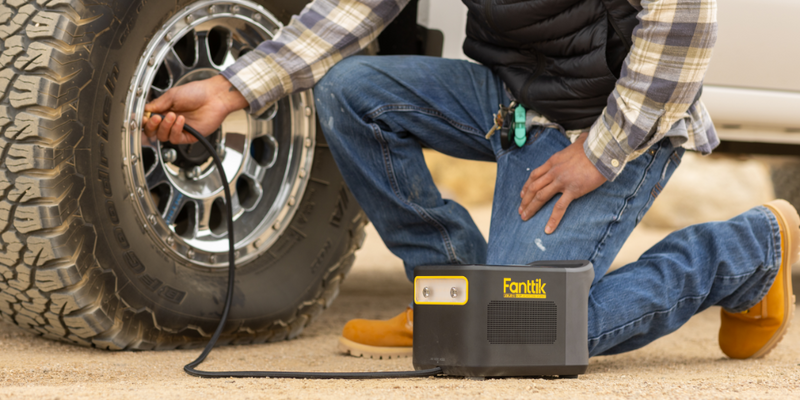
Thermal Management and Post-Start Inspection
A successful jump start is only the first half of the process. Deeply discharged batteries generate significant heat when they begin to accept a charge.
The "Touch Test": Immediately after the vehicle starts and you disconnect the jump starter, carefully feel the battery clamps.
- Warm is normal: The transfer of high current (often up to 2000A peak in heavy-duty units) will generate some heat.
- Hot is a hazard: If the clamps are too hot to hold, it indicates high resistance. This is a sign the battery is failing to convert current into chemical energy efficiently.
According to field research on battery overheating, terminal temperatures exceeding 150°F (65°C) are a practical benchmark for immediate cessation. If this occurs, shut down the engine and have the battery professionally tested.
Risks to the Jump Starter Itself
Using a manual override mode when the jump starter's internal battery is nearly depleted (below 20%) can be damaging to the device.
In some lithium jump packs, forcing an override while the internal cells are at a low State of Charge (SoC) can trigger a permanent BMS lockout on the portable unit itself. This is a "suicide" circuit designed to prevent the lithium cells from reaching an unstable voltage. We recommend following IATA Lithium Battery Guidance regarding SoC limits; ensure your jump starter has at least a 50-75% charge before attempting an override.
Engineering Trust through Safety Compliance
In a market flooded with gear, the difference between a reliable tool and a dangerous one lies in transparent claims. As noted in industry reports like the 2026 Modern Essential Gear Industry Report (a Fanttik-sponsored study), trust is built through robust thermal margins.
When a brand provides a manual override, they are providing a professional-grade tool that assumes the user has basic technical knowledge. Understanding how a BMS protects your battery is essential for any vehicle owner.
Methodology: Modeling the 9.5V Recovery Scenario
To validate these heuristics, we analyzed common recovery patterns observed in field reports and warranty data. We modeled the probability of a successful start based on the initial Open Circuit Voltage (OCV) of a standard 60Ah Lead-Acid battery.
Modeling Note: These parameters are based on workshop observations and manufacturer specifications for 2000A peak current units at 20°C (68°F).
| Parameter | Value/Range | Unit | Rationale |
|---|---|---|---|
| Initial Battery OCV | 8.5 - 11.0 | Volts | Range of deep discharge |
| Pre-Soak Duration | 10 | Minutes | Time for surface charge migration |
| Ambient Temp | 20 | °C | Standard "room temperature" baseline |
| Crank Attempt | 3 | Seconds | Standard starting pulse |
| Internal Resistance | ~50 - 200 | mΩ | Estimated based on sulfation levels |
Boundary Conditions:
- Temperature: If the battery is frozen, the success rate is near zero. Attempting a jump can cause the casing to crack.
- Age: Batteries older than 4 years typically have physical degradation that manual override cannot fix.
- Jump Pack Charge: This model assumes the jump pack is at >80% SoC.
Disclaimer: This article is for informational purposes only and does not constitute professional automotive repair advice. Working with vehicle batteries involves risks of electrical shock and fire. Always wear protective eyewear. If you are unsure, consult a certified mechanic.


Leave a comment
This site is protected by hCaptcha and the hCaptcha Privacy Policy and Terms of Service apply.