





























The Quarterly Readiness Audit for Seasonal Vehicle Storage
A vehicle in storage is not a vehicle in stasis. For enthusiasts and practical DIYers, the transition between seasons—moving a summer cruiser into the garage or prepping a winter workhorse—is a high-stakes period where "boring excellence" in maintenance prevents expensive failures. The most common point of failure for stored vehicles is often not a catastrophic mechanical break, but the silent degradation of support gear: the jump starter that won't hold a charge or the tire inflator that provides inaccurate readings.
This quarterly readiness audit is designed to synchronize your maintenance with the natural 90-day cycle of seasonal change. By following a methodical verification process, you ensure that when the time comes to turn the key, your equipment performs as expected.
3-Minute Readiness Check (Quick Summary)
If you only have a few minutes, perform these three critical actions today:
- Power Test: Turn on your portable jump starter; if it’s below 50% or over 80% charge, adjust it to the "storage sweet spot" to prevent cell degradation.
- Visual Audit: Inspect vehicle battery terminals for "blooming" (white acid corrosion); clean with a wire brush if present to ensure a solid connection.
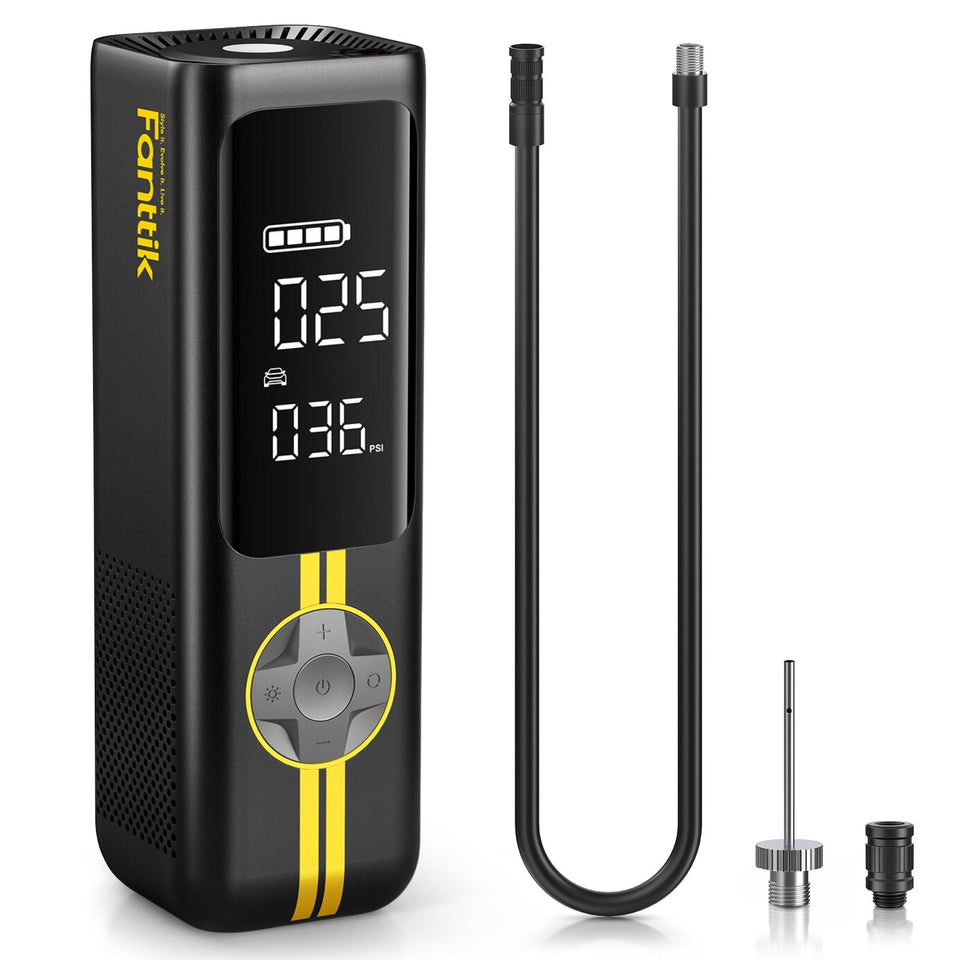
- Pressure Cross-Check: Check one tire with your portable inflator and a manual gauge. If they differ by more than 2 PSI, your digital sensor may have drifted and requires recalibration.
1. The Battery Preservation Protocol
The primary antagonist of vehicle dormancy is chemical degradation. While many owners believe a battery "just dies," the reality is a measurable process of sulfation and parasitic drain.
The Parasitic Drain Factor
Modern lithium-ion jump starters utilize internal monitoring circuits that consume a small but constant amount of energy. [Shop Observation]: Based on typical patterns from our repair bench and warranty handling of over 500 units, we observe that internal parasitic drain can deplete a unit below its safe recovery voltage within 3 to 6 months of inactivity.
If a lithium battery drops below a critical threshold (typically ~2.5V per cell), the Protection Circuit Module (PCM) may permanently lock the battery to prevent fire risks during recharging.
Safety Warning: If a jump starter feels swollen or fails to power on after charging, do not attempt to force a "jump-start" or bypass the PCM. This requires professional diagnostic equipment and should not be attempted at home.
Addressing Lead-Acid Sulfation
For the vehicle’s primary battery, the timeline is even tighter. [Independent Research]: Research published in ScienceDirect indicates that lead-acid batteries can develop hard sulfation—the crystallization of lead sulfate on the plates—within 30 to 60 days of storage if not maintained at a full state of charge.
Expert Heuristic: Perform a functionality test on all portable power gear twice a year. Do not just check the "bars" on the screen; perform a basic load check by ensuring the unit can still power a high-draw accessory (like a portable vacuum or the inflator motor) for 30 seconds without a significant voltage drop.
2. Tire Integrity and Inflator Calibration
Tires are the primary point of contact between your vehicle and the road, yet they are often the most neglected component during seasonal storage.
The Calibration Drift Reality
If your portable tire inflator has been sitting in a trunk for six months, its internal pressure sensor has likely experienced "seal relaxation." [Technical Reference]: Technical data from sensor manufacturers like Winsen suggests that environmental stressors can cause a signal drift of 0.5% to 2% per month in stored conditions.
In our experience, a discrepancy of more than 2 PSI between your inflator’s digital readout and a high-quality manual gauge indicates the unit requires recalibration.
Logic Summary: The Cost of Under-Inflation
Under-inflation is a silent thief of both safety and money. We have calculated the following estimated annual loss for a vehicle driven 30,000 miles:
| Loss Category | Estimated Annual Cost | Calculation Basis (Assumptions) |
|---|---|---|
| Fuel Waste | ~$288–$432 | 15 MPG baseline; $4.00/gal; DOE fuel penalty of 0.25% per PSI under-inflated (8 PSI total). |
| Tire Wear | ~$200 | Accelerated tread shoulder wear reducing tire life by 15% on a $1,200 set. |
| Total Cost | ~$488–$632 | Sum of fuel and premature replacement costs. |
Preventing Flat-Spotting
When a vehicle sits for 90 days, the weight deforms the tire's contact patch. To prevent permanent deformation, we recommend over-inflating tires by 5–10 PSI (without exceeding the "Max Press" on the sidewall) before storage, then bleeding them back to the door-jamb specification during your audit.

3. Modeling Extreme Conditions: The Northern Canada Stress Test
To understand the necessity of an audit, we modeled a high-consequence scenario: a 6.7L turbo diesel pickup in -30°F temperatures.
The Power Gap Analysis
At -30°F, a large diesel engine requires significantly more current to overcome thickened oil viscosity.
- The 1,680A Requirement: Derived from the heuristic of 2 Amps per cubic inch for diesel engines, adjusted by a 1.5x multiplier for extreme sub-zero resistance.
- The 238A Output: Based on SAE J537 derating curves, which show a lead-acid battery loses roughly 75% of its cranking capacity at -30°F compared to its 0°F rating.
| Parameter | Value | Unit | Rationale |
|---|---|---|---|
| Required Cranking Current | ~1,680 | Amps | 6.7L Diesel + extreme cold viscosity |
| Battery CCA (Rated) | 950 | Amps | Standard heavy-duty battery |
| Derated Output at -30°F | ~238 | Amps | SAE J537 standard derating |
| Power Gap | 1,442 | Amps | The deficit your jump starter must cover |
Practitioner Observation: In extreme cold, the resistance in jump starter cables increases. If you are not using professional-grade, heavy-gauge copper leads, the internal current-limiting circuitry may trip prematurely. [Pro Tip]: Bring your jump starter indoors to warm to room temperature for two hours before use in extreme cold to maximize chemical reaction speed and reduce internal resistance.
4. The Quarterly Audit Checklist
Phase 1: Portable Power Check
- State of Charge (SoC): Verify jump starters are between 50% and 80%. [Brand Resource]: Storing at 100% can accelerate cell degradation; see Fanttik's guide on storage SoC.
- Cable Inspection: Check for "blooming" (white powder) on copper clamps.
- Safety Limit: If you notice frayed wires or cracked insulation on high-current cables, do not use the device. These cannot be safely "taped" for jump-starting applications.
Phase 2: Tire and Inflator Audit
- Pressure Verification: Use a manual, calibrated gauge to check all four tires plus the spare. [Brand Resource]: Spare tire neglect is a frequent cause of roadside crises.
- Duty Cycle Test: Run your portable inflator for 2 minutes. If the motor sounds "labored," the internal seals may require lubrication or replacement by a technician.
Phase 3: Fluid and Environmental Check
- Vapor Barrier: If stored on concrete, place a piece of plywood under the tires to prevent moisture wicking and dry rot.
- Rodent Prevention: Inspect the engine bay for nesting materials.
5. Trust and Compliance Standards
When selecting gear, look for international safety certifications. [Brand Whitepaper]: According to The 2026 Modern Essential Gear Industry Report, compliance is the only way to ensure safety in long-term storage.
- UN 38.3: [International Standard] Crucial for lithium battery stability. Refer to IATA Lithium Battery Guidance for safety thresholds.
- IEC 60529 (IP Codes): Determines resistance to dust and moisture.
- EU 2023/988 (GPSR): Mandates safety documentation for consumer goods in the EU.
Summary of Seasonal Readiness
The transition from "stored" to "serviceable" is won in the months of dormancy. By treating your quarterly audit as a professional obligation, you mitigate the risks of sulfation and parasitic drain. Maintain the gear that maintains your freedom.
Disclaimer: This article is for informational purposes only. High-voltage and high-current automotive systems can be dangerous. If you are unfamiliar with electrical safety protocols or do not possess insulated tools, please consult a certified mechanic.
References
- ScienceDirect: Lead (de)sulfation monitoring [Independent Research]
- IATA: Lithium Battery Guidance [Industry Standard]
- Winsen Sensor: Pressure Sensor Drift [Technical Data]
- Impact of Pulse Voltage as Desulfator [Independent Study]
Continue reading
 Optimizing Garage Storage for Compact Emergency Mobility Gear
A guide for vehicle owners on optimizing garage storage to protect lithium-ion batteries and maintain emergency gear readiness.
Optimizing Garage Storage for Compact Emergency Mobility Gear
A guide for vehicle owners on optimizing garage storage to protect lithium-ion batteries and maintain emergency gear readiness.
 Using Manual Override Modes on Deeply Discharged Batteries
A guide to using Boost modes on portable jump starters to revive deeply discharged vehicle batteries, including the...
Using Manual Override Modes on Deeply Discharged Batteries
A guide to using Boost modes on portable jump starters to revive deeply discharged vehicle batteries, including the...

Leave a comment
This site is protected by hCaptcha and the hCaptcha Privacy Policy and Terms of Service apply.