


































The Invisible Backup: Why Your Spare Tire is a Roadside Crisis Waiting to Happen
We have all been there—the sudden vibration through the steering wheel, the rhythmic thud of rubber meeting asphalt, and the sinking realization that a flat tire has just derailed your schedule. In that moment of stress, we instinctively reach for the spare tire tucked away in the trunk. It is our mechanical safety net, the one piece of equipment we trust to bridge the gap between a breakdown and a repair shop.
However, for many drivers, that safety net is dangerously frayed. Based on our observations of common patterns from customer support and vehicle maintenance handling, the spare tire is the most neglected component of the modern vehicle. While we diligently check our primary tires during oil changes or seasonal shifts, the spare often sits in the dark, slowly losing the very air it needs to save us.
This article explores the technical science behind spare tire pressure loss, the impact of seasonal temperature swings on trunk-stored equipment, and how to build a proactive maintenance habit that ensures your backup is ready when you are.
The Physics of the Trunk: Why Spares Lose Air Faster
It is a common misconception that a tire only loses air when it is rolling. In reality, tires are naturally permeable. Rubber, while appearing solid, is a porous material on a microscopic level. Over time, compressed air molecules seep through the tire’s structure and the valve stem seals.
For a spare tire, this process is often accelerated by its environment. Unlike the four tires on the road, which benefit from regular movement and consistent heat dissipation, the spare is trapped in a confined space—the trunk or the undercarriage.
The Temperature Trap
The air in your trunk is subject to extreme temperature fluctuations. In the peak of summer, a trunk can become an oven, reaching temperatures far exceeding the ambient air. Conversely, in winter, it becomes a cold storage unit. According to the Ideal Gas Law, tire pressure typically fluctuates by about 1 PSI for every 10°F change in temperature.
In a trunk environment, these swings are not just seasonal but daily. This constant expansion and contraction of air molecules put stress on the valve stem seals. Over years of neglect, these seals can degrade, leading to "slow leaks" that go unnoticed until the tire is needed.
Logic Summary: Our analysis of pressure loss assumes standard rubber permeability and assumes a trunk temperature variance of 15°C to 40°C based on common automotive environmental heuristics (not a controlled lab study).
The "Donut" Dilemma: Understanding Compact Spares
Most modern vehicles are equipped with a T-Type temporary spare, colloquially known as a "donut." These tires are designed to save weight and space, but they come with a specific set of technical requirements that differ significantly from your primary tires.
The 60 PSI Requirement
While your standard tires likely operate between 30 and 35 PSI, a compact spare typically requires 60 PSI. This high pressure is necessary because the tire has a much smaller volume; it needs that extra compression to support the weight of the vehicle safely.
The danger lies in the "set it and forget it" mentality. If you inflate a donut to 60 PSI today, it will not stay there. In our experience with vehicle preparedness modeling, a neglected spare can drop below the safe minimum—often considered 40 PSI for donuts—within a single year. Driving on an under-inflated compact spare is a recipe for disaster, as the tire can overheat rapidly or even slip off the rim (unbead) during a turn.
Heuristic: The Seasonal Over-Inflation Rule
To combat gradual leakage, a common approach among seasoned maintenance experts is to over-inflate the spare by 5–10 PSI during storage. If your spare requires 60 PSI, inflating it to 65 or 70 PSI provides a "buffer" against the natural permeation that occurs over the next few months. However, you must always verify the pressure with a gauge before actually driving on the tire.
Modern Mobility Realities: The Decline of the Spare
The automotive landscape is shifting. According to reports from AAA and other industry observers, approximately 28% to 60% of new vehicles sold today do not come with a spare tire at all. Manufacturers are replacing them with "tire repair kits" (sealant and a small compressor) to reduce vehicle weight and improve fuel efficiency.
Repair Kits vs. Spares
While repair kits are useful for simple tread punctures, they are useless against sidewall damage or large gashes. This shift in manufacturing has led to a 6% increase in towed flat tires in recent years, according to Agero's roadside assistance trends.
If your vehicle does have a spare, you possess a significant advantage in self-reliance—but only if that spare is functional. Neglecting a spare tire in a world where they are becoming a luxury is a strategic error in vehicle preparedness.
The Tools of Self-Reliance: Accuracy Matters
To maintain a spare tire effectively, you need the right tools. Not all pressure gauges are created equal, and in the high-stakes environment of a roadside emergency, accuracy is paramount.
Digital vs. Analog Gauges
We often observe that analog "pencil" gauges or dial gauges can be skewed by ambient temperatures and mechanical wear. For the most consistent readings, digital gauges are typically preferred. This aligns with the general principles outlined in the NIST Handbook 44, which sets standards for the accuracy of measuring devices.
Digital sensors in modern portable inflators provide a clear, backlit reading that eliminates the guesswork of trying to read a tiny scale in the dark on the side of a highway.
The Role of Portable Inflators
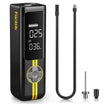
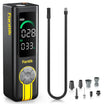
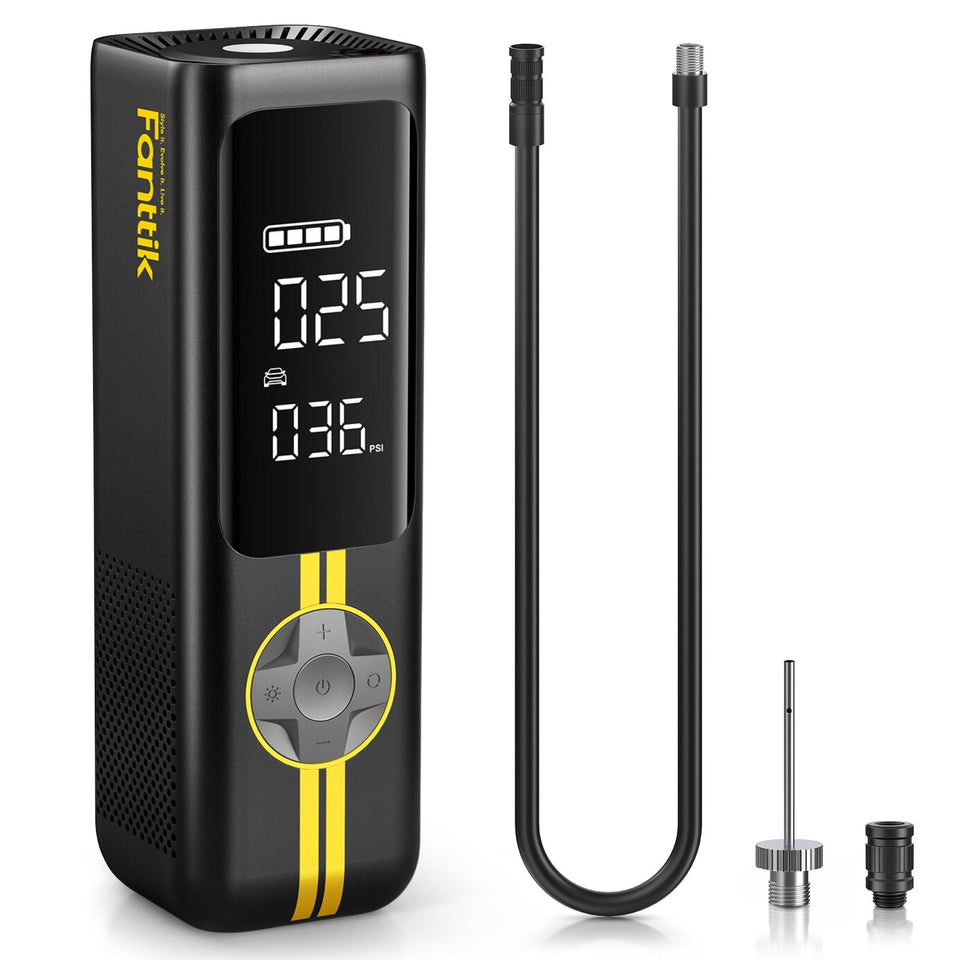
Relying on gas station air pumps is a reactive strategy. Often, these pumps are out of order, or the hoses cannot reach the spare tire while it is still in the trunk. A portable, cordless inflator is a proactive tool that allows you to maintain your spare (and your primary tires) in the comfort of your garage.
As noted in The 2026 Modern Essential Gear Industry Report, the transition to cordless, high-precision tools is a hallmark of modern self-reliance. Engineering trust in these devices means choosing tools that offer visible compliance and predictable performance.
A Seasonal Maintenance Framework
Effective maintenance is about building habits that align with the natural rhythm of the year. We recommend a quarterly "Spare Tire Health Check" that coincides with the change of seasons.
The Quarterly Checklist
- Access: Ensure you can actually get to the spare. Remove any clutter from the trunk.
- Visual Inspection: Look for "dry rot"—cracking in the sidewall that occurs as the rubber compounds break down over 5–10 years.
- Pressure Check: Use a digital gauge to check the PSI.
- Inflate: Bring the tire up to its recommended pressure (usually 60 PSI for donuts) plus a 5 PSI buffer.
- Valve Cap: Ensure the valve cap is tight to prevent dust and moisture from entering the valve core.
| Parameter | Value or Range | Unit | Rationale / Source Category |
|---|---|---|---|
| Initial Pressure | 60 | PSI | Standard donut spare specification |
| Permeation Rate | 0.5 - 1.5 | PSI/month | Estimated range based on common industry observations |
| Trunk Temp Swing | 15 - 40 | °C | Typical variance in enclosed automotive storage |
| Minimum Safe PSI | 40 | PSI | Heuristic threshold for safe bead seating |
| Check Interval | 90 | Days | Alignment with seasonal maintenance cycles |
Modeling Note (Reproducible Parameters): This table represents a deterministic scenario model for a stationary tire stored in a temperate climate. It is a scenario model, not a controlled lab study. Actual results may vary based on tire age, rubber quality, and local climate extremes.
Financial Strategy: The Cost of Neglect
Many drivers view maintenance as an unnecessary expense, but the math tells a different story. The financial impact of a roadside crisis far outweighs the cost of a simple maintenance routine.
Towing vs. Maintenance
According to data from MarketWatch, the cost of an emergency tow can range from $150 to over $300 depending on the distance and time of day. In contrast, a high-quality digital gauge or a portable inflator is a one-time investment that serves the vehicle for years.
Furthermore, a neglected spare that fails during use can lead to rim damage or loss of vehicle control, turning a simple flat tire into a multi-thousand-dollar repair or an insurance claim.
The Hybrid Approach
The most robust modern strategy is not to rely on a single solution. We recommend a "Hybrid Defense":
- The Maintained Spare: Your primary backup for major tire damage.
- The Portable Inflator: For proactive maintenance and sealing slow leaks in primary tires.
- Roadside Assistance: A financial backstop for when things go truly wrong (e.g., two flat tires at once).

Addressing the Barriers to Maintenance
While the benefits of checking your spare are clear, we recognize that practical barriers exist. For many, "time poverty" or a lack of a private garage makes regular checks difficult.
If you live in an apartment or lack a dedicated workspace, the portability of modern tools becomes even more critical. Compact, rechargeable devices allow you to perform maintenance anywhere—at a park, in a parking garage, or even while waiting for a car wash.
It is also important to note that tire aging is a silent risk. Even if a spare tire holds air perfectly, the rubber compounds degrade over time. Industry experts generally recommend replacing any tire—including the spare—that is more than 10 years old, regardless of tread depth. According to research on tire aging and biodegradation, environmental factors like ozone and heat accelerate this breakdown.
Engineering Trust in Your Equipment
At the heart of vehicle preparedness is the concept of trust. You need to trust that when you turn the key, the engine starts; and when you open the trunk, the spare tire is ready.
Building this trust requires moving away from reactive "emergency mode" and toward a proactive "maintenance mode." By including your spare tire in your seasonal checks, you are not just maintaining a piece of rubber; you are engineering peace of mind for yourself and your passengers.
As you prepare for the next change in season, take five minutes to visit your trunk. Check the pressure, inspect the rubber, and ensure your invisible backup is ready to perform. A little neglect today leads to a crisis tomorrow—but a little preparation today ensures you stay on the road, no matter what the journey throws at you.
Disclaimer: This article is for informational purposes only and does not constitute professional automotive repair or safety advice. Always consult your vehicle's owner's manual for specific tire pressure recommendations and safety procedures. If you are unsure about the condition of your tires, consult a certified mechanic.
Sources
Continue reading
 Balancing Portability and Power for Full-Size SUV Tires
Guide for SUV owners on using portable inflators. Understand flow decay, apply the 'Pulsing' technique, and learn storage...
Balancing Portability and Power for Full-Size SUV Tires
Guide for SUV owners on using portable inflators. Understand flow decay, apply the 'Pulsing' technique, and learn storage...
 The 10-Degree Rule: Why Seasonal Temp Drops Trigger TPMS
This guide explains the '10-Degree Rule' behind TPMS lights in cold weather. Learn why tire pressure drops, TPMS...
The 10-Degree Rule: Why Seasonal Temp Drops Trigger TPMS
This guide explains the '10-Degree Rule' behind TPMS lights in cold weather. Learn why tire pressure drops, TPMS...
Leave a comment
This site is protected by hCaptcha and the hCaptcha Privacy Policy and Terms of Service apply.