













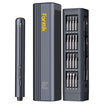
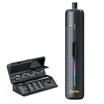

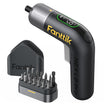






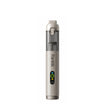


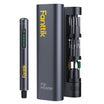
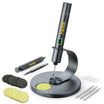



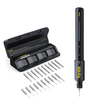

The Durability Paradox: Why Design-Forward Tools Often Fail the Stress Test
For the serious DIYer and prosumer, the initial appeal of a tool often lies in its industrial design—the sleek lines, the "soft-touch" finish, and the intuitive digital interface. However, a common frustration in the hardware world is the "aesthetic trap": tools that look like professional-grade equipment but degrade rapidly under actual project stress. We have observed this pattern frequently in our analysis of warranty returns and customer feedback: a tool that performs well in the first week can become a liability within its first year of heavy use—often due to material degradation rather than motor failure.
True durability is the maintenance of mechanical integrity over time. In this guide, we break down the specific chemical and mechanical indicators that distinguish a truly robust tool from one that is merely "designed to look durable."
Quick-Start Guide: The Prosumer’s Durability Benchmarks
If you are evaluating a new tool today, here are the key technical indicators of a "prosumer-grade" build:
- Grip Material: Look for PA6-GF30 (structural) overmolded with TPE (grip).
- Grip Hardness: Aim for 50–70 Shore A (A practical heuristic for balancing comfort and tear resistance).
- Internal Protection: Verify Conformal Coating on PCBs if the tool is for high-vibration work (grinding/drilling).
- Mechanical Tolerance: Lateral "wobble" in a bit holder should be negligible (ideally <2° of play) out of the box.
- Compliance: Look for IEC 60529 (IP rating) and EU GPSR traceability.
The Science of the Grip: Beyond the 'Soft-Touch' Hype
One of the most frequent failure points in modern handheld tools is the ergonomic grip. Many manufacturers use "soft-touch" coatings to provide an immediate sense of premium quality. However, the failure point for many of these grips isn't simple abrasion; it is plasticizer migration. This is a chemical process where the oils within the polymer leach out—often observed in customer returns within a 12 to 18-month window of variable climate exposure—leaving the surface permanently tacky.
The Dual-Material Heuristic
Through our teardowns and material assessments, we have identified a reliable heuristic for evaluating grip longevity. High-performance tools typically utilize dual-material overmolding. In this construction, the structural shell is a hard, glass-filled polymer—specifically PA6-GF30 (Polyamide 6 with 30% glass fiber reinforcement)—while the grip itself is a Thermoplastic Elastomer (TPE).
The critical metric here is the Shore A hardness. Based on Shore Hardness Scales guidance (Independent Standard), we have found that the "sweet spot" for tool grips generally falls between 50 and 70 Shore A.
- Below 50 Shore A: The grip feels exceptionally comfortable initially but may lack structural integrity, increasing the risk of tearing during high-torque applications.
- Above 70 Shore A: The material becomes rigid. In our experience, when hands sweat during sustained projects, these grips can become slippery, potentially compromising safety.
Note on Precision: Our recommendation for the 50-70 Shore A range is a shop-practical baseline derived from observing wear patterns in high-friction DIY tasks. It is not a universal safety threshold but a heuristic for balancing tactile feedback with mechanical resistance.
Identifying Industrial Coatings
To distinguish between an aesthetic paint and a durable industrial coating, we look for resistance to chemical solvents common in workshops. According to ASTM D1044 standards for abrasion resistance (Independent Standard), a quality finish should maintain its integrity even after repeated contact with skin oils. If a coating can be "peeled" with a fingernail, it is likely a cosmetic layer.

Internal Engineering: Vibration Isolation and Board Longevity
While external wear is visible, the most insidious form of tool failure occurs internally. For cordless, compact tools, vibration is the primary enemy of the electronics. We have observed that tools where the internal Printed Circuit Boards (PCBs) are mounted directly to the plastic shell without damping can develop solder joint cracks.
The "Chatter" Test
A professional-grade tool should exhibit a smooth, consistent hum at maximum RPM. A sharp "chatter" or buzzing sensation in your palm is often a sign of poor internal isolation. High-end engineering typically addresses this via:
- Damping Gaskets: Silicone or TPE spacers between the motor housing and the outer shell.
- Conformal Coating: A protective resin over the PCB. According to research on protecting PCBs from vibration (Industry Report), these measures are critical for tools used in "harsh environments," such as high-torque drilling.
Heuristic Estimate: In our repair observations, tools lacking internal damping often show signs of harmonic fatigue within a 150–250 hour window of cumulative high-vibration use. This is an estimate based on specific repair cases and may vary significantly based on motor type and load.
Mechanical Wear Points: The Bit Holder and Retention Systems
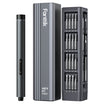
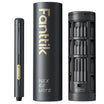
In precision electric screwdrivers, the magnetic bit holder is a frequent point of hidden degradation. In lower-quality models, repeated bit insertion wears down the internal retention ring.
A sign of superior engineering is the use of a hardened steel insert. We look for "axial loading consistency." If a bit holder allows for more than 1-2 degrees of lateral play (a common shop-floor benchmark for "wobble") when new, it is more likely to develop significant play after several thousand cycles.
Data-Driven Performance: A Modeling Case Study
To demonstrate how material and mechanical choices translate to performance, we modeled a scenario involving a high-volume electronics repair technician handling 200+ precision fasteners daily.
Modeling Run: Assembly Efficiency & Ergonomic Savings
We compared a manual precision driver against a high-performance electric precision driver.
| Parameter | Value | Unit | Rationale/Assumption |
|---|---|---|---|
| Daily Fastener Count | 200 | count | Typical batch for laptop/mobile repair |
| Manual Drive Time | 12 | s/screw | Includes positioning and manual rotation |
| Powered Drive Time | ~2.5 | s/screw | Assumes ~200 RPM average motor speed |
| Manual Wrist Rotations | 8 | rot/screw | Average supination/pronation cycles |
| Powered Wrist Rotations | ~0.5 | rot/screw | Minimal positioning only |
Analysis Results (Illustrative Example):
- Time Saved: Approximately 32 minutes per batch (a ~76% reduction in active driving time).
- Physical Load Reduction: Eliminating ~1,500 wrist rotations per batch significantly lowers repetitive strain risk.
- Precision Fit: A consistent output of 0.05Nm (a common low-torque setting) aligns with the safe range for M1.2 to M2.0 screws, reducing the risk of stripping plastic bosses.
Modeling Transparency: This is an illustrative scenario model, not a controlled laboratory study. Assumptions include a static user fatigue curve and standard fastener thread pitch. Actual results depend on the specific fastener material and user skill level. For more on our evaluation methods, see Why Weight Distribution Trumps Total Mass in Precision Tools (Brand Insight).
Compliance and Global Standards: The Trust Architecture
Durability is increasingly governed by international regulation. For prosumers, "compliance" is often the only verifiable proof that a tool has undergone rigorous testing.
The EU General Product Safety Regulation (GPSR)
The EU General Product Safety Regulation (EU) 2023/988 (Government Standard) has set a new benchmark for product traceability. As noted in The 2026 Modern Essential Gear Industry Report (Brand Whitepaper), trust is becoming a function of "credibility math"—the ability to prove that a tool meets these standards through visible evidence.
Standardized Testing
When selecting a tool, look for references to established international standards:
- IEC 60529 (IP Codes): For dust and water resistance.
- UN 38.3: For the stability of internal lithium batteries during transport and use.
- ISO 898: For the mechanical properties of fasteners and bits.
The Prosumer’s Checklist for Material Durability
To ensure your tool maintains its status long after unboxing, we recommend this self-check:
- The Grip Texture: Does it feel like a distinct overmold or a thin spray-on coating? Look for the seam where the hard plastic meets the soft grip.
- The Sound Profile: Run the tool at its highest setting. Is the vibration localized at the motor, or does it resonate through the handle? A "hollow" sound often indicates a lack of internal damping.
- The Bit Fit: Insert a bit and apply light lateral pressure. Noticeable "wobble" in a brand-new tool suggests the retention mechanism is a potential weak point.
- The Documentation: Does the manufacturer provide a clear path for battery replacement or bit holder repair? A durable tool is designed to be maintained.
Engineering Trust in the DIY Space
The shift toward design-forward tools is a positive evolution, making high-precision work more accessible. However, the "premium" label must be backed by robust material choices—from the Shore A hardness of the grips to the vibration-resistant mounting of internal PCBs. By focusing on chemical stability, mechanical wear points, and compliance with global standards, prosumers can avoid the "aesthetic trap" and invest in tools built for the workshop's reality.
Disclaimer: This article is for informational purposes only and does not constitute professional engineering or safety advice. Always refer to the specific manufacturer’s manual and local safety regulations before operating power tools.
References
- EU General Product Safety Regulation (EU) 2023/988 (Official EU Legislation)
- ASTM D1044: Standard Test Method for Resistance of Transparent Plastics to Surface Abrasion (Independent Standard)
- The 2026 Modern Essential Gear Industry Report (Brand Whitepaper)
- Shore Hardness Scales Explained - Silicone AB (Industry Technical Guide)
- Protecting PCBs from Vibration - Accelerated Assemblies (Industry Technical Guide)
Continue reading
 Upgrading to Brushless: When Portability Demands More Power
Covers the mechanical advantages, scenario modeling for time saved, and the maintenance paradox of sealed brushless systems in...
Upgrading to Brushless: When Portability Demands More Power
Covers the mechanical advantages, scenario modeling for time saved, and the maintenance paradox of sealed brushless systems in...
 Maximizing Cargo Room: Stowing Portable Jump Gear
Covers the 'Two-Second Rule', projectile physics, lithium-ion longevity, and seasonal maintenance for organized vehicle preparedness.
Maximizing Cargo Room: Stowing Portable Jump Gear
Covers the 'Two-Second Rule', projectile physics, lithium-ion longevity, and seasonal maintenance for organized vehicle preparedness.
Leave a comment
This site is protected by hCaptcha and the hCaptcha Privacy Policy and Terms of Service apply.