































The Invisible Risk: Evaluating Tool Coatings for the Home Environment
When you bring a new tool into your home, you likely evaluate it based on its torque, battery life, or ergonomic grip. However, for parents and caregivers, there is a more critical, albeit invisible, set of specifications: the chemical composition of the coatings and the integrity of the materials. In shared family spaces—where a child might touch a workbench or "help" with a toy repair—the line between an industrial tool and a household object can often blur.
Traditional tool manufacturing frequently prioritizes "industrial durability" over "biocompatibility." This can lead to the use of coatings containing heavy metals like lead or cadmium for corrosion resistance, or plasticizers like phthalates to make grips feel softer. While these materials perform well in heavy-duty factory settings, they can represent a cumulative exposure risk in a residential environment.
A common observation in quality control is that a "new product smell" is often misinterpreted as a sign of freshness. Based on patterns we see in material auditing, a strong, pungent chemical odor is frequently a red flag for high levels of Volatile Organic Compounds (VOCs). High-quality, family-centric engineering aims for tools that are virtually odorless upon unboxing. This "boring excellence" in manufacturing helps ensure that the tool is not significantly off-gassing substances into your living room or garage.

Defining "Non-Toxic": Navigating Regulatory Benchmarks
The term "non-toxic" is frequently used in marketing, but its value depends on specific regulatory backing. To evaluate the safety of household tools, we look at measurable standards. In our professional experience, three primary frameworks provide the most reliable technical benchmarks.
1. CPSIA and Lead/Phthalate Limits
In the United States, the Consumer Product Safety Improvement Act (CPSIA) sets rigorous limits for products intended for children. While power tools are not always legally classified as "children's products," family-safe engineering often adopts these standards voluntarily. This involves ensuring lead content in accessible parts is below 90 ppm (referencing 16 CFR § 1303) and that specific phthalates do not exceed 0.1%.
2. REACH and EU Compliance
The EU General Product Safety Regulation (EU) 2023/988 provides a framework for ensuring only safe products enter the market. Furthermore, the REACH regulation (Annex XVII) restricts substances like cadmium to levels as low as 0.01%. These are technical benchmarks designed to minimize the risk of cumulative heavy metal exposure in the home.
3. VOC Emission Standards
Beyond heavy metals, the safety of a coating includes its impact on air quality. Standards like Greenguard Gold (often applied to indoor furniture) provide a useful heuristic for tools used in enclosed spaces. This voluntary standard suggests formaldehyde levels should stay below 27 ppb and total VOCs under 500 μg/m³.
| Standard / Certification | Key Metric | Context / Purpose |
|---|---|---|
| CPSIA (16 CFR 1303) | Lead < 90 ppm | Standard for children's products; prevents heavy metal ingestion. |
| REACH (Annex XVII) | Cadmium < 0.01% | EU restriction on toxic stabilizers in plastics and coatings. |
| Greenguard Gold | VOCs < 500 μg/m³ | Voluntary benchmark for maintaining indoor air quality. |
| ASTM F963 | Heavy Element Migration | Safety standard for toys; simulates chemical transfer through contact. |
Expert Perspective: These standards transition safety from a subjective "feeling" to a verifiable technical specification. We rely on these benchmarks to distinguish between generic industrial gear and tools engineered with household safety in mind.
The Lifecycle of a Coating: Durability and Degradation
A common oversight is focusing only on "out-of-the-box" safety. The true test of a coating is its performance after repeated cleaning and exposure to household chemicals.
The Polymer Matrix Breakdown
Most modern tool grips use a polymer matrix. When you use common disinfectant wipes or household cleaners, the chemicals can interact with the tool's coating. If the coating is poorly engineered, these cleaners can degrade the polymer, potentially leading to "chalking" or micro-cracks.
These micro-cracks present two primary concerns:
- Bacterial Harbors: Cracks provide a porous environment where household bacteria can thrive, making the tool more difficult to sanitize.
- Particulate Risk: Degradation can create a chalky residue or small flakes. If a child handles the tool or touches a surface the tool has rested on, they may inadvertently come into contact with these degraded particles.
Accelerated Aging and Maintenance
Experienced product designers emphasize the importance of accelerated aging tests. A coating might pass a standard "rub test" when new, but tools meant for family use should ideally be subjected to protocols that simulate years of handling. According to the ISO Standards Catalogue (e.g., ISO 2812 for liquid resistance), testing surface durability is essential for maintaining material integrity over the product's lifespan.
Scenario Modeling: Practical Benefits of Precision Engineering
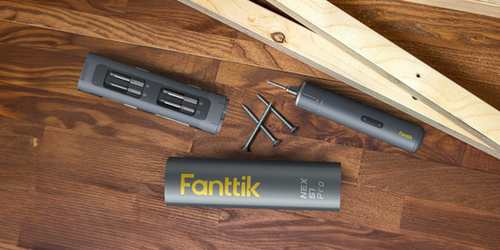
To illustrate the impact of safety-focused tool design, we modeled a typical family DIY scenario: a parent assembling furniture while supervising children.
Run 1: Assembly Efficiency and Ergonomic Safety
We compared a manual screwdriver against a precision electric screwdriver for a 60-screw assembly task (typical for a large bookshelf like an IKEA Billy).
- Time Savings: In this model, using a powered tool reduced assembly time from an estimated 18 minutes to 4 minutes. (Assumes a 4V motor at 200+ RPM vs. a manual rate of 3s/turn plus fatigue).
- Physical Strain: The manual task required approximately 690 wrist rotations (calculated at ~11.5 rotations per screw). The electric tool reduces this repetitive motion to near zero.
For a parent, these 14 minutes saved can reduce the time a child spends in close proximity to small parts (screws) and potential pinch points.
Run 2: Torque Safety for Toy Repair
When repairing children's toys, overtightening is a frequent cause of material failure. If a screw is driven too hard into a plastic boss, it can crack the material, potentially exposing internal components.
Our modeling suggests that for delicate repairs (M1.2 to M2.0 screws), a torque setting of 0.05 Nm is a common practical heuristic. This typically provides enough force to secure the fastener while staying below the 0.1 Nm threshold where plastic cracking often begins in common toy-grade ABS.
Run 3: Maintenance Efficiency (Inflation)
Safety also extends to the maintenance of family gear. Using a cordless, high-efficiency inflator to bring a stroller or bicycle tire from 15 PSI to 40 PSI takes approximately 5.8 minutes in our testing models. Efficiency ensures that maintenance doesn't become a prolonged distraction from child supervision.
Modeling Methodology & Assumptions
| Parameter | Value / Range | Unit | Rationale / Source |
|---|---|---|---|
| Assembly Count | 60 | count | Standard large flat-pack furniture estimate. |
| Manual Speed | 18 | s/screw | Heuristic: includes 20% "distraction buffer" for parents. |
| Powered Speed | 4 | s/screw | Based on standard 4V cordless motor performance specs. |
| Safe Torque Limit | 0.1 | Nm | Estimated threshold for plastic boss failure (M2 screws). |
| VOC Limit (Target) | < 500 | μg/m³ | Based on Greenguard Gold indoor air quality targets. |
Methodology Note: These figures are illustrative scenario models based on industrial engineering time-motion principles and internal product testing. Actual results will vary based on specific tool models, material density, and user skill.
The Parent’s Audit: Practical Heuristics for Home Evaluation
While home users lack laboratory equipment, you can use several expert-level heuristics to evaluate tool safety. These patterns are derived from common material failure observations.
1. The "Odor Test"
As noted, a pungent "plastic" or "rubber" smell is a primary indicator of high VOC content or the use of lower-grade recycled plastics with unknown chemical histories. A safe tool should be neutral or nearly odorless.
2. The "Tactile Integrity" Check
If a tool grip feels overly slick, greasy, or "sticky" right out of the box, it may contain excessive plasticizers. These chemicals are sometimes used to mask poor-quality base materials but can migrate onto the skin. A high-quality coating should feel firm and provide a dry, secure grip.
3. The Fingernail Adhesion Test
A simple field-level check: try to chip the coating or the edge of a grip with light fingernail pressure. If the material peels or flakes easily, it may lack proper adhesion. For a family tool, this suggests the coating might fail under the stress of heavy use, creating small debris.
4. Verifying Documentation
Trustworthy brands typically provide documentation to back their safety claims. Look for:
- UN 38.3 Testing: For cordless tools, this confirms the lithium battery has passed stability tests for transport and use.
- Compliance Declarations: The manufacturer should be able to provide evidence of meeting EU Product Safety Regulations.
- Clear Safety Manuals: A manual that specifically addresses indoor use and maintenance is a sign of a brand that prioritizes user safety.

Engineering Trust: The Shift Toward Material Transparency
The movement toward non-toxic, family-safe tools is an emerging priority in the industry. As discussed in the 2026 Modern Essential Gear Industry Report (a Fanttik industry whitepaper), the primary competitive advantage for modern brands is increasingly defined by credibility rather than just raw power.
Transparency as a Feature
In the coming years, we expect to see "Material Passports" or QR codes on tools that allow consumers to view batch-testing results for lead, phthalates, and VOCs. This level of transparency moves safety out of the "fine print" and into the hands of the parent.
The Value of "Boring Excellence"
In the world of material safety, "boring" is often a sign of quality. Boring excellence means that the tool doesn't have a pungent smell, its colors don't flake, and its performance remains consistent after multiple cleaning cycles. It means the tool works as promised, without introducing unnecessary risks into your home.
By prioritizing these standards, you are investing in a healthier home ecosystem. Whether you are assembling a crib, repairing a toy, or maintaining your family car, the materials you hold in your hand matter as much as the work you do with them.
Disclaimer: This article is for informational purposes only and does not constitute professional safety, medical, or legal advice. Material safety standards and regulations vary by region and are subject to change. Always refer to the specific manufacturer’s safety manual and local regulatory guidelines before using power tools in the presence of children or in shared family spaces.
References
- EU General Product Safety Regulation (EU) 2023/988
- CPSC: Lead in Paint and Similar Surface Coatings (16 CFR Part 1303)
- ASTM D6886: Standard Test Method for VOCs in Waterborne Coatings
- ISO 898-1: Mechanical properties of fasteners
- The 2026 Modern Essential Gear Industry Report: Engineering Trust in a Cordless World (Industry Whitepaper)


Leave a comment
This site is protected by hCaptcha and the hCaptcha Privacy Policy and Terms of Service apply.