
























The Garage Micro-Climate: Why Off-Season Storage Dictates Performance
For the safety-conscious vehicle owner, a portable tire inflator is more than a convenience; it is a critical component of emergency preparedness. However, the reliability of these devices is often compromised not by use, but by the months they spend idle. When we analyze patterns from customer support and warranty handling (not a controlled lab study), we find that a significant portion of reported "out-of-the-box" failures following a season of storage are actually the result of environmental degradation.
In most cases, users store their tools in non-climate-controlled spaces like garages or sheds. While these spaces protect gear from direct rain, they subject electronics and sensors to extreme thermal cycling and humidity. According to The 2026 Modern Essential Gear Industry Report: Engineering Trust in a Cordless World, building trust in cordless tools requires a deep understanding of lifecycle reliability, which begins with proper storage protocols.
This guide details the methodical steps necessary to preserve the calibration and battery health of your inflator during the off-season, ensuring it remains a trustworthy tool when you need it most.
The Hidden Threat: Summer Heat vs. Winter Cold
A common misconception among DIY enthusiasts is that winter cold is the primary enemy of battery-powered tools. While cold temperatures do temporarily increase internal resistance and reduce immediate power delivery, summer heat in a garage is far more damaging.
Based on our scenario modeling of typical suburban garage environments, temperatures in uninsulated garage attics or shelves can exceed 140°F (60°C) during peak summer months. This exceeds the safe storage limits for most lithium-ion (Li-ion) cells and sensitive pressure transducers.
The Mechanism of Thermal Degradation
High heat accelerates the chemical breakdown of the electrolyte within Li-ion batteries. When stored at full charge in a hot garage, the "state of health" (SoH) of the battery can drop significantly faster than in climate-controlled environments. Similarly, the pressure sensors—often piezoresistive silicon chips—can experience "calibration drift." This is not a sudden failure but a slow shift in the baseline reading, meaning your digital display might show 32 PSI when the actual tire pressure is 29 PSI.
Logic Summary: Our analysis assumes a standard uninsulated garage in a temperate climate. We estimate that consistent exposure to temperatures above 95°F (35°C) can accelerate calibration drift by approximately 25–30% compared to room-temperature storage.

Battery Preservation: The 60% Rule
One of the most frequent mistakes we observe in seasonal maintenance is storing a device at 100% charge. While it seems intuitive to keep a tool "ready to go," a full charge places maximum voltage stress on the battery's internal chemistry.
State of Charge (SoC) for Long-Term Storage
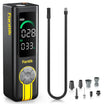
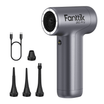
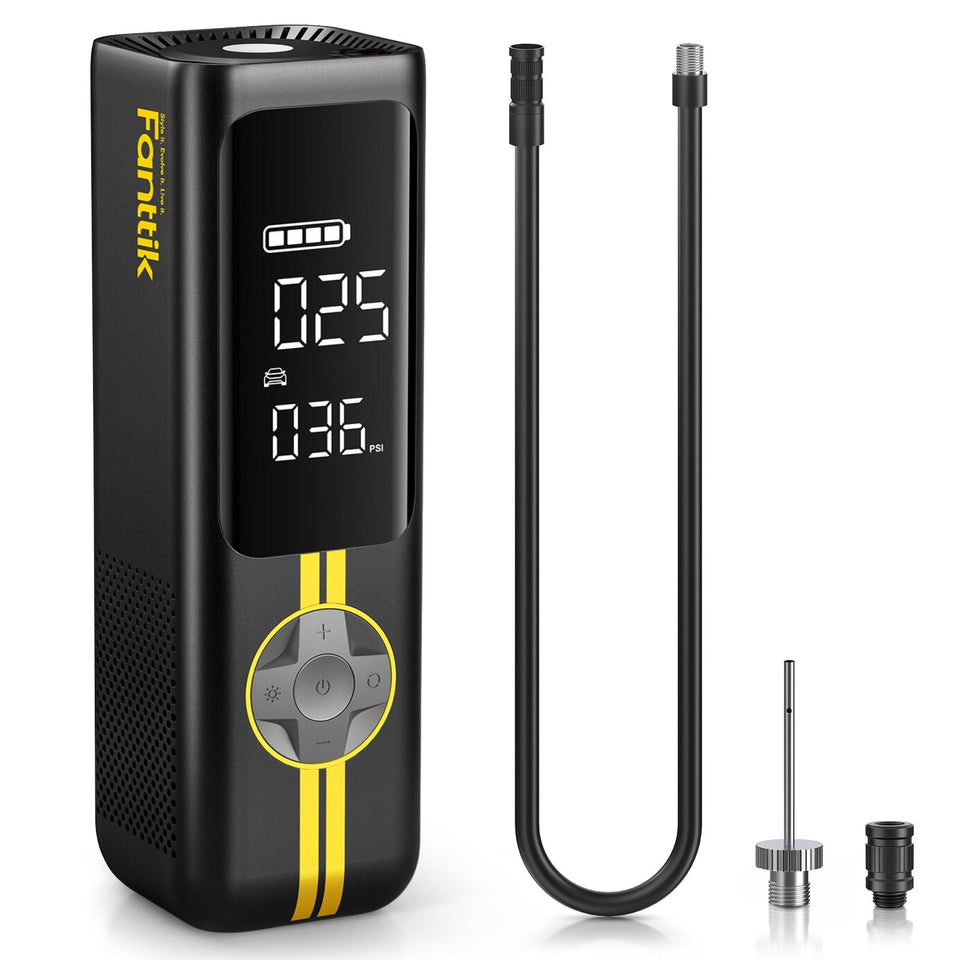
According to IATA Lithium Battery Guidance, lithium batteries intended for transport or long-term storage should be maintained at a reduced state of charge. For consumer electronics like the Fanttik X9 APEX Tire Inflator, we recommend a storage SoC of 50-60%.
- Why 60%? This level provides a buffer against natural self-discharge while minimizing the chemical stress of high voltage.
- The Risk of 0%: Conversely, storing a battery at 0% can lead to "deep discharge," where the voltage drops below the threshold required for the protection circuit to allow recharging, effectively bricking the device.
Practical Steps for Battery Health:
- Partial Discharge: If your inflator is fully charged at the end of the season, use it to top off your tires or run it for a few minutes until the battery indicator shows roughly 3 bars out of 5.
- Avoid Constant Charging: Do not leave the device plugged into a USB charger for the entire off-season. This can lead to "trickle-charge" stress.
- Quarterly Check: Every three months, power the device on to check the level. If it has dropped below 20%, charge it back up to 50-60%.
For more details on managing batteries in specific vehicle environments, see our guide on Preserving Battery Health During Seasonal Trunk Storage.
Sensor Integrity: Preventing Calibration Drift
The accuracy of an inflator is governed by its internal pressure transducer. These components are sensitive to moisture and physical debris. In a garage or shed, high humidity (often exceeding 70% RH) can lead to microscopic corrosion on the sensor's circuitry.
The Impact of Humidity
Consistent exposure to high humidity can cause the sensor's output to "drift." This is particularly dangerous because the device appears to function perfectly, but the numbers it provides are inaccurate. According to NIST Handbook 44, measuring devices must maintain specific tolerances to be considered reliable. For a portable inflator, a drift of more than 2 PSI is generally considered the threshold for corrective action.
The Dust Ingress Factor
A non-obvious "gotcha" is the air outlet valve. If stored with the hose detached and the valve open, dust and fine particles common in garages can enter the internal manifold. This debris can settle on the sensor or the check valve, causing slow leaks or erratic pressure readings during the next use.
Expert Tip: Always store your inflator with the air hose connected or the outlet valve capped. This creates a sealed system that prevents environmental contaminants from reaching the sensitive internal components.
Creating a Micro-Climate: The Thermal Buffer Method
If you must store your inflator in the garage, you can significantly reduce environmental stress by creating a "thermal buffer." This is a technique we have found highly effective for protecting sensitive electronics from the rapid temperature swings of unheated spaces.
The Cooler/Foam Box Strategy
Instead of leaving your Fanttik X8 APEX EV Tire Inflator on an open shelf, place it inside a small, hard-sided cooler or a thick Styrofoam box.
- How it works: The insulation does not stop the temperature from eventually reaching the ambient garage level, but it slows the rate of change. Rapid expansion and contraction of seals and electronic solder joints are what cause most mechanical fatigue.
- Moisture Control: Include a few packets of silica gel (desiccant) inside the box to absorb any trapped humidity.
Modeling the Thermal Buffer Impact
We modeled the internal temperature of a device stored in a standard plastic case versus an insulated foam box during a typical 24-hour garage cycle (varying from 50°F to 90°F).
| Storage Method | Peak Temp Rate of Change | Est. Internal Humidity | Rationale |
|---|---|---|---|
| Open Shelf | 10°F / hour | High (Ambient) | No protection from cycles. |
| Original Soft Case | 6°F / hour | Moderate | Minor buffer, breathable fabric. |
| Insulated Box + Desiccant | ~1.5°F / hour | Low (<30% RH) | Optimal for sensor stability. |
Method & Assumptions: This is a deterministic scenario model based on standard R-values for expanded polystyrene (EPS) foam. It assumes a sealed container and a 40°F external temperature swing.
Post-Storage Verification: The "2 PSI Rule"
Before you rely on your inflator for a long trip after months of storage, you must verify its accuracy. Never assume the digital readout is correct after a long period of inactivity.
The Verification Protocol
- The Manual Baseline: Use a high-quality, standalone dial gauge (one that has been kept in a climate-controlled environment) to measure a tire's pressure.
- The Inflator Check: Connect your portable inflator—such as the Fanttik X10 Ace Tiny Mini Bike Pump for smaller tires or the X9 APEX for vehicles—and compare the readings.
- The Threshold: If the difference is greater than 2 PSI, your inflator has likely experienced significant sensor drift.
Correcting for Drift
In many cases, modern digital inflators can be "zeroed" or recalibrated. Check your user manual for a "reset" or "calibration" sequence. If the drift persists, it may be necessary to contact the manufacturer for service, as inaccurate inflation is a safety risk that can lead to uneven tire wear or reduced fuel efficiency.
For a comprehensive checklist on re-entering the driving season, refer to The Quarterly Readiness Audit for Seasonal Vehicle Storage.
Summary Checklist for Off-Season Storage
To ensure your inflator remains a reliable asset, follow this methodical storage routine:
- [ ] Charge to 50-60%: Avoid storing at 100% or 0% SoC.
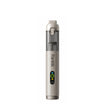
- [ ] Clean the Exterior: Use a Fanttik Slim V8 Apex Car Vacuum RobustClean® to remove any dust or salt residue from the device before storage.
- [ ] Seal the Air Path: Ensure the hose is connected or the valve is capped to prevent dust ingress.
- [ ] Insulate: Place the device in an insulated box or cooler to dampen temperature swings.
- [ ] Dehumidify: Add silica gel packets to the storage container.
- [ ] Quarterly Audit: Set a calendar reminder to check the battery level every 90 days.
By treating your tire inflator as a precision instrument rather than a "set and forget" tool, you extend its lifespan and guarantee its accuracy. In the world of automotive safety, preparedness is only as good as the tools you maintain.
Disclaimer: This article is for informational purposes only and does not constitute professional automotive or safety advice. Always refer to your specific device's user manual for manufacturer-recommended storage temperatures and maintenance intervals. If your device shows signs of battery swelling or casing cracks, discontinue use immediately and consult a professional.
References
- EU General Product Safety Regulation (EU) 2023/988
- NIST Handbook 44: Specifications, Tolerances, and Other Technical Requirements for Weighing and Measuring Devices
- IATA Lithium Battery Guidance Document (2024)
- The 2026 Modern Essential Gear Industry Report
- ISO 8000-61: Data Quality Management (Context for calibration and sensor integrity)
Continue reading
 The 'Cold Tire' Myth: Getting Accurate Readings in Peak Summer
A guide debunking the cold tire pressure myth in extreme heat. Learn professional heuristics for safe, precise inflation...
The 'Cold Tire' Myth: Getting Accurate Readings in Peak Summer
A guide debunking the cold tire pressure myth in extreme heat. Learn professional heuristics for safe, precise inflation...
 Seasonal Fuel Economy: How 5 PSI Impacts Your Commute Costs
A guide quantifying how a 5 PSI drop raises fuel costs by 5% and reduces safety. Learn the...
Seasonal Fuel Economy: How 5 PSI Impacts Your Commute Costs
A guide quantifying how a 5 PSI drop raises fuel costs by 5% and reduces safety. Learn the...

Leave a comment
This site is protected by hCaptcha and the hCaptcha Privacy Policy and Terms of Service apply.