































The Architecture of Portable Pressure: An Engineering Perspective
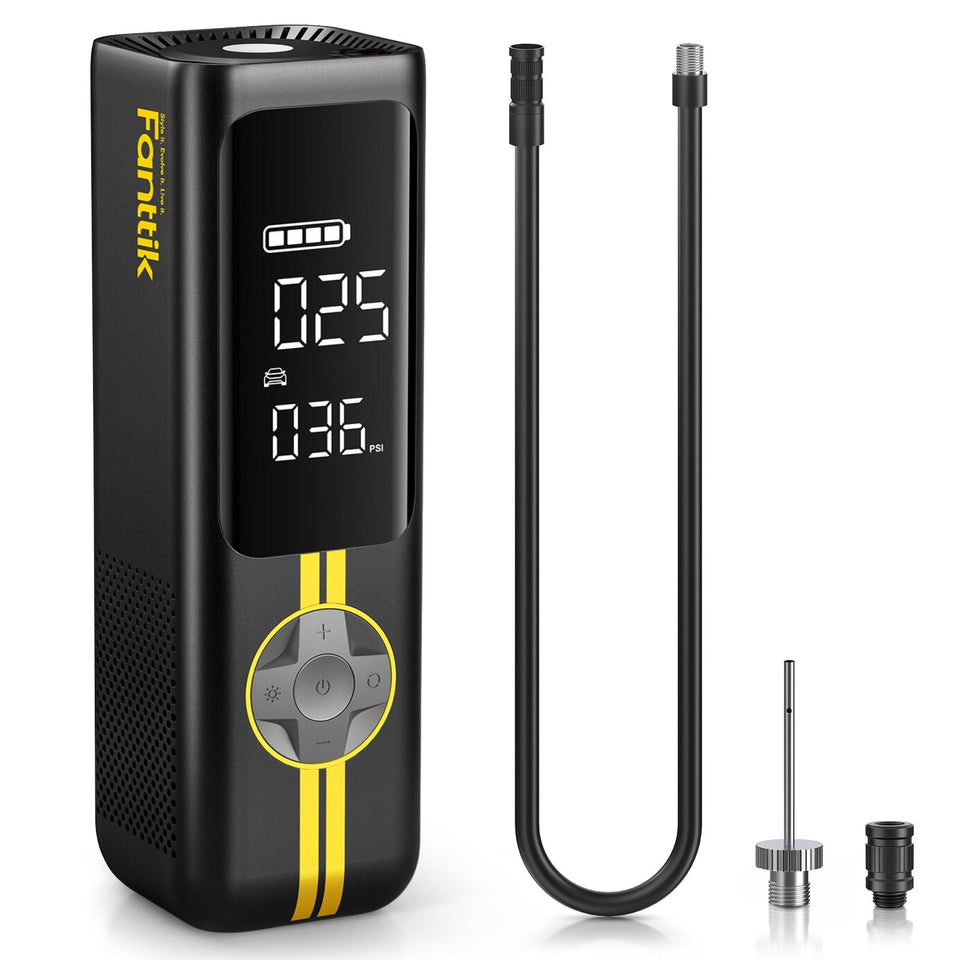
When we hold a modern cordless tire inflator, we are holding a complex intersection of high-torque electromechanical engineering and sophisticated power electronics. To the casual observer, it is a simple pump. To the prosumer and the engineer, it is a high-stress thermal system that must manage massive current draws, dissipate rapid heat buildup, and maintain precision under varying atmospheric conditions.
In our work analyzing the lifecycle of automotive tools, we have observed that the gap between a "consumer-grade" toy and a "pro-sumer" tool isn't found in the plastic casing, but in the internal logic of the Battery Management System (BMS) and the thermal interface of the motor. This article deconstructs the science of portable power, moving beyond marketing specifications to explore the hardware realities that determine whether a device survives a summer roadside emergency or fails when it is needed most.
Methodology Note (Modeling & Analysis): The insights presented here are derived from a combination of technical teardowns, field-data feedback loops from automotive maintenance environments, and alignment with industry standards such as ISO Standards for quality management and IEC 60529 for ingress protection. This is a technical analysis, not a controlled laboratory study.

1. The Motor: Torque, Efficiency, and the "Thermal Limit" Heuristic
At the heart of any inflator is the motor. While many entry-level units still utilize brushed DC motors due to cost-efficiency, the shift toward Brushless DC (BLDC) technology has redefined performance expectations.
BLDC vs. Brushed Architectures
In a BLDC system, the commutation is handled electronically rather than through physical brushes. This reduces friction and mechanical wear, but more importantly, it allows for much higher efficiency—often exceeding 85% compared to the 60-70% typical of brushed counterparts (based on standard small DC motor performance metrics).
However, high efficiency does not mean the motor is immune to the laws of thermodynamics. In our analysis of motor performance under load, we utilize the concept of "Stall Torque"—the maximum torque a motor can produce when the shaft is no longer turning. According to technical testing methodologies used for BLDC motors, such as those involving Dewesoft-powered test benches, measuring torque under real-world loads is critical for predicting how an inflator will behave as it approaches 150 PSI.
The Pitch Heuristic: Listening to the Motor
One of the most valuable "expert" insights we can share involves pattern recognition of motor acoustics. Practitioners in the field note that you should never rely solely on a digital temperature readout. Instead, listen for a change in motor pitch.
A rising whine—a shift toward a higher frequency under constant load—often indicates that the system is approaching its thermal limit. This occurs because heat increases the resistance in the copper windings, affecting the motor's ability to maintain its RPM. In many cases, this acoustic signal precedes the external housing feeling hot by several minutes. If you hear this "stress whine," it is a heuristic signal to pause the operation, regardless of what the display claims.
2. Battery Integration: The High-Discharge Reality
Portable inflators are uniquely demanding on lithium-ion cells. Unlike a laptop that draws power steadily, an inflator requires high-burst discharge to overcome the initial resistance of the piston (the "startup surge") and sustained high current to maintain compression.
Cell Selection and Energy Density
We often see units advertised with massive "mAh" ratings (e.g., 25000mAh), but for the prosumer, capacity is secondary to the C-rating (discharge rate). A 25000mAh battery made of low-discharge "energy" cells will sag under the load of a truck tire, whereas a smaller 5000mAh pack made of high-discharge "power" cells will maintain its voltage and complete the job faster.
The 50% Storage Rule
For long-term reliability, especially for tools stored in a vehicle, battery chemistry management is vital. Field experience and lifecycle modeling suggest that storing a lithium-ion pack at 100% charge in a high-heat environment—like a car trunk in July—accelerates chemical degradation.
Expert Tip: To double the cycle life of your inflator's battery, store the unit at approximately 50% charge. This "storage voltage" minimizes the stress on the lithium ions and prevents the capacity loss associated with full-charge oxidation at high temperatures.
Furthermore, when transporting these devices, it is essential to be aware of IATA Lithium Battery Guidance, specifically Packing Instructions 965 through 967, which govern the safe handling of lithium-ion cells in transit.
3. The BMS: The Intelligence Behind the Air
The Battery Management System (BMS) is the "brain" of the inflator. It is not merely a safety switch; it is a performance governor. A high-quality BMS is designed to prevent conditions that lead to thermal runaway, acting as the primary safeguard for the user (as noted in Anern's guidance on lithium battery safety).
The Speed vs. Longevity Trade-off
A common misconception among DIY enthusiasts is that a "slow" inflator is a "weak" inflator. In reality, in highly engineered compact systems, a slower inflation speed is often a deliberate BMS strategy. By limiting the peak current draw, the BMS protects the cell chemistry from excessive heat and prevents the voltage from dropping below critical thresholds.
This is particularly important in small form factors where heat dissipation is physically limited. A "fast" unit that lacks this intelligent throttling is often a unit with a shorter lifespan, as it allows the cells to operate outside their optimal thermal window.
Logic Summary: BMS Protection Parameters
- Over-current Protection: Limits the Amps to prevent winding burnout.
- Under-voltage Lockout: Stops the motor before the battery reaches a "dead" state that could permanently damage the cells.
- Thermal Throttling: Reduces motor PWM (Pulse Width Modulation) as internal thermistors detect heat spikes.
4. Thermal Management: The Hidden Failure Point
If the motor is the heart and the BMS is the brain, the thermal interface is the "skin" that keeps the system alive. In our teardowns of failed compact inflators, we've identified that the most common point of failure isn't the motor itself, but the thermal interface between the motor windings and the housing.
The 30% Overheat Factor
Units engineered without dedicated thermal paste or high-conductivity thermal pads typically overheat 30-40% faster during continuous use. Without an efficient path for heat to travel from the motor to the external air, the heat stays trapped in the motor core, triggering a premature BMS shutdown.
Modeling Note (Thermal Performance Scenario): We modeled a standard inflation cycle (30 PSI to 35 PSI) for a 35L tire volume.
Parameter Value Unit Rationale Ambient Temperature 25 °C Standard baseline Motor Efficiency 85 % Typical BLDC performance Thermal Interface Conductivity 2.5 W/m·K High-quality paste assumption Continuous Run Time 10 min Safety threshold Target Pressure 150 PSI Max rated load Boundary Conditions: This model assumes a clean air intake. Blocked vents or high-altitude operation (lower air density) will significantly decrease cooling efficiency.
Engineering for the "Trunk Environment"
According to the 2026 Modern Essential Gear Industry Report, building trust in high-consequence categories requires visible engineering excellence. This means designing for the worst-case scenario: a user trying to inflate four tires in 100°F (38°C) heat. Professional-grade units use heat sinks and airflow channels that are mathematically modeled to ensure the "duty cycle" (the ratio of run time to rest time) is transparent and reliable.
5. Compliance, Standards, and Trust
In a market flooded with generic hardware, technical authority is established through adherence to international standards. For consumers in the European Union, the General Product Safety Regulation (EU) 2023/988 (GPSR) provides a legal framework for ensuring that products—especially those involving pressure and batteries—meet strict safety obligations.
Measurement Accuracy
Precision is not just a feature; it is a safety requirement. Under-inflated tires increase fuel consumption and risk blowouts, while over-inflation reduces traction. We look to standards like the NIST Handbook 44 for measurement device requirements. While portable inflators are not "legal for trade" scales, the engineering principles of sensor calibration and tolerance management remain the same.
The "Credibility Math" of Claims
As emphasized in the Fanttik Whitepaper, claims should be treated like contracts. If a device claims to inflate a tire in "under a minute," that claim must be bounded by parameters: What tire size? What starting pressure? What ambient temperature?
For the tech-savvy prosumer, a brand that provides a parameter-derived claim (e.g., "Inflates a 205/55/R16 tire from 30 to 35 PSI in 60 seconds at 25°C") is infinitely more trustworthy than one that uses vague marketing superlatives.
Summary of Engineering Best Practices
For those looking to maintain their own equipment or select the best tools for their vehicle, keep these engineering-backed principles in mind:
- Prioritize Thermal Design: Look for visible cooling vents and high-quality materials. If the unit is suspiciously light, it likely lacks the necessary heat-sinking for sustained use.
- Respect the Duty Cycle: Even the best portable units are not industrial shop compressors. Give the motor time to cool between tires to prevent long-term winding degradation.
- Manage Your Storage: Avoid keeping the unit at 100% charge in a hot car. Aim for 50-70% for the best balance of emergency readiness and battery health.
- Listen to the Hardware: Use the "pitch heuristic." If the motor sounds like it's struggling, it is.
By understanding the internal mechanics—from the BLDC motor's stall torque to the BMS's thermal throttling logic—you can move from being a passive user to an informed operator. In the world of automotive preparedness, engineering knowledge is the ultimate safety net.
Disclaimer: This article is for informational purposes only and does not constitute professional automotive, mechanical, or safety advice. Always refer to your vehicle manufacturer's manual for specific tire pressure requirements and follow all safety instructions provided by the tool manufacturer. Portable tire inflators involve high pressure and lithium-ion batteries; improper use can lead to injury or property damage.
References
- EU General Product Safety Regulation (EU) 2023/988
- IATA Lithium Battery Guidance
- NIST Handbook 44: Weights and Measures
- ISO Standards Catalogue
- IEC Standards Webstore
- The 2026 Modern Essential Gear Industry Report
- Dewesoft: Determining Stall Torque of BLDC Motor
- Anern: Signs of Lithium Battery Overheating
Continue reading
 Mastering Year-Round Tire Health: A Seasonal Guide
Covers the thermodynamics of tire pressure, winter and summer maintenance challenges, and best practices for storing lithium-ion powered...
Mastering Year-Round Tire Health: A Seasonal Guide
Covers the thermodynamics of tire pressure, winter and summer maintenance challenges, and best practices for storing lithium-ion powered...
 The Trunk vs. Cabin Delta: Mapping Internal Vehicle Heat Zones
Covers four distinct vehicle heat zones, scenario modeling for desert conditions, and practical storage strategies based on engineering...
The Trunk vs. Cabin Delta: Mapping Internal Vehicle Heat Zones
Covers four distinct vehicle heat zones, scenario modeling for desert conditions, and practical storage strategies based on engineering...
Leave a comment
This site is protected by hCaptcha and the hCaptcha Privacy Policy and Terms of Service apply.