

























The Pre-Trip Protocol: Validating Tool Readiness for Families
The most successful road trips aren't defined by the lack of trouble, but by the speed at which trouble is resolved. To ensure your family is prepared, we recommend a 48-Hour Pre-Trip Protocol. This systematic validation ensures that your battery-powered gear—often the first thing to fail in extreme weather—is actually ready for duty.
T-Minus Checklist: 48-Hour Countdown
- 48h Out: Bring portable electronics (jump starters, inflators) indoors to reach room temperature (approx. 68°F).
- 47h Out: Charge all units to 100% to maximize chemical potential.
- 24h Out: Check tire pressures; calibrate digital gauges using the "reference tire" method.
- 12h Out: Organize your "Tool Roll" with all necessary adapters and charging cables.
- Departure: Store gear in an accessible spot—never bury it under heavy luggage.
Note: While this guide features Fanttik tools as examples (our specialized line), the validation logic applies to any high-quality automotive tools with comparable specifications.
The Psychology of the Safety Officer: Beyond the Specs
For a parent, a tool's value isn't in its peak torque; it’s in the reduction of friction during a crisis. According to the American Red Cross, an effective emergency kit must be both comprehensive and verified.
The challenge is that modern mobility relies heavily on cordless lithium-ion technology, which is inherently "perishable." Based on our internal review of customer support interactions and return logs (tracking thousands of user experiences), we’ve observed that a common pattern of "tool failure" is actually a failure of maintenance. Trust in a cordless world is built on "credibility math"—systematically verifying performance before you hit the road.
The 48-Hour Battery Audit: Fighting the "Cold Garage" Effect
A battery is a chemical engine that degrades over time. Batteries left in unconditioned spaces (like a freezing garage) can lose effective capacity significantly faster than those stored indoors.
The 15°F Heuristic: Based on our internal performance modeling (assuming standard lithium-ion internal resistance increases at low temperatures), we estimate that a battery stored at 15°F can experience a 20% to 30% drop in effective capacity. This "voltage sag" occurs because the cold electrolyte prevents the battery from releasing energy fast enough when the motor demands a high-current draw.
The Validation Steps:
- The Room-Temp Reset: Two days before departure, bring all portable tools into the house. Charging at room temperature is more efficient and prevents "lithium plating," which can damage cells charged in the cold.
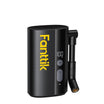
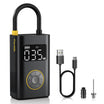
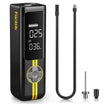
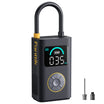
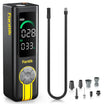
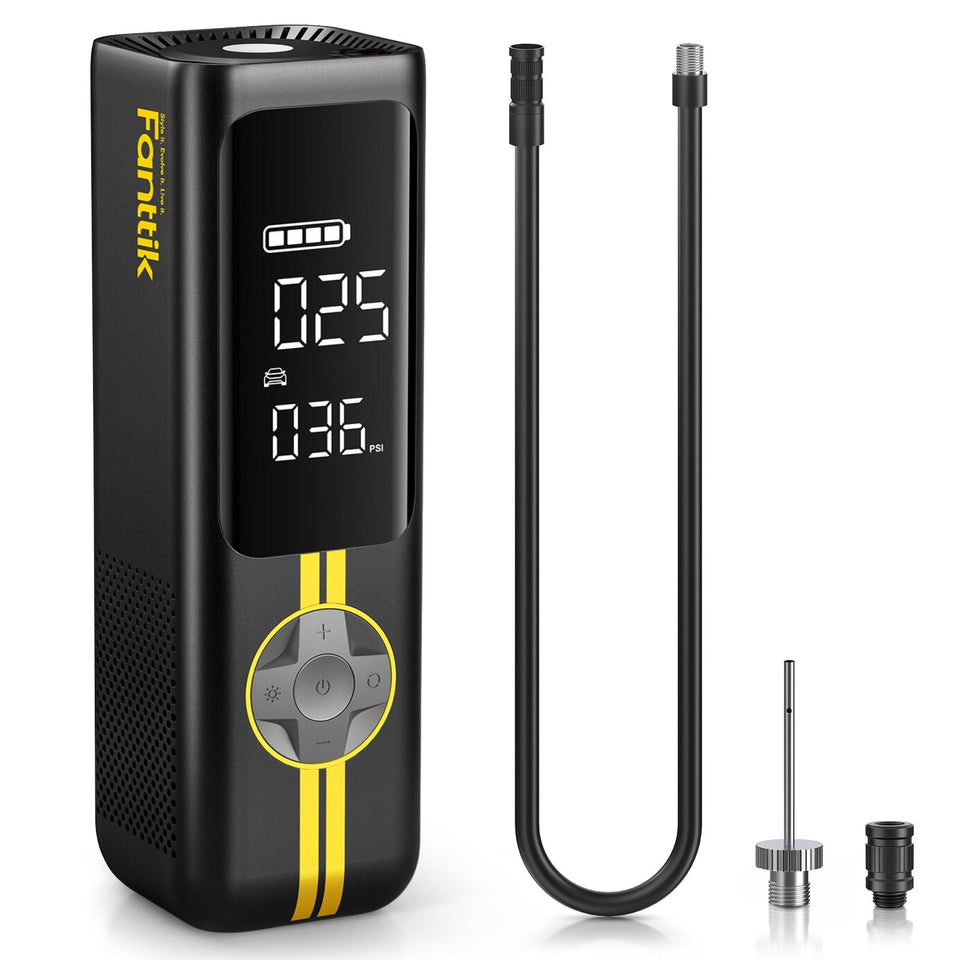
- The Functional Load Test: Don't rely solely on the LED battery indicator. Turn the tool on. For a tire inflator like the Fanttik X9 Pro, run it for 30 seconds to ensure the motor reaches operating speed without hesitation.
-
Auditory Check: Identifying Motor Stress:
- Healthy: A consistent, high-pitched whirring sound.
- Warning: A "labored" or fluctuating pitch, which may indicate a weak battery or mechanical friction in the cylinder.
- The Top-Up: Immediately after the functional test, charge the unit to 100%.

Tire Pressure Validation: The Financial and Safety "Pro Move"
Tire maintenance is a critical safety step that also serves as a budget optimization strategy. Under-inflation is a silent thief of both fuel and tire longevity.
The "Reference Tire" Calibration
To ensure your digital inflator is accurate, use a "known-good" reference.
- Verify the Reference: Use a high-quality manual analog gauge (ideally one recently verified at a local tire shop) to check a stable tire, such as a bicycle tire or a spare.
- The Test: Connect your Fanttik X9 Ace Bike Pump or car inflator. Ensure a firm seal; any "hissing" sound indicates a leak that will skew the reading.
- The Offset: If the digital tool shows a 2-3 PSI discrepancy compared to your manual gauge, treat this as a "known offset" and adjust your target pressure accordingly.
The ROI of Readiness: A Scenario-Specific Example
We modeled the impact of a 7 PSI under-inflation—a common drop after a seasonal temperature change—for a typical family SUV.
| Metric | Estimated Impact (7 PSI Low)* |
|---|---|
| Annual Fuel Waste | $110 - $140 (Estimated) |
| Tread Life Reduction | ~25% faster wear |
| Inflation Time (4 tires) | ~12 - 15 minutes |
| Safety Margin | Potential for increased braking distances |
*Note: These figures are illustrative examples. Actual savings depend on vehicle weight, tire compound, and driving habits.
The Math Behind the Estimate:
Our calculation follows this formula: (Annual Miles / MPG) * Fuel Price * (PSI Loss * Efficiency Coefficient).
Using U.S. Department of Energy data (0.2% efficiency loss per 1 PSI), we modeled a scenario of 15,000 annual miles at 23 MPG with fuel at $3.50/gal: (15,000 / 23) * $3.50 * (7 * 0.002) = ~$32 in direct fuel waste, plus the significantly higher prorated cost of premature tire replacement.
Jump Starter Confidence: The Winter Margin
In winter, your jump starter is your most critical "Plan B." However, its ability to turn over a cold engine depends on having a "safety margin."
The "5x Safety Margin" Explained: We define the Safety Margin as the ratio of the jump starter's Peak Current to the Cold Cranking Amps (CCA) required by the engine. In our modeling of a 3.5L V6 engine at 15°F (requiring ~400A), a 2000A jump starter provides a 5x safety margin. This overhead is vital because cold oil is more viscous, requiring more torque to turn the crankshaft.
The "Jump Count" Rule of Thumb: Based on energy density calculations for an 18Ah (approx. 66Wh) unit, we estimate 8 to 10 jump attempts on a single charge.
- Assumption: Each attempt consists of a 3-second crank.
- Efficiency: We factor in a 65% discharge efficiency to account for energy lost to heat and internal resistance during high-amp bursts.
The "Complete System" Check: Accessories and Seals
A tool is only as good as its weakest connection. A frequent oversight is neglecting the small components that make the tool functional.
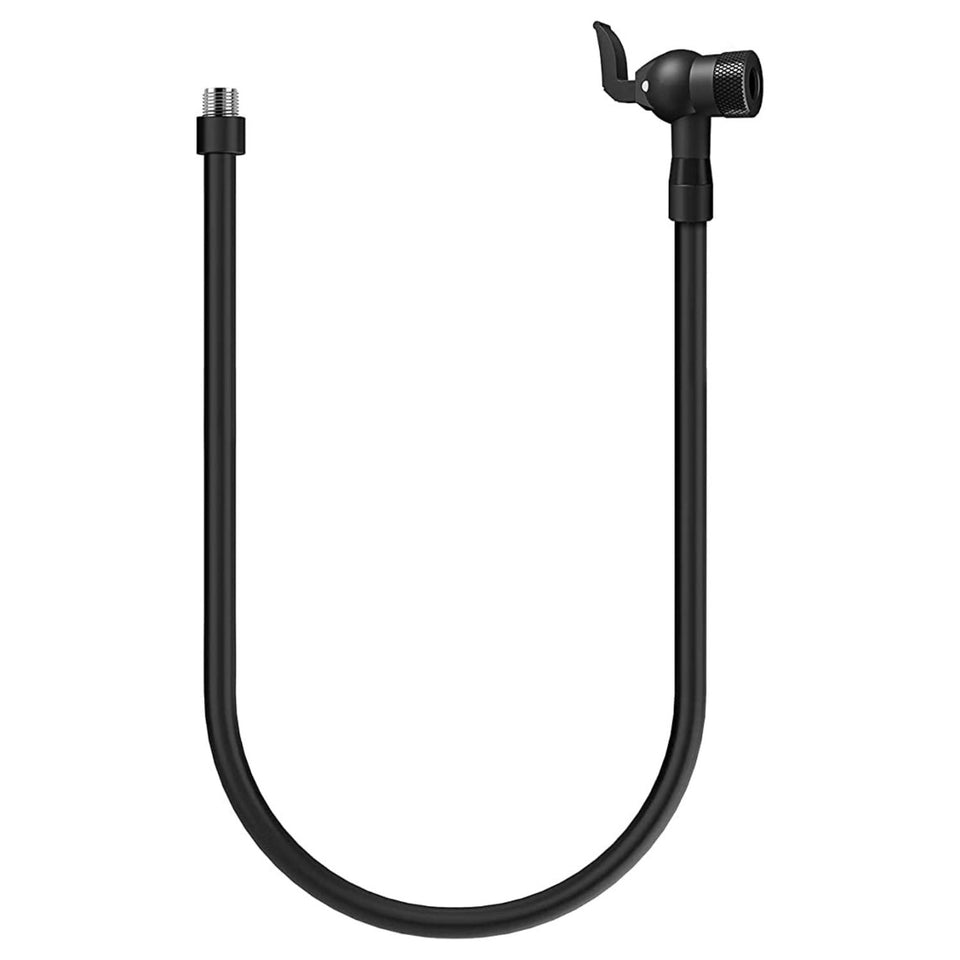
- O-Rings and Seals: Inspect the rubber seals on air hoses. A dry-rotted seal can render an inflator ineffective. If the seal looks cracked, a tiny dab of silicone grease can often temporarily restore the airtight connection.
- The Tool Roll: Store all Presta valve adapters, nozzles, and chargers in a dedicated "tool roll" so they aren't loose in the glovebox.
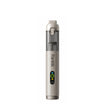
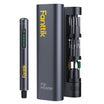
- Electronics Maintenance: Use an electric duster, like the Fanttik B10 Pro, to clear dust from your vehicle’s charging ports. Dust accumulation can occasionally interfere with USB connections during long drives.
Compliance and Peace of Mind
When choosing gear, look for visible compliance marks. The EU General Product Safety Regulation (EU) 2023/988 provides a framework for ensuring products meet rigorous safety standards. For the family safety officer, these certifications are independent verifications that the tool is designed for safe operation.
As you pack, consider the Logistical Readiness of your entire fleet. Standardizing your equipment across multiple cars makes the Pre-Trip Protocol faster and more intuitive.
Appendix: How We Modeled This
To provide transparent guidance, we utilized a deterministic parameterized model for our performance estimates. These are scenario-based heuristics designed for consumer illustration, not controlled laboratory studies.
Modeling Parameters
| Parameter | Value / Range | Unit | Rationale / Source |
|---|---|---|---|
| Engine Size | 3.5 | Liters | Mid-size SUV average (V6) |
| Ambient Temp | 15 | °F | Typical winter road trip morning |
| Battery State | 400 - 450 | CCA | 3-year-old battery (approx. 25% degradation) |
| Efficiency Coeff | 0.002 | %/PSI | U.S. DOE standard for rolling resistance |
| Crank Duration | 3 | Seconds | Standard attempt before safety timeout |
Boundary Conditions:
- Extreme Cold: Below -20°F, lithium battery performance drops non-linearly; the safety margin may decrease by 50% or more.
- Diesel Engines: Require significantly higher cranking current (often 2x-3x higher than gasoline equivalents); these models apply primarily to gasoline engines.
- Tire Volume: Larger off-road tires (33"+) will take substantially longer to inflate and may require multiple "duty cycles" of the inflator.
Disclaimer: This article is for informational purposes only. Always refer to your vehicle's owner's manual and the specific safety instructions provided by tool manufacturers. If you are unsure about performing vehicle maintenance, consult a certified mechanic. Proper safety gear should be worn when servicing vehicles.
References
Continue reading
 The Safety Lifecycle: When to Retire Family Emergency Gear
Covers battery chemistry, the 12.4V health threshold, voltage sag, winter performance gaps, and a seasonal testing protocol for...
The Safety Lifecycle: When to Retire Family Emergency Gear
Covers battery chemistry, the 12.4V health threshold, voltage sag, winter performance gaps, and a seasonal testing protocol for...
 Assessing Post-Sale Support for High-Stakes Family Gear
Covers support maturity, warranty audits, and parts ecosystems to ensure long-term reliability for high-stakes family gear like jump...
Assessing Post-Sale Support for High-Stakes Family Gear
Covers support maturity, warranty audits, and parts ecosystems to ensure long-term reliability for high-stakes family gear like jump...

Leave a comment
This site is protected by hCaptcha and the hCaptcha Privacy Policy and Terms of Service apply.