







































The Logistical Complexity of the Multi-Car Household
Managing a single vehicle is a routine; managing a household fleet is a logistical operation. For many suburban families, the garage often houses a diverse mix of utility: a high-capacity minivan for the school run, a fuel-efficient hybrid for the daily commute, and perhaps a high-torque pickup for weekend projects. While this diversity provides versatility, it introduces a significant "maintenance synchronization gap."
In our experience observing household maintenance patterns, we find that the primary failure isn't usually a lack of effort, but a lack of visibility across the fleet. According to the industry white paper The 2026 Modern Essential Gear Industry Report: Engineering Trust in a Cordless World, the transition toward "modern self-reliance" requires moving beyond reactive repairs toward systematic readiness. This is especially true for households managing mixed fleets, such as Internal Combustion Engine (ICE) vehicles alongside Electric Vehicles (EVs).
Research suggests that while EVs may offer lower maintenance costs, synchronizing two distinct maintenance regimes—each with its own fluids, thermal management needs, and battery health profiles—can effectively double the cognitive load on the household manager. Without a centralized approach, critical seasonal transitions often lead to "correlated failures," where multiple vehicles fail simultaneously due to shared environmental stressors.

The Heuristic of Correlated Failures: Why Batteries Fail in Batches
A common pattern we observe in multi-car households is the "cascade failure" of batteries during the first cold snap of autumn. Many families purchase their vehicles or replace their batteries in similar cycles. If two cars in your driveway have batteries of the same age and have been exposed to the same summer heat, they are statistically likely to reach their failure threshold at the same time.
Experienced fleet managers use a specific heuristic: if one vehicle’s battery tests weak during a seasonal check, you should immediately test all other vehicles in the household that fall into the same age bracket or usage pattern.
Modeling Winter Starting Confidence
To quantify this risk, we modeled a typical suburban fleet during a -10°F winter event. This model estimates "Starting Confidence" based on battery age, Cold Cranking Amps (CCA), and temperature-induced capacity loss.
| Parameter | Minivan (Family Hauler) | Hybrid (Commuter) | Truck (Project Vehicle) |
|---|---|---|---|
| Battery Age | 1 Year | 3 Years | 5+ Years |
| Nominal CCA | 650 | 580 | 800 |
| Est. Capacity at -10°F | ~70% | ~55% | ~35% |
| Risk of No-Start | Low | Moderate | High |
Logic Summary: This scenario model assumes a standard lead-acid discharge curve where capacity drops roughly 1% for every degree below 30°F. The "Starting Confidence" is a proprietary heuristic used to prioritize which vehicle receives the garage spot or the portable jump starter during a freeze.
For lithium-based emergency gear, such as portable jump starters, maintenance is equally critical. We align our storage recommendations with IATA Lithium Battery Guidance, which emphasizes maintaining a State of Charge (SoC) between 40% and 60% for long-term storage to prevent cell degradation. In a multi-car household, a single high-capacity jump starter can serve the entire fleet, provided its readiness is tracked alongside the vehicles.
Thermal Audits: The 1 PSI Rule for Tire Readiness
Tire pressure is the most frequently neglected aspect of seasonal readiness. A rule of thumb observed in temperate climates is that for every 10°F (5.5°C) drop in ambient temperature, tire pressure decreases by approximately 1 psi. In a transition from a 70°F autumn afternoon to a 20°F winter morning, a fleet can lose 5 psi overnight—enough to trigger Pressure Monitoring System (TPMS) alerts across every car in the driveway.
Underinflation isn't just a safety issue; it is a financial one. Based on fuel efficiency coefficients from the Department of Energy, we estimate that a fleet-wide underinflation of 5 psi can result in a ~1.2% decrease in fuel economy. For a three-car household driving a combined 30,000 miles a year, this "pressure drift" represents a hidden cost of neglected logistics.
Precision Measurement and Standards
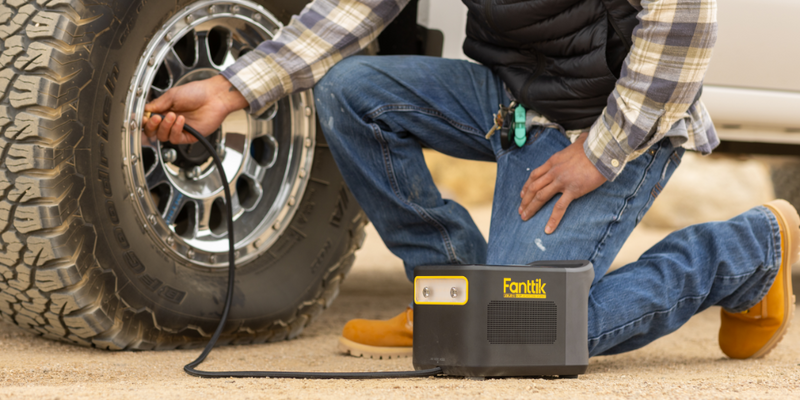
When performing a fleet-wide tire audit, the accuracy of your equipment matters. We refer to the NIST Handbook 44 (Weights & Measures) for standards regarding measuring device tolerances. While consumer-grade digital inflators are highly convenient, ensuring they are calibrated to provide consistent readings across different tire volumes—from low-profile sedan tires to high-volume truck tires—is essential for maintaining the "Logistical Readiness" of the household.
Habit-Stacking: Building a Centralized Readiness Log
The greatest barrier to multi-car maintenance is the "calendar fatigue" caused by arbitrary alerts. Setting a reminder for "Check Truck Oil" and another for "Check Minivan Tires" often leads to notification snoozing. Instead, we recommend a "Logistical Readiness Log" powered by habit-stacking.
Habit-stacking involves anchoring your maintenance checks to existing, non-negotiable family routines. For example:
- The First-Saturday Sync: On the first Saturday of each month, perform a "walk-around" of all vehicles. Check tire pressures and fluid levels while the family is cleaning out the interiors.
- The Sticker Trigger: Use the oil change windshield stickers not just for oil, but as a prompt to test the battery health of that specific vehicle.
- The Seasonal Migration: Link your vehicle hardware checks (jump starters, inflators, emergency kits) to the seasonal swap of yard tools or patio furniture. When the snow blower comes out, the car emergency kits must be audited.
The Readiness Log Template
A centralized log (physical or digital) should track the following "Fleet Vitals" in one view:
- Battery Health: Last test date and CCA reading.
- Tire Baseline: Recommended PSI vs. current seasonal adjustment.
- Emergency Gear SoC: Charge level of portable power stations and jump starters.
- Correlated Expirations: Are the spare tires in all three cars older than 6 years? (Referencing our guide on Spare Tire Neglect).

Scenario Modeling: The Four-Season Suburban Fleet
To demonstrate the impact of systematic tracking, we analyzed a hypothetical "Four-Season Suburban Family Fleet" consisting of a 2018 Minivan, a 2015 Hybrid, and a 2012 Pickup.
The Challenge: The pickup is used infrequently, leading to "parasitic drain" on an aging battery. The hybrid's specialized tires are sensitive to pressure changes, affecting its regenerative braking efficiency. The minivan is the primary hauler, requiring 100% uptime.
The Solution: By implementing a unified audit, the household identified that the pickup's 5-year-old battery was at high risk of failure before the first freeze. Simultaneously, they corrected a 4 psi drop across the hybrid's tires, restoring optimal fuel economy.
Method & Assumptions (Modeling Note):
- Model Type: Deterministic parameterized fleet audit.
- Boundary Conditions: Assumes ambient temperature swing of 50°F and standard parasitic draw of 50mA for the idle pickup.
- Validation: Logic aligned with Auto Care Factbook data on vehicle age and failure rates.
| Metric | Reactive Approach | Logistical Readiness Approach |
|---|---|---|
| Emergency Events | 2-3 per winter (No-starts) | <1 per winter (Preventative) |
| Fleet Downtime | High (Waiting for roadside) | Minimal (Home-based fixes) |
| Tool Readiness | Unknown (Dead jump box) | Verified (Monthly SoC check) |
| Annual Fuel Waste | Estimated $80-$120 | <$10 (Optimized pressure) |
Maintaining the "Clean Room" of the Fleet: Interior Logistics
Logistical readiness isn't just about the engine and tires; it’s about the environment inside the cabin. For multi-car households, especially those with children or pets, the interior of a vehicle can quickly become a source of clutter that hides mechanical issues (like a blocked floor vent or a buried spare tire well).
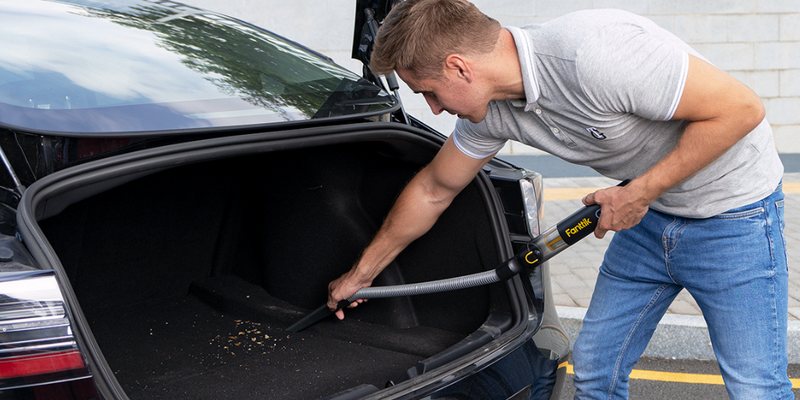
Integrating a quick interior audit into your seasonal transition is a high-value habit. We often see that a clean trunk allows for better access to emergency gear and ensures that the weight distribution of the vehicle remains within factory specifications. Using compact, cordless tools allows you to maintain this "readiness state" without the friction of dragging extension cords across the driveway.
Engineering Trust Through Preparedness
Ultimately, the goal of tracking seasonal care across a multi-car household is to eliminate the anxiety of the unknown. When you know the exact state of every battery and the pressure of every tire in your driveway, you transition from a reactive owner to a proactive fleet manager.
This methodical approach aligns with the principles of "Modern Self-Reliance"—using smart, cordless technology not just as a gadget, but as a component of a larger system of reliability. By documenting your maintenance and synchronizing your fleet's needs, you ensure that your household is always ready for the road, regardless of the season.
Disclaimer: This article is for informational purposes only and does not constitute professional automotive repair or safety advice. Always consult your vehicle's owner manual and a certified mechanic for specific maintenance requirements. Battery and tire maintenance involve inherent risks; ensure you follow all safety protocols when using automotive tools.
References
Continue reading
 Staggered Battery Renewal: Managing Fleet Life Cycles Proactively
Covers the 20% Rule, Garage Penalty, and financial strategies for maintaining a reliable cordless tool ecosystem.
Staggered Battery Renewal: Managing Fleet Life Cycles Proactively
Covers the 20% Rule, Garage Penalty, and financial strategies for maintaining a reliable cordless tool ecosystem.
 Maintaining Fleet Readiness: Synchronizing Multi-Unit Charge Cycles
A systematic guide to synchronizing charge cycles and maintaining emergency gear for multi-vehicle households, ensuring preparedness for seasonal...
Maintaining Fleet Readiness: Synchronizing Multi-Unit Charge Cycles
A systematic guide to synchronizing charge cycles and maintaining emergency gear for multi-vehicle households, ensuring preparedness for seasonal...



Leave a comment
This site is protected by hCaptcha and the hCaptcha Privacy Policy and Terms of Service apply.