
























The Critical Intersection of Humidity and Precision Electronics
In our years of troubleshooting at the repair bench, we have observed a recurring pattern: the most catastrophic electronic failures in home workshops rarely happen during use. Instead, they occur during storage. For serious DIY enthusiasts, a humid environment is not merely an inconvenience; it is a significant threat to the longevity of precision tools and high-value circuit boards. When ambient moisture meets a temperature-sensitive PCB (Printed Circuit Board), the result can be an immediate short circuit or, more insidiously, long-term electrochemical migration that eats away at traces.
Quick Action Guide: Preventing Workshop Condensation
If you are in a rush to protect your gear, follow these three immediate steps:
- The 2-Hour Rule: Never seal a tool in a case immediately after use; let it acclimate to the workshop’s ambient temperature for at least 2 hours to prevent internal "sweating."
- Micro-Climate Storage: Move high-value electronics from open shelves to a gasket-sealed plastic bin or a dedicated metal cabinet.
- Active Desiccants: Place at least 50g of indicating silica gel per cubic foot of storage space and check the color monthly.
The core challenge lies in the "dew point"—the temperature at which air can no longer hold its water vapor, forcing it to condense into liquid. In a typical garage or basement workshop, temperature swings of 10–15°C (50–59°F) are common. If your tools are colder than the surrounding air when the humidity spikes, they often act as a magnet for condensation.
The Physics of Workshop Condensation: The "Sealed Case" Trap
A common mistake we see among technically-inclined users is the instinct to "protect" a tool by sealing it in its original hard-shell case or a plastic bin immediately after use. While this seems logical, it can create a "humidity trap." If you bring a tool from a cool environment into a warmer, humid workshop and seal it, the air inside the case warms up faster than the tool's internal components.
As the air inside the sealed container warms, its capacity to hold moisture increases. However, the internal circuit boards and metal chassis of the tool remain at the previous, cooler temperature for an extended period. This creates a localized dew point inside the tool's housing. Based on our repair logs and common patterns in customer returns (though not a controlled laboratory study), this "sealed case" scenario is a frequent contributor to unexpected "dead on arrival" symptoms when a tool is retrieved after a few weeks of storage.
Understanding the Dew Point Mechanism
To manage this risk, you should monitor the relationship between relative humidity (RH) and temperature. While NIST Handbook 44 provides the foundation for measurement precision, workshop owners can use a simple digital hygrometer to track the dew point.
Practical Rule of Thumb: Condensation typically occurs when the surface temperature of the PCB falls below the dew point of the surrounding air. For example, in a workshop with 80% RH at 25°C (77°F), the dew point is approximately 21°C (70°F). Any tool stored at 20°C that is exposed to this air will likely begin to "sweat."
Desiccant Storage: Silica Gel vs. Clay-Based Products
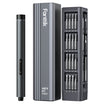
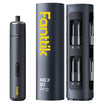
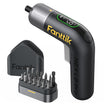
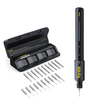
For localized moisture control, desiccants are an effective first line of defense. However, not all desiccants are equally suited for electronics. We generally recommend silica gel over clay-based (bentonite) products for precision hardware. Clay desiccants can produce dust; even microscopic particles can be abrasive and may interfere with the mechanical tolerances of tools like the Fanttik E2 MAX Precision Electric Screwdriver.
The 50-Gram Rule (Workshop Heuristic)
A practical heuristic we apply in our workshop is the 50-Gram Rule: use 50 grams of high-quality silica gel for every one cubic foot of sealed storage volume.
- How to Calculate: Measure your storage bin (Length × Width × Height in feet) to find the cubic volume, then multiply by 50 to find the required grams of desiccant.
- Why it works: This provides sufficient "headroom" to absorb moisture introduced during the occasional opening of the container.
According to industrial standards like IPC J-STD-033B, maintaining storage below 10% RH is the benchmark for Level 1 components. While 10% is difficult to achieve in a home setting, the 50-gram rule typically keeps a well-sealed bin within the 20–30% RH range, which offers a significant safety margin over ambient workshop conditions.
The Pitfalls of Desiccant Reactivation
Many DIYers attempt to reactivate silica gel in a standard kitchen oven. We have found this can lead to failure. Household ovens often have wide temperature fluctuations and "hotspots" that can exceed 120°C (250°F), the point at which the structural integrity of the silica beads can degrade or the indicator dyes may melt.
Based on research into energy-efficient regeneration, a more reliable method for the DIYer is using a dedicated food dehydrator on a low, consistent setting (typically 50-70°C). This provides the gentle, uniform airflow needed to strip moisture without damaging the beads. Safety Note: Always ensure the area is well-ventilated when heating desiccants to avoid inhaling any trapped volatile compounds.

Managing Micro-Climates: Cabinets vs. Whole-Room Control
Trying to dehumidify an entire garage or basement is often an exercise in futility and high energy bills. Instead, we advocate for the "Micro-Climate Cabinet" approach. By creating a small, relatively airtight zone—such as a gasketed metal cabinet or a heavy-duty plastic tote—you can control the environment with higher precision.
The Dehumidifier Rod Strategy
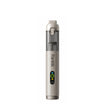
For workshops without whole-space climate control, a compact electric dehumidifier rod is a common investment. These rods work on the principle of thermal convection. By slightly raising the temperature inside a small cabinet (usually by 2–3°C), they lower the relative humidity and help keep the surface temperature of your tools above the dew point.
Illustrative Example: 24L Micro-Climate Modeling The following table represents an illustrative scenario for a standard 24L tool chest using typical workshop parameters.
| Parameter | Value | Unit | Assumptions/Boundary Conditions |
|---|---|---|---|
| Cabinet Volume | ~24 | Liters | Standard DIY tool storage bin |
| Target RH | <30% | % RH | Threshold for preventing oxidation |
| Initial RH | 80% | % RH | Typical humid workshop baseline |
| Stabilization Time | ~5.5 | Minutes | Time to reach stable RH after closing lid |
| Seal Grade | IP54 | - | Requires a gasket-sealed lid; non-sealed bins will fail to maintain this |
PCB Protection Standards and Conformal Coatings
In extreme environments, such as coastal workshops where salt air compounds the humidity problem, physical barriers on the circuit board itself may be necessary. Professional electronics are often treated with "conformal coatings"—thin polymeric films that protect the board's profile.
While coatings like acrylic or silicone provide excellent moisture resistance, they present a significant trade-off: repairability. Based on industry observations regarding high-value boards, removing these coatings for a repair can add an estimated 300–500% to the total labor time.
For most DIY tools, we recommend focusing on environmental storage rather than permanent coatings. If you must use a coating, acrylic-based sprays are often the most practical for DIYers because they are generally easier to remove with isopropyl alcohol during future repairs compared to silicone or epoxy.
Seasonal Maintenance Workflow
Establishing a routine is the final step in maintaining reliability. As suggested in The 2026 Modern Essential Gear Industry Report, reliability is a function of systematic care.
| Step | Action | Frequency | Why it Matters |
|---|---|---|---|
| 1. Acclimation | Allow tools to sit in open air for 2+ hours | After every use | Prevents internal condensation |
| 2. Surface Wipe | Wipe metal/plastic with microfiber cloth | Before storage | Removes hygroscopic salts/oils |
| 3. Desiccant Audit | Check color of silica gel indicators | Monthly | Ensures active moisture absorption |
| 4. Battery Check | Maintain ~50% charge at 15–25°C | Quarterly | Prevents BMS failure due to humidity/temp |
Precision Assembly in Humid Environments
When performing repairs in a humid workshop, the physical properties of materials can change. Plastic screw bosses, for instance, can absorb moisture and may become more prone to stripping. In these scenarios, the torque control on your tools is a critical safety feature.
Heuristic Note: Torque Safety Margins For M1.2 to M2.0 precision screws common in modern electronics, we suggest the following practical settings based on workshop experience:
| Variable | Value | Unit | Rationale |
|---|---|---|---|
| Screw Class | M1.2 - M2.0 | - | Standard electronics fasteners |
| Min Torque | 0.02 | Nm | Minimum for electrical contact |
| Max Safe Torque | 0.10 | Nm | Threshold before stripping plastic |
| Recommended Setting | 0.05 | Nm | Practical safety margin for moisture-affected parts |
Building a Culture of Reliability
Preventing circuit board condensation is not about buying the most expensive equipment; it is about understanding the subtle interplay between temperature and air. By moving away from "sealed case" storage and toward active micro-climate management, you help ensure that your precision tools are ready to perform when you need them.
In the world of DIY and precision repair, trust is earned through the meticulous application of these principles. Whether you are managing a coastal workshop or a basement hobby space, these methodical steps—grounded in engineering logic and real-world patterns—will help safeguard your electronics against the invisible threat of humidity.
Disclaimer: This article is for informational purposes only. Maintenance of electronic tools involves inherent risks, including electrical shock and fire hazards. Always refer to the manufacturer’s specific safety guidelines and local regulations, such as the EU General Product Safety Regulation (EU) 2023/988, before performing repairs or modifications.
Sources
- The 2026 Modern Essential Gear Industry Report
- IPC J-STD-033B: Handling, Packing, Shipping and Use of Moisture/Reflow Sensitive Surface Mount Devices
- NIST Handbook 44: Specifications, Tolerances, and Other Technical Requirements for Weighing and Measuring Devices
- AllPCB: Conformal Coating Removal and Rework Best Practices
- Patsnap: How to Reduce Energy Costs with Silica Gel Regeneration
Continue reading
 Protecting Tool OLED Displays from Extreme Winter Cold
Covers OLED vs. LCD cold resilience, condensation risks, recovery protocols, and practical storage strategies for long-term tool reliability.
Protecting Tool OLED Displays from Extreme Winter Cold
Covers OLED vs. LCD cold resilience, condensation risks, recovery protocols, and practical storage strategies for long-term tool reliability.
 Troubleshooting Battery Imbalance After Autumn Storage
Covers cell drift mechanisms, the 0.2V diagnostic threshold, and safe recovery protocols for NMC and LiFePO4 batteries in...
Troubleshooting Battery Imbalance After Autumn Storage
Covers cell drift mechanisms, the 0.2V diagnostic threshold, and safe recovery protocols for NMC and LiFePO4 batteries in...

Leave a comment
This site is protected by hCaptcha and the hCaptcha Privacy Policy and Terms of Service apply.